
Introduction
Overview of Bulk Products in Food and Industrial Processing
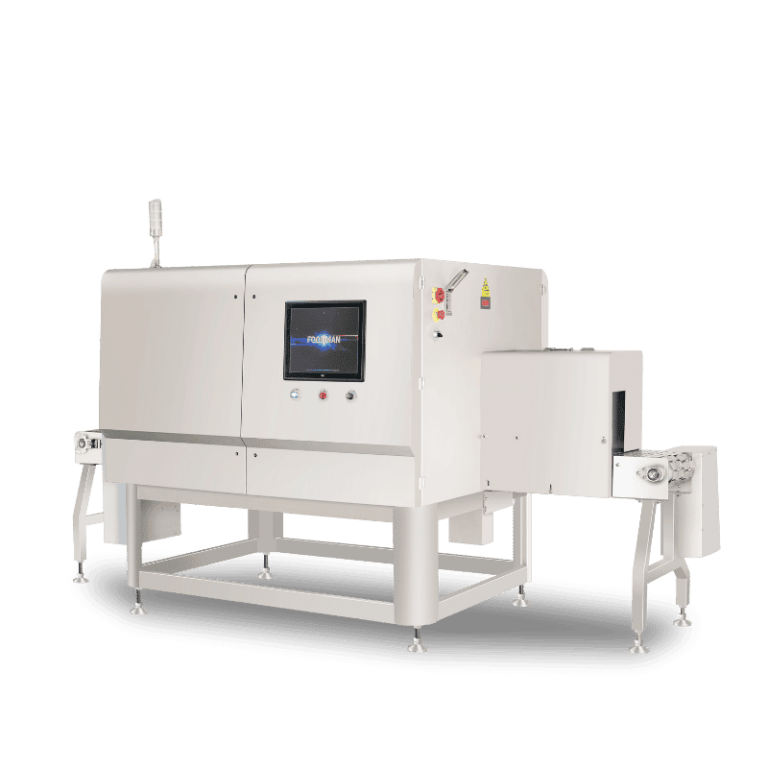
Bulk products, including grains, nuts, spices, powders, and other unpackaged materials, are essential in both food and industrial processing. These products are typically handled in large volumes and move continuously along high-speed production lines, making them susceptible to contamination and irregularities. Ensuring consistent quality in bulk products is vital for operational efficiency, consumer satisfaction, and regulatory compliance. In modern facilities, food X-Ray inspection has emerged as a key technology to address the unique challenges posed by unpackaged bulk products. By integrating X-Ray inspection systems, processors can monitor quality at every stage without interrupting production.

Importance of Contaminant Detection for Safety and Quality
Detecting contaminants in bulk products is crucial for both safety and product quality. Foreign objects such as metal fragments, glass, stones, and plastic can pose serious health risks, while inconsistencies in size, density, or composition may affect product quality and consumer trust. Traditional inspection methods, including manual sampling and visual checks, are often insufficient for high-speed, high-volume operations. A dedicated X-Ray inspection machine provides a reliable, non-destructive solution, ensuring that every item is scanned for potential hazards. By deploying X-Ray inspection equipment inline, food processors can maintain rigorous quality standards, prevent product recalls, and enhance brand reputation.
Introduction to X-Ray Inspection as a Modern Solution
X-Ray inspection systems have become indispensable in the modern processing of unpackaged bulk products. These advanced food X-Ray inspection machines utilize differences in density and absorption to detect foreign objects and contaminants in real time. Unlike traditional sampling methods, X-Ray inspection equipment can perform 100% inline inspection, offering immediate feedback and reducing the risk of contaminated products reaching the market. High-speed X-Ray inspection machines ensure consistent product safety and quality, even in complex production environments. With the ability to integrate into existing lines seamlessly, X-Ray inspection systems not only improve safety and compliance but also optimize operational efficiency, minimize waste, and provide verifiable inspection data for regulatory and customer reporting.
Challenges in Inspecting Unpackaged Bulk Products
Variability in Product Size, Shape, and Density
Unpackaged bulk products inherently exhibit significant variability in size, shape, and density, creating a major challenge for consistent quality control. Items such as nuts, grains, seeds, powdered ingredients, and small industrial components vary widely in mass, geometry, and composition. This variability makes it difficult for traditional detection methods to identify contaminants reliably, often leading to missed foreign objects or false positives that can affect both safety and production efficiency.
Modern X-Ray inspection machines overcome this challenge by leveraging advanced imaging algorithms and dual-energy or multi-energy density analysis to differentiate between product materials and potential contaminants. Food X-Ray inspection systems can accurately detect foreign objects even when they are similar in density to the surrounding product. These systems automatically adjust for differences in product size and orientation, ensuring precise detection across diverse bulk items. By enabling consistent monitoring without the need for manual intervention, X-Ray inspection equipment not only enhances safety but also reduces waste and maintains production flow.
Additionally, some X-Ray inspection machines incorporate adaptive software that learns the characteristics of each product type over time. This intelligence improves detection accuracy in batches with high variability, minimizing false rejections and helping processors maintain product quality standards while meeting throughput requirements.
High-Speed Production Lines and Continuous Flow Challenges
Bulk processing lines are often high-speed, with continuous flow rates that can reach several tons per hour. Inspecting products in real time without slowing down production presents a considerable technical challenge. Manual sampling or visual inspection is typically too slow for these conditions, leading to gaps in contamination monitoring and increasing the risk of defective products reaching the market.
Inline X-Ray inspection systems are specifically designed to handle these high-speed, continuous-flow environments. They provide real-time imaging and analysis for every unit, ensuring that even small or irregular contaminants are detected immediately. Modern X-Ray inspection machines capture high-resolution images at rapid speeds and can analyze multiple items simultaneously, offering consistent, non-destructive quality control.
By integrating food X-Ray inspection equipment into continuous-flow lines, processors can maintain uninterrupted production while achieving precise monitoring. The systems provide instant feedback, enabling operators to adjust line parameters, remove contaminated batches, or fine-tune portioning in real time. This capability ensures product safety and uniformity without sacrificing throughput, making X-Ray inspection machines an essential tool for large-scale bulk production operations.
Traditional Detection Methods and Their Limitations
Traditional methods for inspecting unpackaged bulk products, including sieving, metal detection, manual visual inspection, or spot sampling, have inherent limitations. Sieves and screens are only effective for particles of certain sizes and fail to detect non-metallic contaminants such as glass, stone, or dense plastics. Metal detectors cannot identify non-metal foreign objects, and manual inspection is labor-intensive, slow, and prone to human error—especially in high-volume operations.
In contrast, food X-Ray inspection systems offer a comprehensive, non-destructive solution. Advanced X-Ray inspection machines can detect a wide range of foreign materials, including metal, glass, stone, bone fragments, and other dense contaminants, regardless of their shape or size. X-Ray inspection equipment also enables 100% inline inspection, ensuring that every product passes through the quality control process, eliminating the risk of undetected contamination that can occur with sampling-based methods.
Furthermore, modern X-Ray inspection systems can be integrated with software analytics and reporting tools, allowing processors to track trends, identify recurring contamination sources, and maintain regulatory compliance more efficiently. By combining high-speed, accurate detection with operational insights, X-Ray inspection machines reduce product recalls, minimize waste, and improve overall operational efficiency—benefits that traditional detection methods cannot match.
Principles of X-Ray Inspection for Bulk Products
How X-Rays Penetrate Bulk Materials
X-Ray inspection relies on the ability of X-rays to penetrate bulk materials and reveal their internal structure. When X-rays pass through unpackaged bulk products, their intensity is attenuated differently depending on the density and composition of the material. Denser objects, such as stones, metal fragments, or bone, absorb more X-ray energy, while less dense materials, like grains, nuts, powders, or processed food particles, allow more X-rays to pass through.
Modern X-Ray inspection machines utilize highly sensitive detectors to capture this differential absorption, generating high-resolution images of the product’s internal composition. Food X-Ray inspection systems are specifically designed to handle variations in particle size, shape, and density, ensuring accurate detection even in complex bulk materials. By analyzing the patterns of X-ray attenuation, X-Ray inspection equipment can identify anomalies that may indicate the presence of foreign objects, enabling reliable quality control without physically altering the product.
Moreover, advanced X-Ray inspection systems often incorporate multi-energy or dual-energy technology, allowing for enhanced differentiation between materials of similar densities. This capability is crucial for bulk products, where subtle differences in absorption can signify contaminants that traditional inspection methods might miss.
Detection of Foreign Objects Based on Density and Absorption
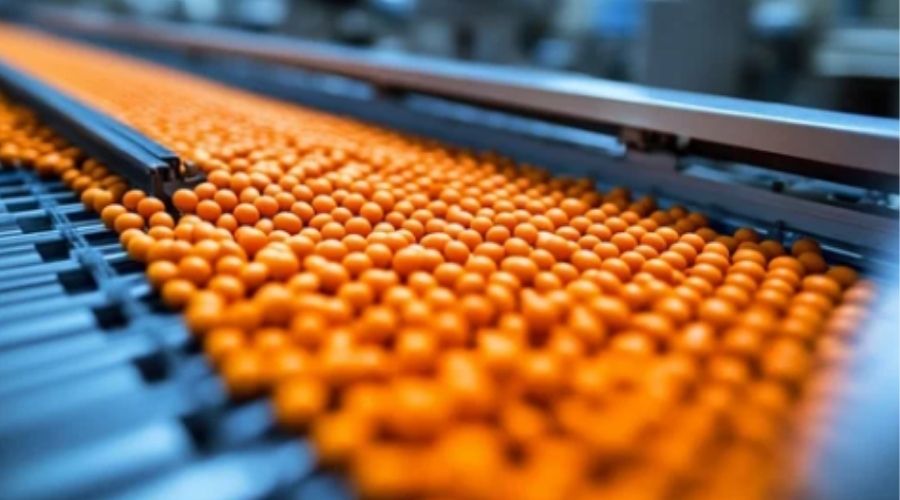
The core principle behind X-Ray inspection for bulk products is the detection of foreign objects through differences in density and X-ray absorption rates. Each material interacts with X-rays uniquely: metals absorb the most radiation, followed by dense minerals, bones, and certain plastics, while organic products like grains or nuts absorb less. X-Ray inspection machines leverage this contrast to detect contaminants embedded within bulk materials.
Food X-Ray inspection systems analyze the X-ray images in real time, automatically flagging any irregularities that deviate from the expected density profile. The systems can detect a wide range of contaminants, including metal, glass, stone, bone fragments, and dense plastic pieces. By using sophisticated algorithms and density mapping, X-Ray inspection equipment ensures that even small foreign objects are identified, reducing the risk of product recalls or customer complaints.
In addition, X-Ray inspection machines can be calibrated for specific products, adjusting sensitivity and detection thresholds to account for natural variations in density. This customization enables processors to maintain high detection accuracy while minimizing false positives, which is particularly important in high-volume bulk processing operations.
Differentiating Between Product Material and Contaminants
A key challenge in inspecting unpackaged bulk products is differentiating between the intended product and potential contaminants, especially when materials have similar density or composition. Advanced X-Ray inspection systems address this challenge through a combination of imaging technology, software intelligence, and data analysis.
Modern X-Ray inspection machines use high-resolution detectors and advanced image processing algorithms to create detailed profiles of the bulk product. Food X-Ray inspection systems can distinguish between natural density variations within the product and anomalies caused by foreign objects. For example, in a batch of nuts or grains, the system can recognize normal variations in size and density while isolating stones, shell fragments, or metal debris.
X-Ray inspection equipment often includes features such as adaptive learning and automatic calibration, which improve the system’s ability to differentiate between product material and contaminants over time. By continuously analyzing data from the production line, X-Ray inspection machines refine their detection criteria, reducing false alarms and ensuring consistent product quality.
The result is a highly reliable inspection process where each unit of bulk product is verified for safety and integrity without the need for destructive sampling. Integrating X-Ray inspection systems into bulk production lines enhances both consumer safety and operational efficiency, making it an indispensable tool for modern food and industrial processing.
Key Features of Bulk Product X-Ray Inspection Systems
High-Speed Inline Scanning for Continuous Flow
Bulk product processing requires inspection solutions that can keep up with high-speed production lines while ensuring no compromise on safety or quality. Modern X-Ray inspection systems are specifically engineered for continuous inline scanning, capable of analyzing large volumes of unpackaged materials—such as grains, nuts, powders, dried fruits, and seeds—without slowing down production. A high-performance X-Ray inspection machine can scan every single product in real time, detecting contaminants instantly before they progress further down the line. This capability eliminates the need for random sampling and ensures every unit is inspected, greatly reducing the risk of contaminated goods reaching the market. By integrating food X-Ray inspection technology into continuous-flow systems, manufacturers can maintain strict compliance with food safety regulations, prevent production bottlenecks, and optimize throughput for maximum efficiency.
Dual-Energy and Multi-Angle Imaging Capabilities
Advanced X-Ray inspection equipment often incorporates dual-energy and multi-angle imaging technologies, which significantly enhance the precision of contaminant detection. Dual-energy imaging allows an X-Ray inspection system to differentiate between materials with similar densities, making it possible to detect bone fragments in fish, dense plastics in confectionery, or stones in nuts that would otherwise be missed by conventional detection methods. Multi-angle imaging provides additional perspectives of the product, ensuring that contaminants hidden within overlapping layers are still detected. For unpackaged bulk products where size, density, and shape can vary widely, these advanced imaging capabilities make food X-Ray inspection far more reliable than single-view or metal detection systems, dramatically reducing the risk of undetected hazards and false positives.
Real-Time Data Processing and Automatic Rejection
Speed and accuracy must work hand in hand in bulk product inspection, especially in high-output production facilities. Modern X-Ray inspection machines are equipped with high-speed processors capable of analyzing captured images in real time. The system can immediately identify anomalies—such as metal fragments, glass shards, or dense stones—and activate automatic rejection mechanisms that remove contaminated products from the flow without slowing down operations. This inline inspection method means there is no need for manual intervention, which reduces labor requirements, eliminates human error, and ensures consistent quality control. By integrating advanced software with X-Ray inspection equipment, manufacturers can also track and record inspection results for each batch, supporting traceability, regulatory compliance, and data-driven process improvements.
Non-Destructive Testing Ensuring Product Integrity
One of the biggest advantages of food X-Ray inspection is its completely non-destructive nature. Unlike physical sampling, cutting, or destructive testing methods, an X-Ray inspection system examines products internally without altering their form, texture, or nutritional quality. This is particularly important for bulk products, where it is neither feasible nor economical to destroy samples during inspection. By using X-Ray inspection equipment, processors can maintain 100% inspection coverage while preserving every unit for sale. Furthermore, the ability to inspect products without packaging or direct handling reduces the risk of cross-contamination, further ensuring product safety. This approach not only safeguards brand reputation but also minimizes waste, maximizes yield, and supports sustainability goals by ensuring only safe, uncontaminated products reach the consumer.
Applications Across Industries
Grain, Rice, and Cereal Products
In grain, rice, and cereal processing, product safety and quality are paramount due to the high risk of contamination from stones, glass, and metal fragments introduced during harvesting, transport, or milling. Food X-Ray inspection systems provide a reliable way to detect these hazards even when contaminants are similar in size or color to the product. Unlike traditional sieving or metal detection methods, an X-Ray inspection machine identifies foreign objects based on density, ensuring detection of non-metal materials as well. Large-scale producers often integrate high-speed X-Ray inspection equipment directly into bulk handling lines to inspect every grain or kernel without slowing production, maintaining safety while meeting throughput demands.
Nuts, Seeds, and Dried Fruits
Nuts, seeds, and dried fruits present unique inspection challenges due to their irregular shapes, varying densities, and susceptibility to damage from traditional screening methods. X-Ray inspection systems can scan these unpackaged products in bulk, accurately identifying contaminants such as stones, shell fragments, dense plastics, or pieces of metal. With advanced imaging algorithms, a food X-Ray inspection machine can distinguish between edible product material and harmful debris, even in mixed loads. This level of precision reduces false rejects, minimizes waste, and ensures that only safe, high-quality products are packaged and shipped.
Powdered Products, Spices, and Seasonings
Powdered products such as flour, cocoa, and spices require specialized inspection due to their fine particle size and flow characteristics. Traditional inspection methods often fail to detect contaminants hidden within dense powder layers. X-Ray inspection equipment solves this issue by penetrating the product flow and identifying density anomalies in real time. A bulk X-Ray inspection system can operate inline with minimal disruption, ensuring contaminants are removed before blending or packaging. This is particularly valuable in spice production, where foreign objects like stones, glass, or insect fragments can severely impact quality and safety.
Confectionery and Snack Items
In confectionery and snack production, maintaining product integrity and appearance is essential. Food X-Ray inspection technology allows manufacturers to detect physical contaminants such as metal, glass, or hard plastics without damaging delicate items like chocolate, chips, or biscuits. An X-Ray inspection machine can inspect bulk snacks before portioning, ensuring contaminants are removed before packaging. The non-destructive nature of X-Ray inspection equipment helps preserve the texture, flavor, and presentation of products, while still meeting strict food safety compliance standards.
Other Non-Food Bulk Materials (e.g., Pharmaceuticals)
X-Ray inspection systems are not limited to the food industry. In pharmaceuticals, bulk powders, tablets, or capsules require thorough contaminant detection to meet stringent regulatory standards. X-Ray inspection machines can detect foreign materials such as glass, stones, or metal shavings, even in high-density non-food products. Beyond pharmaceuticals, X-Ray inspection equipment is also used in industries handling plastics, chemicals, or minerals, where product purity and safety are equally important. The versatility of food X-Ray inspection technology ensures that it can be adapted for both food and non-food bulk applications, offering universal safety assurance across multiple industries.

Advantages of Using X-Ray Inspection for Bulk Products
Enhanced Safety and Compliance with Regulations
For industries handling unpackaged bulk products, meeting food safety and quality regulations is non-negotiable. X-Ray inspection systems provide an advanced solution for detecting a wide range of contaminants—including metal, glass, stone, and dense plastics—that traditional methods often miss. By integrating food X-Ray inspection into bulk processing lines, manufacturers can ensure consistent compliance with global safety standards such as HACCP, BRCGS, and FDA requirements. An X-Ray inspection machine delivers precise, non-destructive scanning for every unit of product, ensuring that safety protocols are met without slowing down production.
Reduction of Recalls, Waste, and Production Loss
Product recalls are costly, both financially and reputationally. Contaminants in bulk products can lead to large-scale recalls if they go undetected. By using X-Ray inspection equipment, manufacturers can identify and remove defective materials early in the process, before packaging or distribution. This proactive approach reduces waste, prevents entire batches from being discarded, and minimizes production downtime. With real-time detection, X-Ray inspection systems safeguard against recalls while ensuring that only safe products move forward, ultimately protecting brand integrity.
Improved Product Consistency and Consumer Confidence
Consistency in quality builds trust with consumers. Food X-Ray inspection not only removes contaminants but also monitors product density, shape, and size to ensure uniformity across batches. An advanced X-Ray inspection machine can detect anomalies that affect product consistency, allowing manufacturers to make immediate adjustments. This level of control strengthens consumer confidence, as customers know they are receiving safe, high-quality products every time. In competitive markets, the assurance provided by X-Ray inspection equipment can be a significant differentiator.
Cost Savings from Optimized Detection and Sorting
While installing X-Ray inspection systems is an investment, they often deliver substantial cost savings in the long term. By accurately detecting and automatically sorting contaminated products, X-Ray inspection machines reduce manual labor costs, minimize waste, and improve line efficiency. The non-destructive nature of food X-Ray inspection means that products are only rejected when necessary, avoiding unnecessary losses. Additionally, by preventing recalls and ensuring compliance, X-Ray inspection equipment helps avoid legal penalties and reputational damage, making it a cost-effective choice for bulk product safety.
Challenges and Considerations
Calibration and Sensitivity for Different Bulk Products
Different bulk products—such as grains, nuts, powders, or dried fruits—vary widely in density, moisture content, and particle size. These variations require careful calibration of the X-Ray inspection system to ensure optimal detection sensitivity. An improperly calibrated X-Ray inspection machine may fail to detect low-density contaminants or produce false positives. For food X-Ray inspection, fine-tuning the system to account for product-specific density variations is essential for achieving both accuracy and efficiency. Regular recalibration is especially important when switching between product types or processing seasonal variations.
Handling High-Volume, High-Density Flow
In bulk processing environments, the production flow can be extremely fast and dense, with several tons of product moving per hour. High-volume throughput can challenge even advanced X-Ray inspection equipment, as image clarity and processing speed must remain consistent despite heavy loads. Modern X-Ray inspection machines are designed to handle such demanding conditions, but manufacturers must ensure the equipment’s specifications align with their operational needs. For food X-Ray inspection, maintaining detection accuracy under high-density flow conditions is crucial for preventing contaminants from slipping through.
Integration with Existing Production Lines
Seamless integration of an X-Ray inspection system into an existing bulk product line is not always straightforward. Factors such as conveyor width, product flow direction, and available floor space must be considered to avoid production bottlenecks. The X-Ray inspection equipment must also communicate effectively with existing sorting and rejection mechanisms. For food X-Ray inspection, proper integration ensures that detection and rejection happen without disrupting the pace of production, allowing manufacturers to maintain both safety and efficiency.
Operator Training and System Maintenance
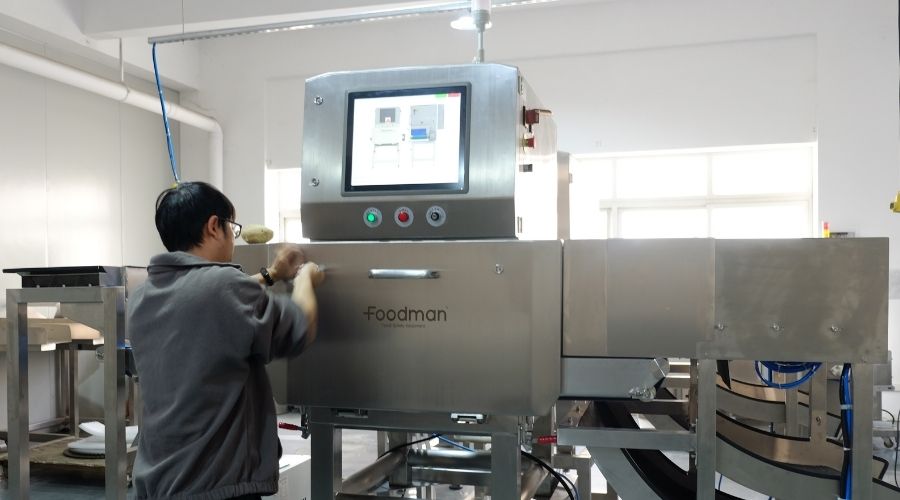
Even the most advanced X-Ray inspection machines require skilled operators to achieve maximum performance. Operators must understand how to interpret detection results, adjust settings, and perform regular maintenance. Without adequate training, there is a risk of incorrect operation, leading to missed contaminants or unnecessary product rejection. Scheduled maintenance is equally critical—cleaning detectors, checking alignment, and updating software keep the X-Ray inspection equipment functioning at peak performance. In food X-Ray inspection, a well-trained team and a robust maintenance plan are key to ensuring long-term reliability and compliance with safety standards.
Conclusion
Summary of the Importance of X-Ray Inspection for Bulk Products
In bulk product processing—whether for food, pharmaceuticals, or other industries—the ability to detect contaminants quickly and accurately is essential for maintaining product integrity. X-Ray inspection has become a cornerstone technology for this purpose. By using an advanced X-Ray inspection system, manufacturers can detect a wide range of foreign objects, including metals, glass, stones, and dense plastics, in unpackaged bulk materials. Unlike traditional inspection methods, food X-Ray inspection offers a non-destructive, comprehensive solution that ensures every product meets safety and regulatory standards before it reaches consumers.
Emphasis on Safety, Efficiency, and Product Quality
The benefits of investing in modern X-Ray inspection machines go far beyond contaminant detection. These systems improve operational efficiency by scanning products in real time without slowing production. High-performance X-Ray inspection equipment can handle high-speed, high-volume environments, ensuring that every particle of product is thoroughly examined. For the food industry, food X-Ray inspection plays a vital role in protecting consumers, reducing product recalls, and building trust in the brand. The combination of safety, efficiency, and consistent quality control makes X-Ray inspection an indispensable part of modern bulk product processing.
Call-to-Action: Encouraging Adoption of Advanced X-Ray Inspection Solutions
For manufacturers who have not yet adopted advanced X-Ray inspection systems, now is the time to take action. The technology is more accessible, reliable, and cost-effective than ever before. Investing in the right X-Ray inspection equipment ensures long-term benefits, including reduced waste, fewer recalls, and greater consumer confidence. In industries where safety and quality are non-negotiable, food X-Ray inspection and other specialized applications provide the assurance that every batch meets the highest standards. By integrating these systems into your production lines, you can protect your brand, improve efficiency, and stay ahead in a competitive market.
FAQ
Q: How does a food X-Ray inspection system handle unpackaged bulk products?
A: Food X-Ray inspection systems use advanced imaging to scan unpackaged bulk products like grains, nuts, or powders, detecting contaminants without slowing production or altering the product’s quality.
Q: How does an X-Ray Inspection System For Unpackaged Bulk Products handle irregular shapes and sizes?
A: Advanced X-Ray inspection equipment uses density-based detection and adaptive algorithms to identify contaminants regardless of variations in size, shape, or density of bulk products.
Q: What industries can benefit from X-Ray Inspection System For Unpackaged Bulk Products?
A: Key industries include food processing (grains, nuts, seeds, spices, snacks), pharmaceuticals, chemicals, and any sector handling loose or unpackaged bulk materials.