Introduction: The Tiny Threat Lurking in Every Bite
Perhaps few dining experiences are more frustrating than the sudden realization that a fish bone has become lodged in your throat. What began as a leisurely meal can quickly escalate into a medical emergency, instantly transforming the pleasure of fine dining into a painful ordeal. These minuscule calcified structures—often shorter than a fingernail and thinner than a needle—represent one of the seafood industry’s most intractable and perplexing challenges.
For decades, the presence of tiny bones in fish fillets was regarded as almost inevitable—an inherent risk associated with consuming seafood. However, in an era defined by unprecedentedly strict food safety standards and soaring consumer expectations, this attitude of acceptance is rapidly becoming untenable. The issue of fish bones is not merely a nuisance; it constitutes a multi-million-dollar liability that not only threatens brand reputation and invites regulatory scrutiny but, most importantly, endangers consumer safety.
The statistics are sobering. Every year, emergency rooms around the globe treat thousands of cases of injury resulting from the accidental ingestion of fish bones—some of which even require surgical intervention.
Now, modern X-ray inspection technology is reshaping the seafood industry. Advanced X-ray bone detection systems are capable of identifying even the most minute bone fragments hidden within fish fillets, packaged seafood, or processed aquatic products. By deploying these X-ray inspection systems, businesses can significantly mitigate the risk of bones in their seafood products, safeguard consumer safety, and avoid costly product recalls.
The Hidden Dangers of Small Fish Bones
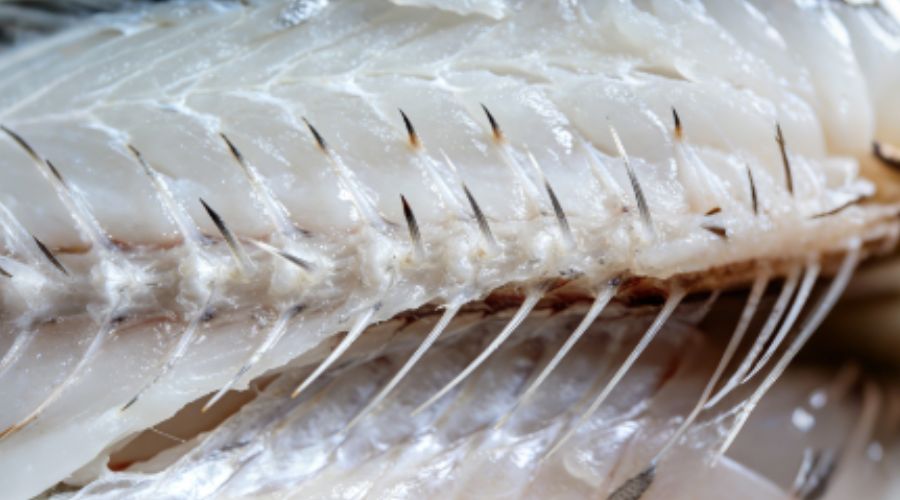
Although fish bones may seem insignificant, their consequences can be extremely serious.
When consumers purchase boneless fish fillets, they expect a safe dining experience. However, if fish bones slip through the seafood processing workflow and ultimately reach the consumer, they can trigger a host of problems.
First, fish bones can cause physical injury. Tiny bones may become lodged in the throat or cause oral trauma—risks that are particularly acute for children and elderly consumers. In more severe cases, sharp fish bones can even lead to medical emergencies.
Second, discovering fish bones in so-called “boneless” products erodes consumer trust. A single such incident can trigger customer complaints, negative reviews, or a fierce backlash on social media.
For seafood brands competing in the global market, failing to reduce fish bone risk in seafood in their products can damage brand reputation and invite scrutiny from regulatory bodies.
From an economic perspective, the consequences are even more severe. Undetected fish bones can result in product recalls, liability lawsuits, or the loss of retail partnerships. These risks make aquatic product processing, seafood processing X-ray machine an increasingly vital component of modern seafood processing facilities.
Limitations of Traditional Inspection Methods
Prior to the advent of X-ray inspection technology for seafood processing, the detection of fish bones relied primarily on manual inspection.
Visual Inspection: Another method involves workers using their fingers to tactilely inspect the surface of the fish meat for bones. Once a bone is detected, it is removed using tweezers. Although this method is widely employed in aquatic product processing, seafood processing, it suffers from several drawbacks:
It is slow and labor-intensive.
It relies heavily on the skill and attentiveness of the workers.
Deeply embedded or minute fish bones may go undetected.
Even with training, the ability of manual inspection alone to mitigate the risk of fish bones in seafood remains limited.
Random Sampling Inspection: Some seafood producers conduct random quality checks during the processing stage. While sampling can identify certain sporadic issues, it cannot guarantee that every single product is completely bone-free. Sampling methods inherently possess blind spots; consequently, fish bones may still slip through the production line.
Due to these limitations, traditional methods struggle to consistently mitigate the risk of fish bones in seafood within a large-scale production environment. Workers visually inspect fish fillets during processing; while experienced inspectors can identify obvious bones, those that are minute or embedded within the fillet often prove difficult to detect.
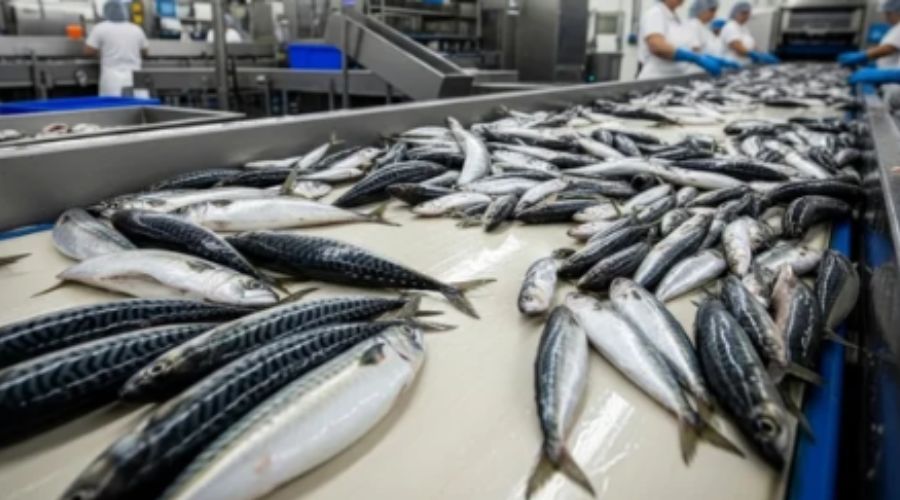
Furthermore, seafood production lines operate at high speeds. Workers cannot maintain perfect accuracy over extended periods—particularly when tasked with inspecting thousands of fillets per hour.
Even under ideal conditions, manual inspection cannot guarantee a consistent reduction in the risk of fish bones in seafood products.
Technological Breakthrough: X-Ray Inspection Machines for Fish bone Detection
The emergence of specialized X-ray inspection technology for aquatic product processing has fundamentally transformed the landscape of contamination detection. Unlike traditional metal detectors—which are limited to detecting metal contaminants—modern X-ray systems are capable of identifying a wide variety of foreign objects, including low-density organic materials that were previously difficult to detect.
How X-Ray Inspection Works?
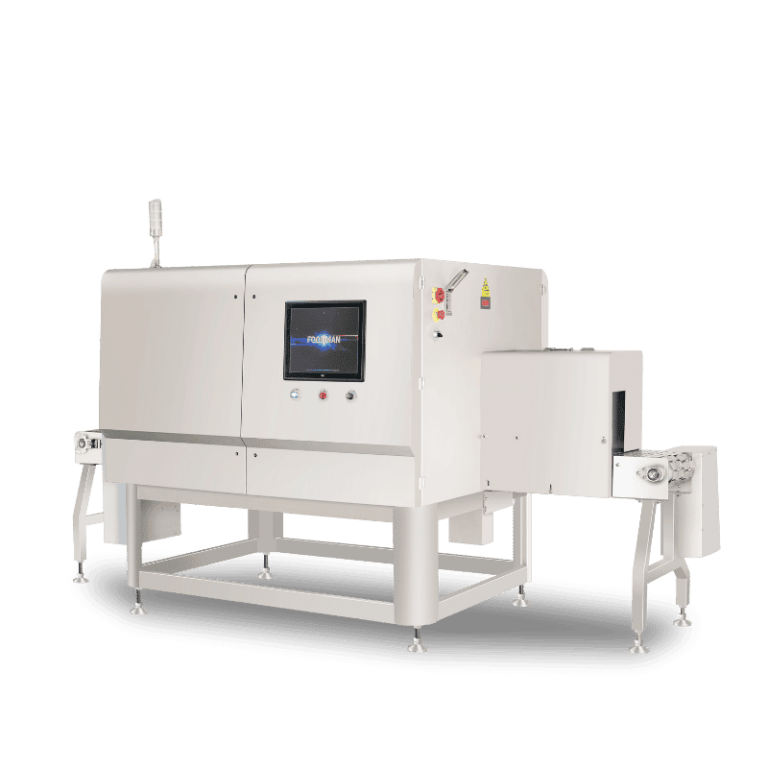
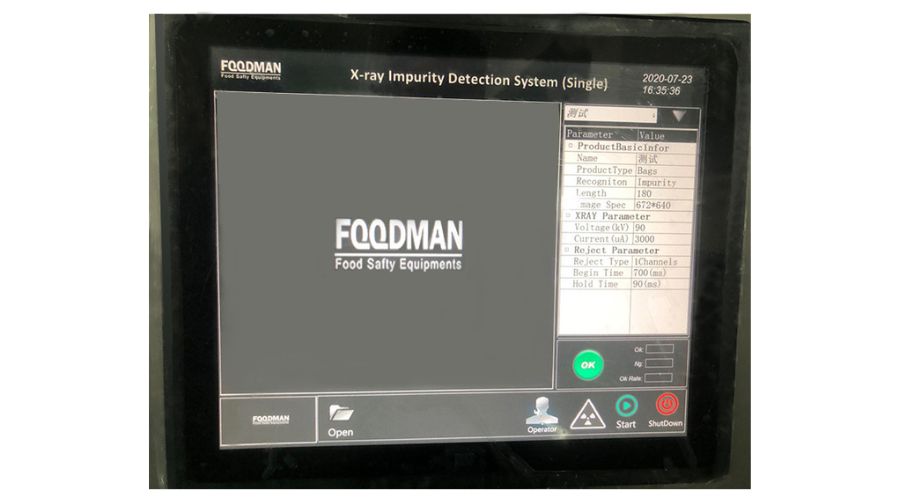
A typical X-ray fish bone detection machine comprises the following key components: an X-ray generator, which produces a low-dose X-ray beam capable of penetrating seafood products; a detector system, which captures the transmitted X-ray signals and converts them into digital images; image processing software, which employs algorithms to identify density variations associated with fish bones; and an automatic rejection system, which removes products containing fish bones from the conveyor belt.
With this system in place, seafood processing plants gain access to a powerful quality assurance tool.
By integrating X-ray inspection technology into their production lines, businesses can detect minute fish bones that would otherwise go unnoticed by traditional inspection methods.
Consequently, seafood producers can more effectively mitigate the risk of fish bones in their products while maintaining high production efficiency.
At the core of this technological breakthrough lies dual-energy X-ray technology. Traditional single-energy systems rely on overall density imaging; thus, it is difficult to distinguish bone fragments when their density overlaps with that of the surrounding tissue. In contrast, dual-energy technology captures images simultaneously at two distinct energy levels. This approach reveals not only density but also material composition, thereby enabling a clear differentiation between muscle tissue and calcified bone.
The application of this technology to the aquatic product processing sector marks a paradigm shift. Today, advanced X-ray inspection equipment designed for bone detection can identify bone fragments smaller than one millimeter—fragments so minute that they are virtually impossible to detect through manual inspection. Operating at production line speeds, these systems rigorously inspect every fillet, every piece of fish meat, and every package with a level of precision that human inspectors simply cannot match.
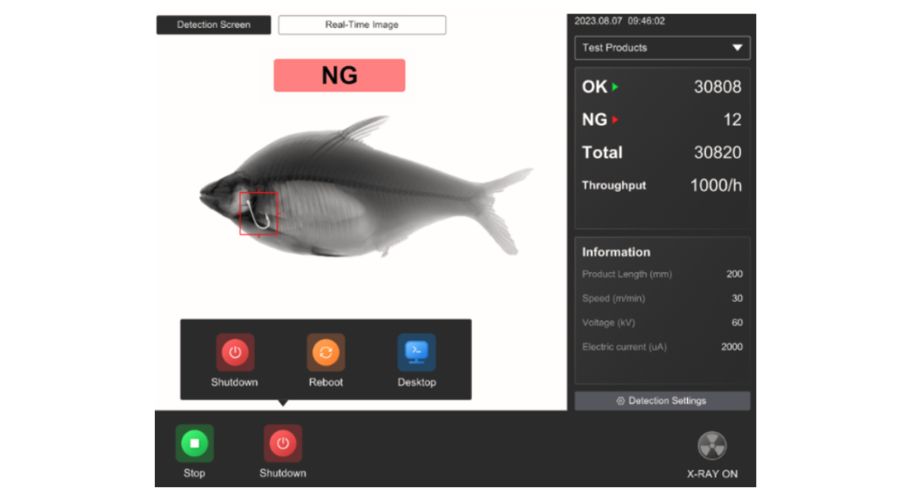
Artificial intelligence has significantly enhanced this capability. Modern systems employ machine learning algorithms—trained on thousands of images—to distinguish between genuine contaminants and harmless anatomical variations. AI does not suffer from fatigue, distraction, or a decline in standards over time; it evaluates every product against the same rigorous criteria, every single time.
For processors of salmon, trout, tilapia, and countless other fish species, this technology transforms what was once a matter of faith into a verifiable certainty. When a package bears the assurance of X-ray inspection, that guarantee is not based on statistical probability or visual sampling, but rather on the actual inspection of that specific product—an inspection capable of discerning nuances invisible to the human eye.
Practical Value: Far Beyond Mere "Seeing"
The advantages of X-ray inspection technology in seafood processing extend far beyond simple detection.
Comprehensive Product Inspection. Modern X-ray inspection equipment for fish bones can inspect every single product on the production line. This ensures that aquatic product processing operations achieve 100% inspection coverage, rather than relying on random sampling. This comprehensive inspection capability significantly reduces the risk of processors missing fish bones in their seafood products.
High-Speed Industrial Performance. Seafood production lines typically process thousands of products per hour. Advanced X-ray inspection systems are capable of keeping pace with such high speeds while maintaining exceptional detection accuracy. This means that businesses can enhance safety standards without sacrificing production efficiency.
Detection of Other Contaminants. In addition to fish bones, aquatic product processing X-ray machine used in seafood processing can detect other foreign objects, such as metal fragments, glass shards, shell fragments, stones, and more. By simultaneously detecting multiple types of contaminants, X-ray inspection enhances the overall safety of aquatic product processing operations.
Enhanced Brand Protection. Employing X-ray inspection machine for fish bone to detect fish bones demonstrates a company’s unwavering commitment to food safety. Consumers and retailers increasingly expect manufacturers to utilize advanced inspection technologies. By adopting X-ray inspection, seafood companies can build trust and bolster their brand reputation.
Reduced Recall Risk. Product recalls are costly and highly damaging. By utilizing X-ray inspection technology to mitigate the risk of fish bones in seafood, businesses can significantly reduce the likelihood of safety-related incidents occurring.
Future Trends in Seafood Processing Inspection
Driven by technological advancements, X-ray inspection systems are continuously evolving. The new generation of X-ray inspection machine for fish bone designed for detecting fish bones integrates artificial intelligence and deep learning algorithms. These systems are capable of identifying bone patterns with greater precision and adapting to various fish species. Furthermore, modern X-ray inspection machines for seafood processing feature more compact and hygienic designs, making them easier to integrate into existing seafood production lines.
As these innovative technologies advance, the global seafood industry’s capacity to mitigate the risk of fish bones in seafood products will continue to improve.
Conclusion
The seafood industry faces a long-standing challenge: ensuring that “boneless” products truly live up to their name. In large-scale seafood processing environments, traditional inspection methods are unable to fully address this issue. Manual inspection, tactile examination, and sampling techniques all suffer from inherent limitations. The application of X-ray inspection technology marks a trans formative step forward for the industry.
Modern X-ray fish bone detection systems provide reliable, automated inspection capabilities, enabling seafood producers to mitigate the risk of bones in their products while maintaining high production efficiency. By integrating X-ray inspection systems into their processing workflows, companies can enhance product safety, safeguard their brand reputation, and deliver a superior experience to consumers.
As the seafood industry continues to modernize, X-ray inspection will play an increasingly vital role in ensuring that seafood processing becomes safer, smarter, and more reliable.
FAQ
X-ray inspection can detect tiny fish bones that traditional manual inspection methods might miss, thereby helping producers mitigate the risk of bones in seafood products. This contributes to enhanced product safety and a reduced risk of product recalls.
Modern systems equipped with dual-energy technology and high-resolution detectors can reliably identify bone fragments as small as 0.5 mm under optimal conditions. Detection sensitivity depends on various factors, including product thickness, bone orientation, and the density contrast between the bone and the surrounding tissue.
Yes. X-ray inspection machines designed for seafood processing can detect a variety of foreign objects—such as metal, glass, shell fragments, and stones—during the processing stage, thereby enhancing overall food safety.