
Introduction: Food Safety Is Increasingly Important in Modern Food Manufacturing
In the fast-paced operation of modern food production facilities, the human eye is not a reliable guardian. Despite brands’ pride in quality, the reality of high-speed production lines (processing thousands of products per minute) is that contamination often occurs within milliseconds. Stainless steel fragments from mixer blades, glass shards from broken cans, or high-density plastic fragments from packaging can all end up in the final product. In the past, manufacturers relied on manual visual inspection and metal detectors to mitigate these risks. However, with the globalization of supply chains and the increasing complexity of recipes, these methods are no longer sufficient. The solution lies in automation.
Today, X-ray inspection equipment in the food industry has evolved into intelligent guardians, capable of detecting a wide variety of physical contaminants and triggering immediate alarms or rejecting contaminated products without human intervention. The shift from manual inspection to automated X-ray inspection of food is not just about safety; it is a fundamental strategy for reducing labor costs and significantly improving production line efficiency.
Definition of X-ray Inspection Systems in the Food Industry
An x ray inspection equipment is a specialized technology used to detect contaminants, product defects, and structural anomalies in food. These systems use x ray for food penetrate food and generate detailed images that reveal its internal structure.

The x ray inspection of food process allows manufacturers to identify foreign objects that may be hidden in raw materials or packaging. By analyzing density differences, materials such as metal fragments, glass shards, stones, calcified bone, and high-density plastics can be detected.
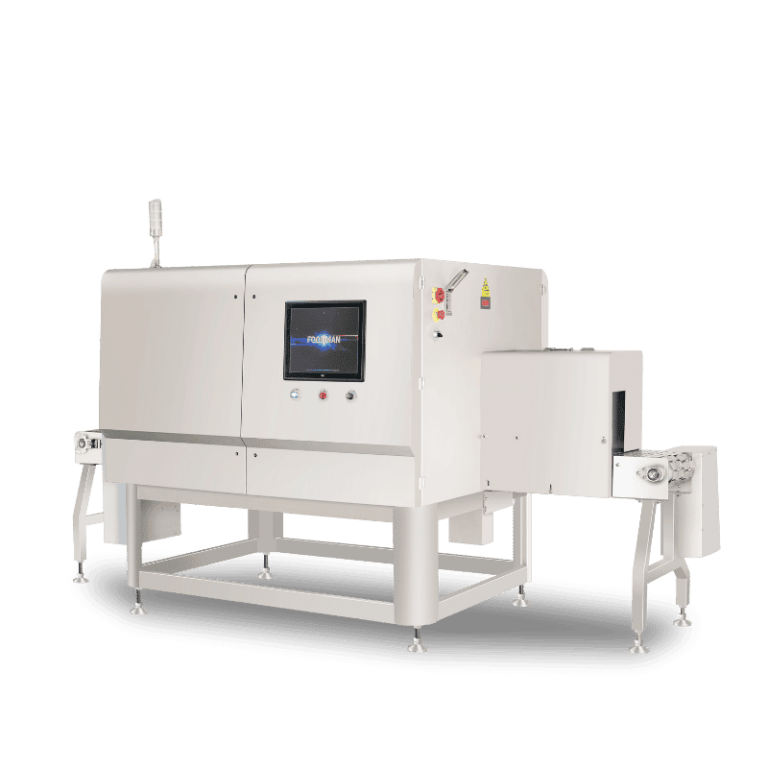
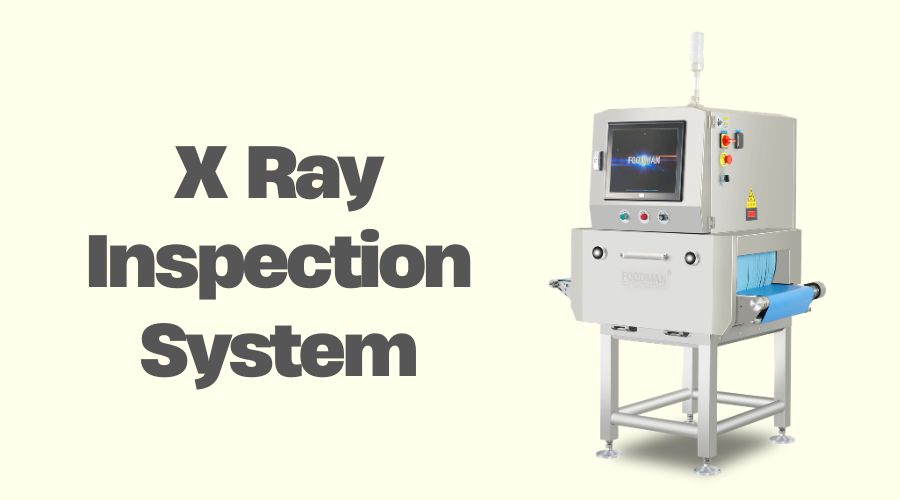
A typical food industry X-ray inspection machine contains multiple components, such as an X-ray generator, a detector system, image processing software, and a rejection mechanism. As food passes through the inspection area, the system acquires and analyzes images in real time.
Modern X-ray inspection equipment can inspect products at extremely high speeds while maintaining precise inspection sensitivity. These systems are widely used in industries such as snack foods, dairy products, baked goods, meat processing, and ready-to-eat foods.
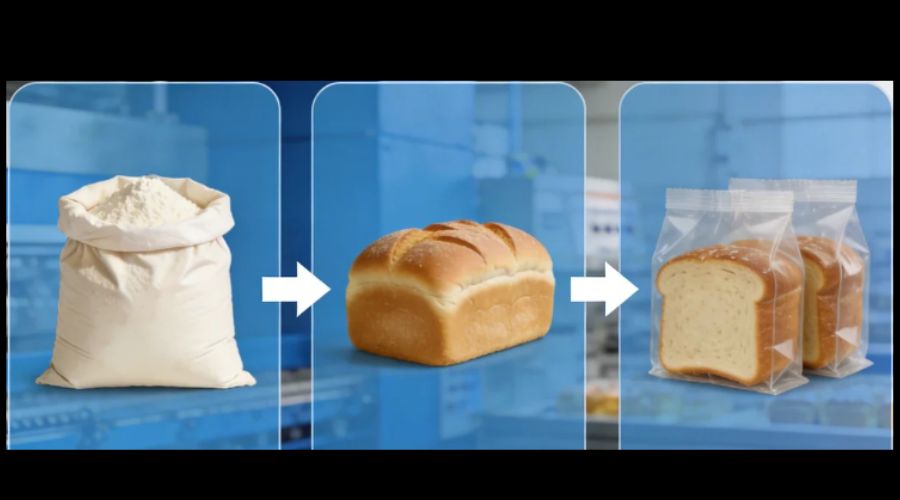
X-ray inspection technology is particularly important for the inspection of packaged food products. Because X-rays can penetrate packaging materials such as plastic, aluminum foil, and cardboard, inspection can be performed without opening the packaging, thus ensuring product integrity while meeting hygiene standards.
The Technical Principle of X-ray Food Inspection
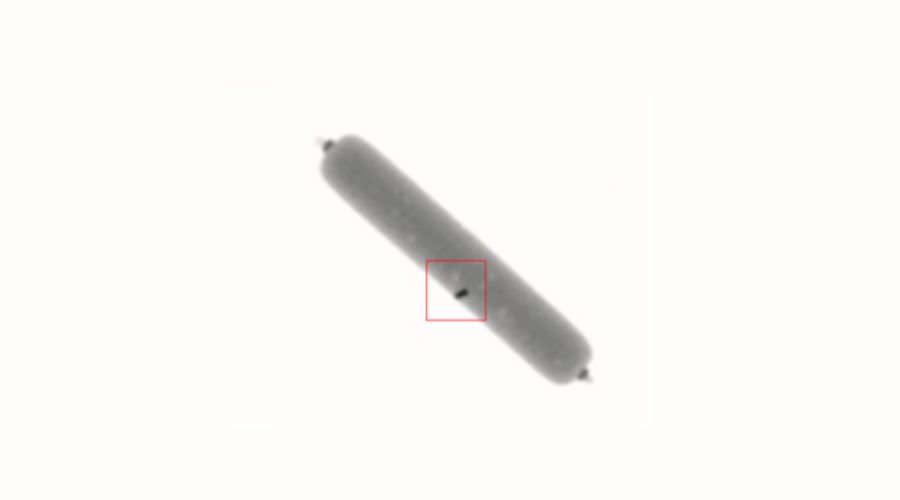
The effectiveness of X-ray inspection equipment is based on differences in material density. When X-rays pass through food, denser materials absorb more radiation than less dense materials. The detector converts this information into grayscale images, thus displaying the density changes.
During food X-ray inspection, contaminants such as metals or glass appear darker in the image because they absorb more X-rays than the surrounding food materials. Advanced image processing software analyzes these images to identify irregular shapes or abnormal density patterns.
Modern food industry X-ray inspection machines can analyze thousands of images per minute, making them ideal for high-speed production lines. The system automatically compares each product image to predefined standards and determines whether the product meets safety requirements.
If the x ray machine food industry detects a contaminant, it can trigger an alarm or activate a rejection device, using methods such as swing arm, pusher, or air blast to rejected the contaminated product. This automated process ensures that unsafe products are immediately separated from qualified products.
Many advanced x ray machine food industry also incorporate other quality control functions. For example, X-ray inspection of food can verify product weight, detect missing items in packaging, and identify damaged or deformed products.
These capabilities make x ray inspection of food system a powerful tool for comprehensive inspection in modern food production environments.
Key Advantages: Automation, High Sensitivity, and Reduced Labor
Automated X-ray inspection offers three major advantages, directly addressing pain points in modern production management.
Significantly Reduced Labor: Traditional quality control typically requires a large number of workers standing at the end of the production line, visually inspecting products or manually scanning. This is tedious, costly, and prone to errors. By deploying X-ray inspection machines in the food industry, manufacturers can automate the entire process. The machine can operate 24/7 without manual intervention and significantly reduces the need for manual sorting stations. This frees up labor from repetitive inspection tasks, allowing them to focus on technical work such as equipment maintenance and process optimization.
Unparalleled Contaminant Detection Capability: Unlike manual inspection, which can only detect surface defects, food X-ray inspection can detect contaminants hidden deep within the product. Whether it’s a pebble in a frozen vegetable block or a shard of glass in a sauce jar, the system ensures that no contaminated product enters the shipping area.
Immediate Response Mechanism: The ability to automatically issue alarms and reject contaminated products constitutes a fault protection mechanism that manual inspection cannot achieve. When production lines are running at high speeds, human operators may miss defects or react too slowly to stop the line in time. However, X-ray systems can react instantly, minimizing waste and preventing large-scale rework.
Comparison with Traditional Metal Detectors
For many years, metal detectors have been the primary technology for identifying contaminants in food production. While metal detectors are effective at detecting metallic objects, they have some limitations compared to X-ray inspection equipment.
The most obvious difference lies in detection capability. Metal detectors can only detect metallic objects, while x ray machine food industry can identify both metallic and non-metallic contaminants. Materials such as glass or stones cannot be detected by metal detectors, but food-specific X-ray inspection equipment can easily identify them.
Furthermore, metal detectors provide limited product information. X-ray machine food industry however, can analyze the internal structure of a product and identify defects such as missing or broken parts.
Due to these advantages, many food manufacturers now combine metal detectors with X-ray inspection of their food systems to create multi-layered protection strategies. Metal detectors can be used in the early stages of production, while food-specific X-ray inspection equipment performs final inspection before packaging or distribution.
Applications of X-ray Inspection in Food Production Lines
The versatility of X-ray inspection equipment allows it to be used at multiple stages of the food production line.
At the raw material stage, x ray machine for food industry can detect contaminants that may have entered during harvesting or transportation. Early detection prevents contaminated raw materials from entering processing equipment.
During the processing stage, X-ray inspection systems in the food industry monitor products moving on conveyor belts or in pipes. If foreign objects are introduced during production, these systems can detect them immediately.
At the packaging stage, X-ray inspection equipment performs final product inspection. The system checks sealed packaging to ensure it is free of contaminants and meets quality standards.
In high-speed production environments, X-ray inspection in food processing is used in conjunction with automatic rejection devices. When a foreign object is detected, the food industry X-ray inspection system signals the removal of the product containing the foreign object from the production line.
This automated detection and rejection process helps manufacturers maintain high safety standards while keeping production lines running efficiently. Therefore, food industry X-ray inspection systems play a crucial role in balancing safety and production efficiency.
Strengthening Quality Control, Reducing Recalls
The primary goal of any food safety program is to prevent product recalls. Recalls not only cause huge economic losses but also damage consumer trust. Automated X ray inspection of food products is the most effective defense against this. By ensuring that every product is inspected and all rejected contaminated products are documented, manufacturers can establish a verifiable safety record.
This data is crucial for traceability. If a supplier issue is discovered, the X ray system’s logs can pinpoint the time of use of contaminated raw materials and the affected end products. This level of control makes recalls more precise and efficient, rather than large-scale, costly recalls.
Furthermore, automated rejection processes eliminate the “human factor” in safety considerations. A tired night shift inspector might miss a defect; a food industry X ray inspection system would never make such a mistake. This consistency is the cornerstone of modern quality control, ensuring 100% compliance with safety standards at all times.
Conclusion
Food safety remains one of the most pressing concerns for modern food manufacturers. With increasing production line speeds and complexity, traditional inspection methods alone are insufficient to guarantee product safety.
Advanced X ray inspection equipment offers a powerful solution for detecting hidden contaminants and maintaining high quality standards. Precise X ray inspection of food allows manufacturers to identify foreign objects that might otherwise be missed.
Integrating X ray inspection systems into automated production lines enables companies to continuously inspect products without slowing down production. By automatically detecting contaminants and rejecting affected food, dedicated X ray inspection equipment for the food industry helps ensure both food safety and production efficiency.
As technology continues to advance, X ray inspection equipment will become increasingly intelligent and flexible. With improved imaging algorithms and automation capabilities, food X ray inspection will remain a cornerstone of modern food safety strategies.
For manufacturers looking to reduce contamination risks, improve production efficiency, and enhance consumer trust, investing in dedicated X ray inspection equipment for the food industry is a forward-thinking decision that contributes to safe and reliable food production in the future.
Frequently Asked Questions
Modern X ray inspection equipment can detect metal fragments, glass shards, stones, calcified bone, and high-density plastics. These substances are clearly visible during food X-ray inspection due to their density differences.
Yes. X-ray inspection equipment used in the food industry uses extremely low radiation doses that comply with international safety regulations. X-ray inspection technology in the food industry does not affect the quality, taste, or nutritional value of food.
Yes. One of the main advantages of X-ray inspection equipment is its ability to inspect products through sealed packaging. This allows X-ray inspection of food to be performed at the final stage of production.
When a contaminant is detected during food X-ray inspection, the food industry’s X-ray inspection machine sends a signal to an automatic rejection device. The food industry’s X-ray inspection system then rejects the contaminated product from the production line.
X-ray inspection equipment can improve product safety, reduce the need for manual inspection, and help prevent costly recalls. Continuous X-ray inspection of food ensures that every product meets stringent safety and quality standards.