
Introduction
Growing Regulatory Pressure on Food Safety and Contamination Prevention
In today’s food industry, regulatory authorities are increasingly focused on food safety, with stricter requirements to prevent contamination. Manufacturers are expected to implement robust preventive measures, including metal detectors in the food industry, to ensure that products meet global safety standards. Failure to comply with these regulations can lead to serious consequences, including recalls, fines, and reputational damage.
Understanding how a metal detector works is essential for food manufacturers to integrate these systems effectively. Modern metal detectors for food production lines are designed to detect both ferrous and non-ferrous metals, ensuring that even the smallest contaminants are identified before products reach consumers.

The Hidden Costs of Non-Compliance: Recalls, Fines, and Reputation Damage
Non-compliance with food safety regulations can be extremely costly. Recalls not only result in financial loss but also erode consumer trust, potentially causing long-term brand damage. Investing in a reliable metal detector in food industry operations mitigates these risks by providing consistent monitoring for metallic contaminants across production lines.
When manufacturers understand what do metal detectors detect—including iron, aluminum, and stainless steel fragments—they can design production processes that proactively prevent contamination. This knowledge also helps operators identify potential contamination sources, reducing downtime and operational disruption.
How Metal Detection Technology Goes Beyond Compliance to Improve Operational Efficiency
Advanced food industry metal detectors do more than just ensure regulatory compliance—they also improve operational efficiency. By integrating metal detectors for food production lines with automated systems, manufacturers can achieve real-time monitoring, minimize false positives, and reduce production waste.
Knowing how the metal detector works allows operators to optimize sensitivity settings according to different food types, such as wet, dry, or frozen products. This ensures high detection accuracy without slowing down the production process. Manufacturers can also use insights from these systems to maintain continuous quality control, supporting both food safety and overall operational productivity.
Understanding Metal Contamination Risks
Internal vs. External Sources of Metal Contamination
Metal contamination in the food industry can originate from both internal and external sources. Internal sources often include machinery wear and tear, broken equipment parts, or fragments from cutting, mixing, or packaging tools. External sources may involve raw materials contaminated during transport or handling.
Understanding how a metal detector works allows manufacturers to identify these risks effectively. By knowing what can a metal detector detect, operators can target high-risk points in the production line and implement metal detectors for food production lines to monitor both internal and external contamination sources. Modern metal detector in food industry applications provide real-time alerts, helping prevent contaminated products from reaching consumers.

High-Risk Food Categories
Certain food categories are particularly vulnerable to metal contamination due to their processing methods. These include:
Processed meats: Grinding, slicing, and mixing equipment can introduce metal fragments.
Bakery products: Metal particles from mixers, cutters, and conveyors may contaminate dough or finished goods.
Dairy products: Equipment such as homogenizers or packaging lines can be sources of metallic debris.
Ready-to-eat meals: Complex processing steps and multi-component assembly increase contamination risks.
Deploying food industry metal detectors at critical control points ensures that these high-risk foods are scanned effectively. Understanding what do metal detectors detect—including ferrous, non-ferrous, and stainless steel fragments—helps food manufacturers optimize safety protocols while maintaining production efficiency.
Consequences of Undetected Metal Contamination
Failing to detect metal contaminants can have serious consequences for both consumers and manufacturers:
Consumer safety: Undetected metal fragments can cause injury, illness, or allergic reactions, undermining consumer confidence in the brand.
Financial loss: Recalls, product replacements, and legal settlements can result in significant monetary losses.
Legal liability: Regulatory authorities may impose fines, sanctions, or production halts if food safety standards are not met.
By leveraging advanced metal detectors for food production lines and integrating AI-assisted detection systems, manufacturers can minimize the risk of undetected metal contaminants. Knowing how the metal detector works allows operators to adjust sensitivity based on product type, packaging, and processing conditions, ensuring comprehensive protection for both consumers and brands.
Operational Integration of Metal Detection Systems
Placement of Metal Detectors Across Production Lines for Maximum Coverage
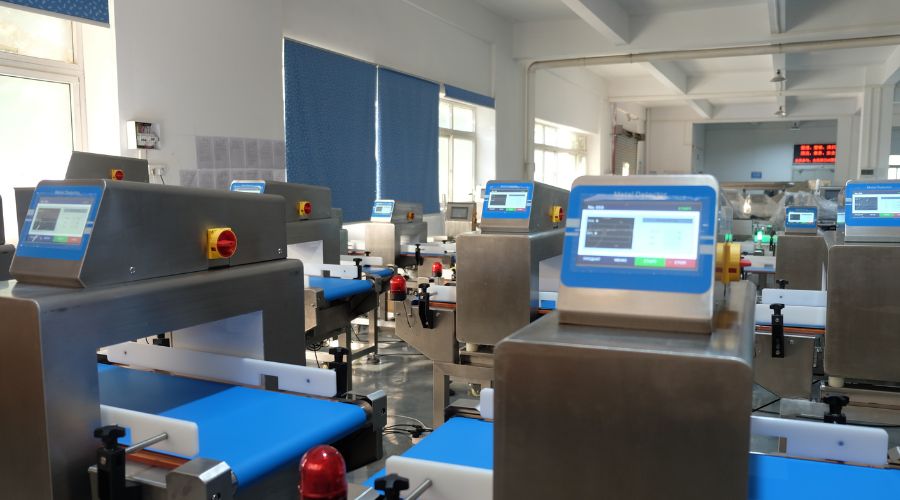
Strategic placement of metal detectors in food industry production lines is critical for achieving comprehensive contaminant detection. High-risk points such as raw material intake, post-grinding or mixing stations, packaging lines, and final product discharge areas are ideal locations for food industry metal detectors.
Understanding how the metal detector works and how a metal detector works in different food matrices allows operators to optimize detector placement. Proper positioning ensures that both metallic and non-metallic contaminants are identified before products reach consumers, enhancing overall food safety.
Combining Metal Detection with Inline Quality Control Processes
Integrating metal detectors for food production lines with existing inline quality control systems significantly strengthens contaminant prevention. By combining X-ray inspections, weight checks, and visual verification, manufacturers can create a multi-layered safety net that minimizes the risk of undetected foreign objects.
Knowing what can a metal detector detect and what do metal detectors detect enables operators to tailor detection sensitivity to product type, packaging material, and processing conditions. This integration ensures that contaminated products are identified in real-time, supporting operational efficiency and regulatory compliance.
Role of Real-Time Monitoring and Automated Alerts in Proactive Risk Management
Modern metal detectors in food industry are often equipped with real-time monitoring and automated alert systems. These features allow operators to respond immediately to contamination events, reducing potential consumer risk and production losses.
Understanding how a metal detector works with real-time feedback systems helps food manufacturers implement proactive risk management strategies. Automated alerts, integrated with production line control systems, ensure swift removal of contaminated items while maintaining high-speed throughput.
By combining advanced metal detection technology, AI-assisted detection, and inline quality control processes, food manufacturers can achieve a robust safety culture that not only meets but exceeds regulatory requirements. This approach maximizes operational efficiency, minimizes recalls, and reinforces consumer trust in food safety.
Advanced Features Enhancing Regulatory Compliance
Sensitivity Adjustments for Different Food Matrices
Modern metal detectors in food industry are designed to handle a variety of food matrices, including wet, dry, frozen, or coated products. Understanding how a metal detector works in different conditions is essential for accurately detecting contaminants without triggering false positives due to the “product effect.”
Advanced food industry metal detectors allow sensitivity adjustments, enabling operators to fine-tune detection thresholds for each product type. By knowing what a metal detector can detect and what do metal detectors detect, manufacturers can ensure that high-risk foods, such as processed meats, bakery items, and ready-to-eat meals, are thoroughly inspected while maintaining production efficiency.
Adaptive Metal Detection: Distinguishing Product Effect from Actual Contaminants
One of the most critical challenges in metal detection for food production lines is differentiating between natural product characteristics and true foreign objects. Adaptive metal detection technology uses advanced signal processing to identify and compensate for product effect, ensuring that metal detector in food industry scans do not misclassify ingredients as contaminants.
By understanding how does a metal detector work with adaptive technology, food manufacturers can maintain high detection accuracy while minimizing false rejections. This capability is particularly important for complex or high-moisture foods where traditional metal detection might struggle.
Data Logging and Audit Trails for Regulatory Inspections
Regulatory compliance requires detailed records of contamination prevention processes. Modern metal detectors for food production line applications come equipped with data logging and audit trail functionalities, allowing manufacturers to document inspection results for regulatory audits.
By integrating X-ray inspection systems or complementary quality control tools with metal detector in food industry data, companies can generate comprehensive compliance reports. These records demonstrate adherence to food safety standards and can streamline inspections from authorities, reducing risk of fines, recalls, or legal penalties.
Remote Diagnostics and Cloud-Based Compliance Reporting
Advanced food industry metal detectors now offer remote diagnostics and cloud-based reporting features. Understanding how the metal detector works with connected systems enables manufacturers to monitor production lines, identify potential issues, and ensure regulatory compliance in real-time, even across multiple facilities.
Cloud-based systems can automatically flag anomalies, track maintenance schedules, and provide instant access to metal detector for food production line performance data. This combination of real-time monitoring, adaptive metal detection, and centralized reporting ensures that food manufacturers maintain the highest food safety standards while improving operational efficiency.
Cost-Benefit Perspective of Metal Detection
Reducing Recall Costs and Liability Exposure
Investing in advanced metal detectors in food industry provides a clear return by significantly reducing the risk of costly product recalls and potential legal liabilities. Undetected metal contaminants can lead to consumer injuries, brand damage, and regulatory fines, all of which can be mitigated by understanding how a metal detector works and implementing food industry metal detectors effectively across production lines.
By knowing what do metal detectors detect and what can a metal detector detect, manufacturers can proactively identify foreign objects such as metal fragments, wires, or staples before products leave the facility. Proper placement of metal detector for food production line systems ensures that high-risk products, including ready-to-eat meals, bakery goods, and processed meats, are thoroughly inspected, safeguarding both food safety and brand reputation.
Optimizing Production Efficiency While Maintaining Compliance
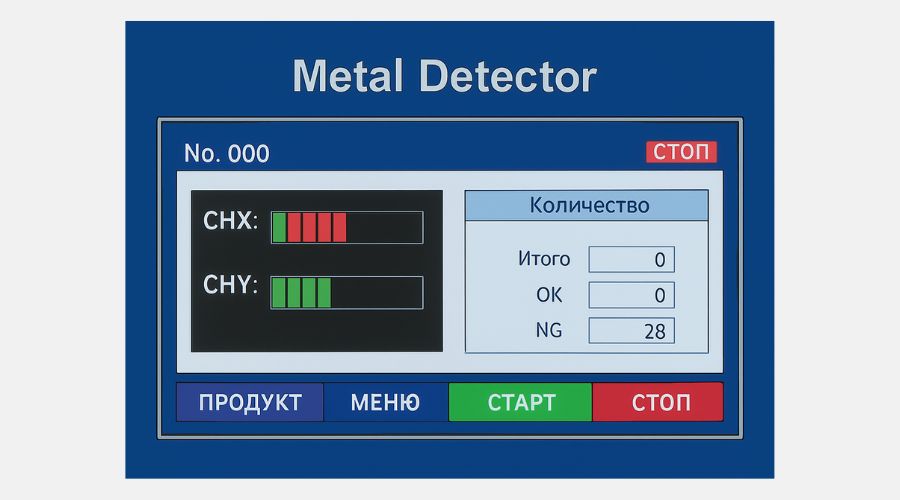
Modern metal detector in food industry systems are designed to operate at high speeds without interrupting production flow. Understanding how the metal detector works allows operators to calibrate sensitivity settings for different product types, reducing false positives and minimizing unnecessary stoppages.
High-performance food industry metal detectors integrated with automated rejection mechanisms help maintain operational efficiency while ensuring that contaminated products are removed immediately. By combining real-time monitoring with precise detection technology, manufacturers can achieve both compliance and throughput goals simultaneously. Knowledge of how does a metal detector work also allows operators to maximize uptime and reduce production bottlenecks caused by manual inspection or false alarms.
Supporting Sustainable Practices by Minimizing Food Waste from False Positives
False positives from poorly calibrated or outdated metal detection systems can result in unnecessary food waste, undermining sustainability initiatives. Using advanced metal detectors for food production line, with AI-assisted detection and adaptive sensitivity, allows manufacturers to differentiate harmless product characteristics from actual contaminants.
By understanding how a metal detector works with adaptive technology, manufacturers not only protect food safety but also minimize waste from rejected products. This supports sustainable practices by conserving raw materials, reducing packaging disposal, and optimizing energy use across production lines. Furthermore, accurate metal detectors in food industry reduce the environmental and financial costs associated with recalls, rework, or disposal of safe but erroneously rejected items.
Integration with Other Inspection Technologies
Complementing Metal Detection with X-Ray Inspection, Vision Systems, and Weight Checks
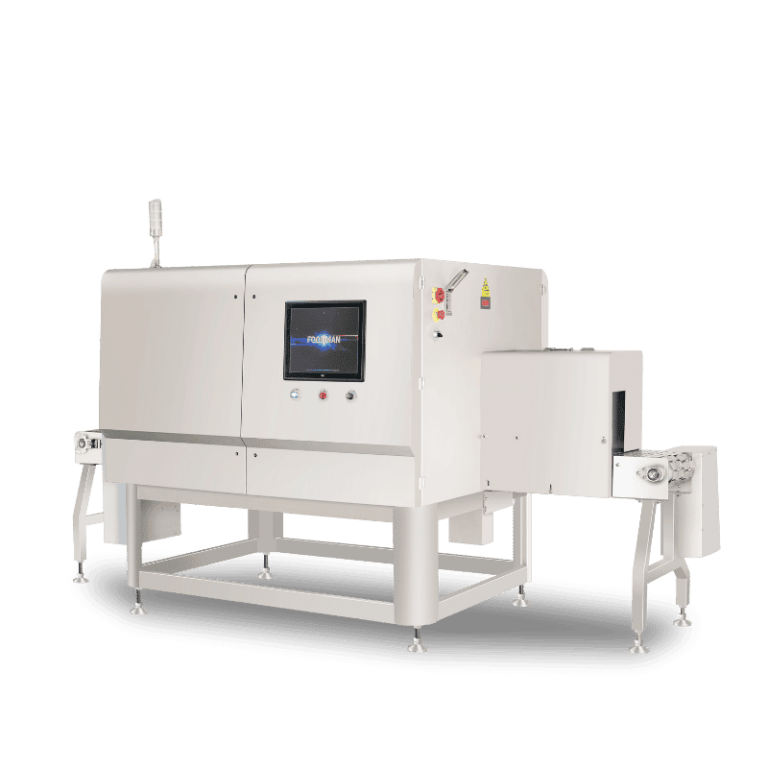
While food industry metal detectors are essential for identifying metallic contaminants, combining them with other inspection technologies significantly enhances overall food safety. Understanding how a metal detector works allows manufacturers to integrate metal detector for food production line systems with X-Ray inspection machines, vision inspection systems, and automated checkweighers to create a multi-layered quality control strategy.
By knowing what can a metal detector detect and what do metal detectors detect, operators can ensure that metallic fragments are caught, while X-Ray inspection systems handle non-metallic contaminants such as glass, stones, or dense plastics. Vision systems can further verify packaging integrity, labels, and fill levels, and weight checks ensure compliance with product specifications, collectively supporting a robust metal detector in food industry program.
Multi-Layered Contamination Control Strategy
An integrated approach to contamination control leverages the strengths of each inspection technology. Metal detectors in food industry provide primary screening for metallic objects, while X-Ray inspection machines detect dense, non-metallic contaminants. Vision systems verify product appearance and packaging, and weight verification ensures proper fill levels.
Manufacturers who understand how the metal detector works can strategically place these systems along production lines, reducing the likelihood of any contaminants reaching consumers. This multi-layered inspection process strengthens food safety, minimizes recalls, and maintains regulatory compliance, all while optimizing production efficiency and reducing unnecessary waste.
Real-Life Examples of Integrated Inspection Systems Enhancing Food Safety
In practice, many leading food manufacturers have successfully implemented integrated inspection systems combining metal detector for food production line technology, X-Ray inspection equipment, vision systems, and automated weight checks. For example:
A bakery uses metal detectors in food industry to detect wire fragments from machinery, paired with X-Ray inspection systems to identify stones or glass in flour-based products.
Beverage producers employ metal detector for food production line systems alongside vision checks to verify bottle caps, labels, and fill levels, ensuring both product integrity and food safety compliance.
Snack manufacturers integrate metal detector in food industry technology with X-Ray inspection machines and checkweighers to maintain high-speed production while minimizing false positives and waste.
These integrated strategies demonstrate how understanding how does a metal detector work and combining it with complementary inspection technologies can effectively protect consumers, safeguard brand reputation, and meet stringent regulatory standards.
Future Trends in Metal Detection for Regulatory Compliance
AI-Assisted Detection for Smarter Contaminant Identification
The next generation of food industry metal detectors is increasingly integrating AI-assisted detection to improve accuracy in identifying contaminants. Understanding how a metal detector works in conjunction with AI allows operators to distinguish between harmless product variations and true metallic foreign objects. By analyzing patterns in real-time, manufacturers can minimize false positives and optimize food safety across complex production lines. Knowing what do metal detectors detect and what can a metal detector detect helps operators implement smarter inspection strategies, ensuring every item meets regulatory standards.
Predictive Maintenance and Self-Calibrating Metal Detectors
Emerging metal detector in food industry technology includes predictive maintenance features and self-calibrating systems. These advanced metal detectors for food production line automatically adjust sensitivity based on the product matrix, whether wet, dry, frozen, or coated. By understanding how the metal detector works in these adaptive systems, manufacturers can prevent downtime, reduce manual intervention, and maintain consistent food safety compliance without slowing high-speed production lines.
Real-Time Data Analytics for Compliance Forecasting
Modern inspection systems now provide real-time data analytics, enabling proactive compliance forecasting. Food industry metal detectors integrated with data logging can track trends in contamination detection, helping manufacturers anticipate potential risks. By analyzing how a metal detector works and what can a metal detector detect, operators can make data-driven decisions, improve quality assurance, and prepare for audits more efficiently. This ensures not only immediate food safety but also long-term regulatory adherence.
The Role of IoT and Connected Devices in Automated Regulatory Reporting
IoT-enabled metal detectors in food industry are transforming regulatory reporting. Connected devices can automatically record inspections, generate audit trails, and send compliance reports to centralized systems. By understanding how does a metal detector work in a networked environment, manufacturers can automate documentation, reduce human error, and streamline food safety compliance. Integration with other inspection technologies, such as X-Ray inspection machines and vision systems, allows for a multi-layered contamination control approach, enhancing overall operational efficiency and regulatory confidence.
Conclusion
Metal Detection as a Strategic Tool for Compliance, Safety, and Operational Excellence
Metal detectors in food industry operations are no longer just a regulatory requirement—they are strategic tools for ensuring food safety, operational efficiency, and compliance excellence. Understanding how a metal detector works and how the metal detector works enables manufacturers to accurately identify hazards, whether metallic fragments or hidden contaminants, across diverse product types. By leveraging food industry metal detectors and metal detector for food production line solutions, companies can safeguard consumers, minimize recalls, and enhance overall production reliability.

Encouragement for Manufacturers to Adopt Advanced Metal Detection Technologies
Modern metal detector in food industry technology offers advanced features such as AI-assisted detection, self-calibration, and real-time monitoring. Knowing what do metal detectors detect and what can a metal detector detect empowers manufacturers to implement robust inspection protocols. Adoption of these advanced metal detectors for food production line systems ensures that both high-speed and complex production lines maintain consistent quality control and regulatory compliance while protecting food safety.
Combining Compliance, Efficiency, and Consumer Trust Through Proactive Contamination Control
Proactive contamination control, using integrated food industry metal detectors alongside complementary technologies like X-Ray inspection machines and vision systems, strengthens the entire safety ecosystem. By understanding how does a metal detector work in combination with automated reporting and audit trails, manufacturers can maintain efficiency, reduce operational risks, and foster consumer trust. Advanced metal detector in food industry solutions allow companies to balance compliance, production efficiency, and brand reputation, demonstrating that investment in cutting-edge metal detection is both a safety imperative and a strategic advantage.
FAQ
Q1: How the metal detector works with AI-assisted systems?
A1: AI-assisted metal detectors for food production line use algorithms to differentiate between natural product variations and true contaminants, reducing false positives and waste.
Q2: Can metal detectors integrate with other inspection technologies?
A2: Yes. Metal detectors can be combined with X-Ray inspection machines, vision systems, and checkweighers to create multi-layered contamination control, enhancing both food safety and operational efficiency.
Q3: How do metal detectors support sustainability in food production?
A3: By minimizing false positives and avoiding unnecessary rejection of safe products, metal detectors in food industry help reduce food waste and conserve raw materials.