
Introduce
In the modern food industry, consumers’ demands for food safety are constantly increasing. Even a tiny metal shard or a minute piece of glass can trigger serious food safety incidents and inflict devastating damage to a company’s reputation. Statistics show that product recalls due to foreign object contamination in food cost billions of dollars globally every year. Against this backdrop, food production lines need a “Keen-Eyed Guardian” capable of penetrating packaging and detecting hidden hazards.
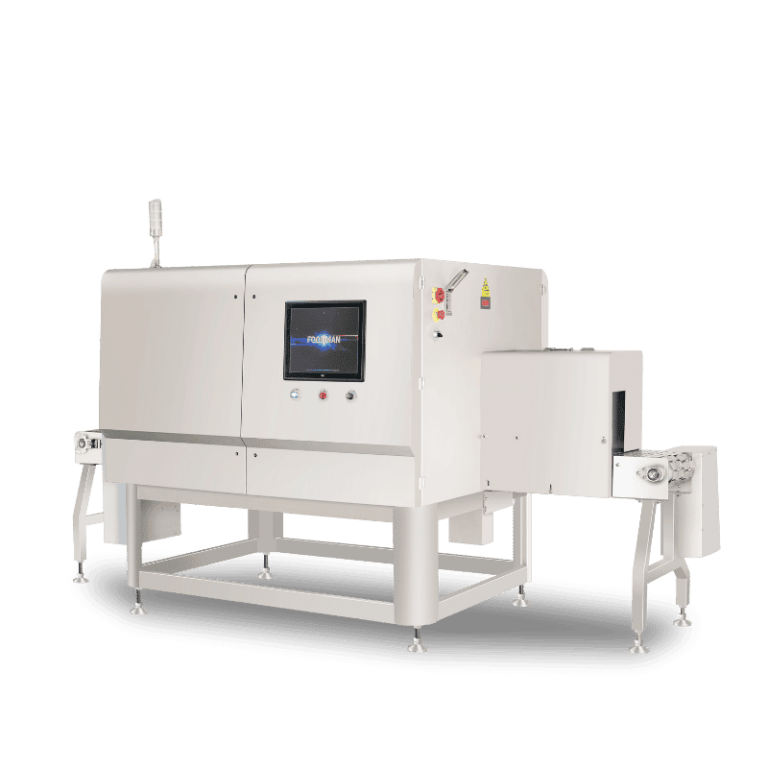
Food x ray inspection equipment has emerged as a revolutionary tool for ensuring food safety. This technology not only penetrates food packaging to observe the internal contents directly but also accurately identifies various potential contaminants, enabling a shift in quality control from “reactive measures” to “proactive prevention.” This article will delve into how X-ray Inspection Systems act as “guardians” on food production lines, revealing their working principles, detection capabilities, and outstanding performance in the food industry.
What is an X-ray Inspection System?
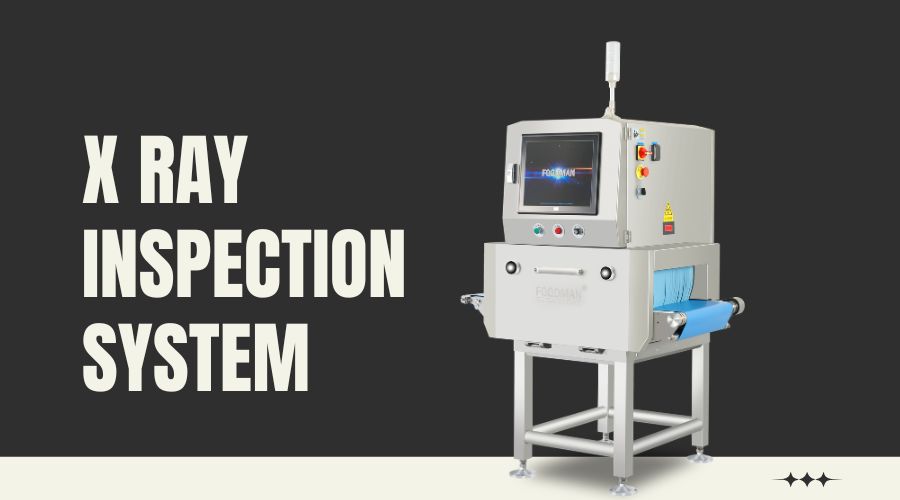
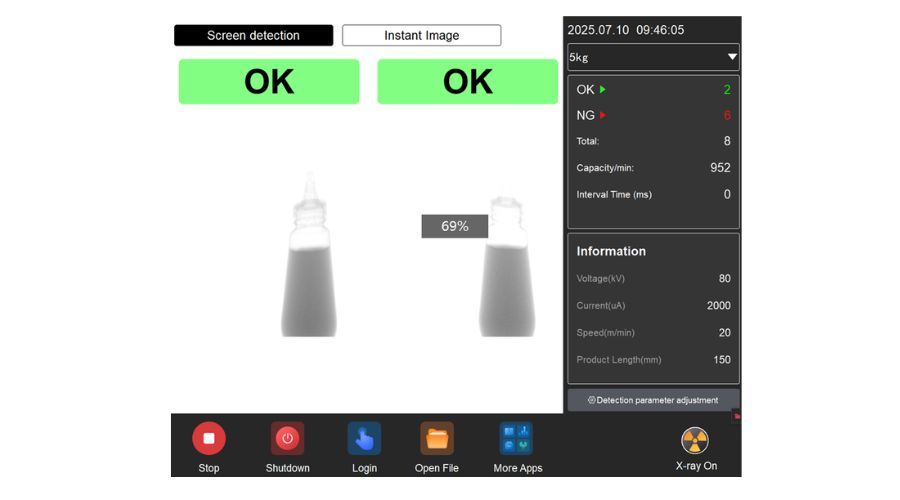
An X-ray Food Inspection Equipment is like an intelligent security guard with X-ray vision. It uses a technology different from other detection equipment. Based on the principle of X-ray penetration, the item to be inspected is irradiated with X-rays. Different materials inside the item will “block” the X-rays to varying degrees. Different densities within the product lead to different absorption levels. Denser materials, such as metal or bone, absorb more X-rays and appear darker in the X-ray image, allowing the system to detect contaminants and rejected products containing foreign objects through sound and indicate or other means.
What can X-ray Inspection Systems do?
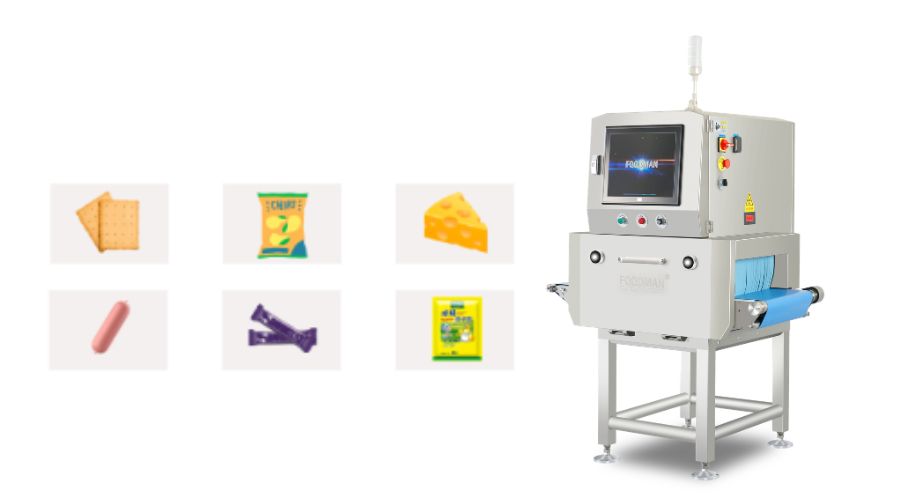
Utilizing the penetrating power of X-rays, they can detect a wide range of foreign objects, from hard foreign objects such as bones and plastics to various metal foreign objects, with higher sensitivity and stability, helping you more effectively improve product quality. They can detect foreign objects in food (such as various meat products, aquatic products, fruits and vegetables, additives, milk powder, chocolate, etc.), including metal, glass, ceramics, stones, bones, and plastics; they can also identify product defects, such as packaging cracks, bubbles, and content deficiencies; achieving complete finished product inspection. Widely used in the food industry, pharmaceutical industry, textile industry, integrated circuit boards, and other industries. For quality control in the food industry, it meets HACCP and IFS certification requirements, identifying product defects such as product damage, deformation, or missing components, and eliminating potential product quality problems.
In addition to foreign object detection, modern Food X-ray Equipment also offers a range of value-added functions:
Product quality integrity verification: checking whether the packaging is intact, without damage or poor sealing.
Missing component detection: for example, checking whether the seasoning packet is missing in snack packaging, or whether all products are present in a gift box.
Morphological detection: identifying deformed, broken, or undersized products.
Foodman’s newly developed fat analysis X-ray Inspection System can measure meat fat content in real time, integrate foreign object detection and weighing functions, improve meat quality, and reduce costs.
Real-world industry application cases
Meat and Poultry Processing Industry
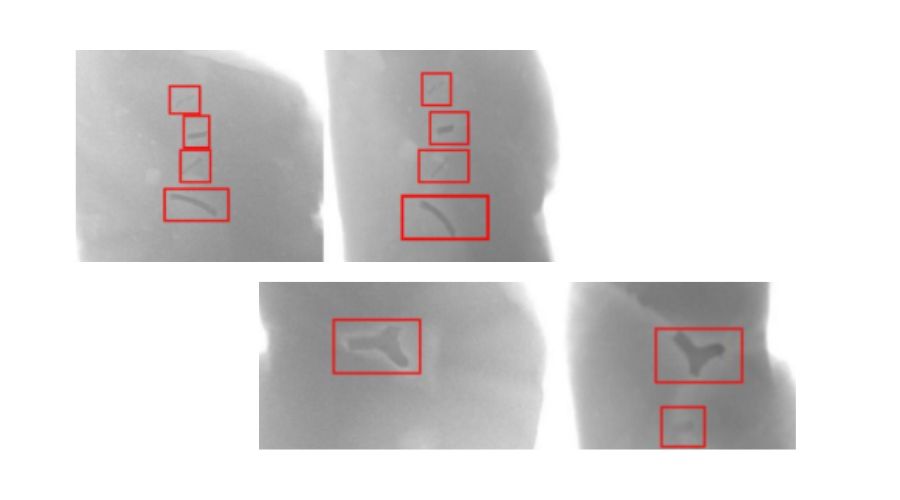
The most common safety risk in poultry products is the presence of bone fragments. Especially in products like boneless chicken and chicken pieces, residual bone fragments, cartilage, or bone marrow can cause harm to consumers. Food X ray Machine can sensitivity identify these calcified tissues, even detecting tiny bone splinters embedded in the meat. A typical case involves an international poultry processing company that reduced bone fragment contamination complaints by 95% after installing an X ray Food Inspection.
Seafood Processing
Foreign object risks in seafood products mainly come from fish and shellfish processing.
Fish bones are the main problem, especially small bones remaining after mechanical deboning. X-rays can clearly show the internal structure of the fish meat, even identifying translucent cartilage. In addition, contaminants such as fishing hooks and metal fragments can also be detected. Shellfish products such as clams and oysters may contain shell fragments or sand. X-ray Inspection Systems can distinguish these foreign objects from the shellfish meat based on density differences.
Beverage Industry
X-ray Inspection Systems can detect suspended particles in liquids, defects in glass bottles themselves (such as cracks in the bottle neck), and whether the filling level is correct. A carbonated beverage manufacturer used X-rays for both foreign object detection and filling level control, increasing the efficiency of its quality control by 40%.
Why choose Foodmanvision?
Foodmanvision’s X-ray foreign object detection system meets the requirements of certifications such as HACCP and IFS. It is a high-speed, high-sensitivity, and highly stable device with unique image analysis technology, ensuring safety and reliability. With X-ray leakage below 1μSv/h, it complies with FDA and CE standards. Foodmanvision has helped hundreds of food companies solve their food safety challenges. We understand that food safety is not just about avoiding fines, but also about protecting your brand and your customers.
Conclusion
X-ray Food Inspection System has become an indispensable quality control tool in modern food production lines, truly providing “transparent” assurance of food safety. From its initial simple metal detection capabilities to today’s intelligent systems capable of identifying multiple foreign objects and performing multiple quality control tasks simultaneously, the X-ray Inspection System has undergone significant advancements.
In an era where consumers have “zero tolerance” for food safety issues, food companies investing in advanced X-ray Inspection Systems are not only responding to regulatory requirements but also demonstrating a responsible attitude towards their brand and consumer health. Professional suppliers like FoodMan, through continuous technological innovation and industry focus, provide reliable, efficient, and intelligent solutions for food companies.
In the future, with the further integration of artificial intelligence, the Internet of Things, and big data technologies, X-ray inspection systems will become even more intelligent and networked. They will not only detect foreign objects but also provide data support for optimizing production processes, becoming a key component of the intelligent food manufacturing ecosystem. This “all-seeing eye” on the food production line will become sharper and more intelligent, continuously safeguarding the safety of the global food supply chain.
FAQ
A: Legitimate industrial X-ray Inspection Systems employ multiple safety designs, with radiation strictly contained within the equipment. The equipment casing uses protective materials such as lead plates to ensure that external radiation levels are far below international safety standards (usually lower than natural background radiation). Operators do not require special protection, and the equipment installation area typically does not need to be designated as a radiation control zone.
A: No. X-ray inspection is a non-ionizing radiation process that does not alter the molecular structure of food, does not produce residual radioactivity, and does not affect the taste, nutritional value, or shelf life of food. The Codex Alimentarius Commission and regulatory agencies in various countries have confirmed the safety of X-ray inspection in the food industry.
A:Look for a supplier with food industry experience. Foodman offers certified machines, training, service support, and good customer reviews.