
Introduction
Importance of Reliable Metal Detection in Food Production Lines
Reliable metal detection is a critical component of modern food production, ensuring food safety and protecting consumers from potential harm. Food industry metal detectors are widely used to identify contaminants such as ferrous, non-ferrous, and stainless-steel particles in packaged and unpackaged products. Understanding how a metal detector works in real production scenarios allows manufacturers to maintain consistent inspection accuracy while avoiding costly recalls or regulatory issues.
A high-performance metal detector for food production line not only prevents contaminated products from reaching the market but also minimizes false rejects, supporting production efficiency and reducing operational waste. By investing in robust metal detector in food industry systems, food manufacturers can achieve both safety compliance and operational reliability.
How Environmental Factors Can Interfere with Detection Accuracy
Environmental conditions can significantly impact how does a metal detector work on production lines. Temperature fluctuations, humidity, vibration, and electromagnetic interference can all alter the detector’s sensitivity and signal processing, affecting what do metal detectors detect.
For example, high moisture content in a product caused by ambient humidity may produce “product effect” signals that mimic metallic contaminants, while vibrations from nearby machinery can misalign products, reducing detection accuracy. Even subtle electrical noise from other equipment can distort the electromagnetic field, influencing what can a metal detector detect.
By understanding the interaction between environmental factors and detector performance, operators can implement calibration adjustments, shielding, or multi-frequency detection technologies to maintain reliable inspection. This ensures that metal detector for food production line systems function effectively under varying production conditions.
The Impact of Environmental Challenges on Food Safety, Productivity, And Compliance
Environmental challenges in food production lines have direct implications for food safety, regulatory compliance, and operational efficiency. Missed contaminants due to interference can lead to recalls, consumer safety risks, and damage to brand reputation. Conversely, false rejects caused by environmental variability increase product waste and slow down line throughput.
Properly configured metal detector in food industry systems, combined with environmental monitoring, allow manufacturers to maintain consistent detection accuracy. Operators can adjust sensitivity based on product type, packaging, and line conditions to ensure what do metal detectors detect aligns with actual contamination risks.
Ultimately, understanding how the metal detector works in the context of environmental stressors helps food producers optimize line performance, maintain compliance with HACCP and GFSI standards, and safeguard both consumer trust and production efficiency. Integrating this knowledge into daily operational protocols is essential for maximizing the reliability of food industry metal detectors and ensuring that metal detector for food production line investments deliver long-term value.
Common Environmental Challenges
Temperature Fluctuations: Effect on Product Properties and Detector Sensitivity
Temperature fluctuations can significantly influence how a metal detector works in food production lines. Changes in ambient or product temperature can alter product density, moisture content, and packaging behavior, which in turn affects what do metal detectors detect.
For example, chilled or frozen products may conduct differently than room-temperature items, creating variable “product effect” signals that can mask metallic contaminants. Similarly, high heat may affect conveyor belt tension or electronic components in the metal detector for food production line, slightly shifting the electromagnetic field and influencing what can a metal detector detect.
Understanding the relationship between temperature and detector performance allows operators to calibrate metal detector in food industry systems proactively, maintaining high detection reliability while ensuring food safety and compliance with regulatory standards.
Humidity and Condensation: Impact on Metal Detector Operation and False Positives
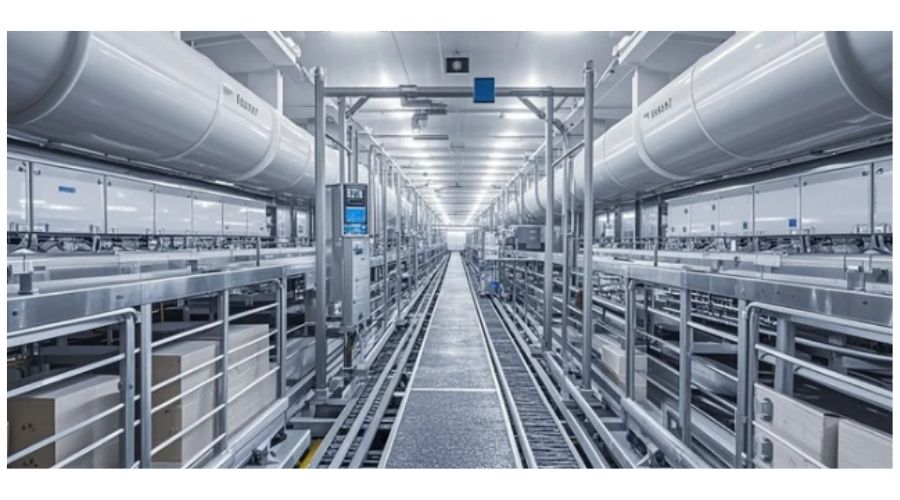
High humidity and condensation pose a major challenge for food industry metal detectors, particularly in wet or chilled environments. Excess moisture can lead to condensation on the product, packaging, or detector coils, which may generate signals that mimic metallic contamination. This increases false positives and disrupts line efficiency.
Knowing how does a metal detector work under these conditions enables manufacturers to implement mitigation strategies, such as climate-controlled enclosures, moisture-resistant coils, or multi-frequency detection technologies. These measures ensure that metal detector for food production line systems maintain consistent sensitivity and accurately identify contaminants, safeguarding food safety without unnecessary product rejection.
Vibrations and Mechanical Instability: Conveyor Movement, Nearby Machinery, And Line Equipment
Vibrations and mechanical instability are common issues in high-speed production lines that can affect how the metal detector works. Conveyor belt misalignment, nearby machinery, or heavy equipment vibrations may shift products as they pass through the detection aperture, affecting what do metal detectors detect.
Even minor misalignment can create inconsistent signal readings, leading to missed contaminants or false rejects. Proper mechanical setup, stable conveyor design, and vibration damping are essential for maintaining the reliability of metal detector in food industry systems. Understanding how a metal detector works in the context of line vibrations allows operators to fine-tune sensitivity, ensuring accurate detection and optimal production efficiency while protecting food safety.
Electrical Noise and Electromagnetic Interference: Sources and Influence on Signal Integrity
Electrical noise and electromagnetic interference (EMI) are critical environmental factors that impact how a metal detector works. Sources may include nearby motors, variable frequency drives, high-voltage lines, or wireless devices, all of which can distort the electromagnetic field used by metal detector for food production line systems.
Interference can reduce sensitivity or trigger false alarms, affecting what can a metal detector detect. Food manufacturers need to understand these risks and implement shielding, grounding, or filter technologies to maintain signal integrity. Advanced food industry metal detectors often incorporate adaptive signal processing and multi-frequency detection to compensate for EMI, ensuring consistent contamination detection and supporting regulatory compliance and food safety standards.
How Environmental Factors Affect Metal Detector Performance
Understanding How a Metal Detector Works Under Ideal Vs. Real-World Conditions
In ideal laboratory settings, how a metal detector works is relatively straightforward: a controlled electromagnetic field detects metallic contaminants as products pass through the detection aperture. However, real-world conditions in food production lines introduce variables that affect what do metal detectors detect.
Factors such as temperature fluctuations, humidity, vibrations, and electromagnetic interference can all alter the detector’s sensitivity. Metal detector in food industry applications must therefore be robust enough to handle these environmental variations. Understanding the difference between ideal and real-world operation is critical for maintaining accurate inspection, ensuring food safety, and minimizing false rejects in high-speed lines.
Product Effect Amplification Due to Environmental Stressors
Environmental stressors can amplify the “product effect,” a phenomenon where the inherent properties of the product mimic a metallic signal. For instance, high moisture, temperature changes, or condensation can strengthen these false signals, making it harder for metal detector for food production line systems to distinguish between actual contaminants and product variation.
Advanced food industry metal detectors with multi-frequency or adaptive signal processing can mitigate amplified product effects. By understanding how the metal detector works in such conditions, operators can adjust calibration and sensitivity to maintain reliable detection, reducing false positives while ensuring that what can a metal detector detect remains accurate.
False Rejects and Missed Detections Caused by Environmental Challenges
Environmental factors directly contribute to detection errors. Vibrations, unstable conveyors, or EMI can cause false rejects by triggering the detector unnecessarily. Conversely, high humidity, temperature variations, or complex packaging may mask small metal fragments, leading to missed detections.
Operators who know how does a metal detector work can implement strategies such as environmental monitoring, shielding, and conveyor stabilization to reduce these errors. Proper setup ensures metal detector in food industry systems maintain consistent sensitivity, helping to safeguard food safety and maintain efficient production throughput.
Examples of Environmental Interference in High-Speed Production Lines
High-speed production lines are particularly susceptible to environmental interference. For example, a frozen food line may experience condensation, causing temporary signal distortion; or a bakery line with nearby mixers and motors may generate EMI, affecting what do metal detectors detect.
Even minor vibrations from packaging machinery can shift products, altering how the metal detector works for irregularly shaped or densely packed items. Real-world case studies show that advanced metal detector for food production line systems with vibration-resistant frames, EMI shielding, and multi-frequency technology can successfully mitigate these challenges, maintaining reliable detection, reducing false rejects, and protecting food safety across diverse production conditions.
Strategies to Mitigate Environmental Impacts
Environmental Control: Temperature, Humidity, And Airflow Management
Managing environmental conditions is a crucial step in ensuring consistent metal detection performance. Temperature fluctuations and high humidity can alter product properties and affect how a metal detector works, leading to false rejects or missed contaminants.
Implementing controlled airflow, climate regulation, and humidity monitoring in production areas helps maintain stable operating conditions for metal detector for food production line systems. By controlling these environmental variables, operators can improve food safety outcomes, ensure that what do metal detectors detect remains accurate, and reduce unnecessary production interruptions caused by environmental stressors.

Conveyor and Machinery Stabilization: Reducing Vibrations and Mechanical Disruptions
Mechanical vibrations from conveyors, nearby machinery, or line equipment can disrupt the electromagnetic field of a metal detector in food industry system, impacting sensitivity and detection accuracy. Even minor instability can affect what can a metal detector detect, especially for small or irregularly shaped products.
Stabilizing conveyors, ensuring proper roller alignment, and isolating sensitive equipment reduce vibrations and mechanical disruptions. Understanding how the metal detector works in these scenarios allows operators to maintain consistent inspection accuracy, minimize false rejects, and support high-speed production lines while maintaining food safety standards.
Shielding and Grounding: Minimizing Electrical Noise and Emi Interference
Electrical noise and electromagnetic interference (EMI) are common in modern food production environments due to motors, drives, and electronic equipment. These interferences can distort signals in food industry metal detectors, causing false positives or missed contaminants.
Proper grounding, EMI shielding, and isolation of the detection system are essential strategies. By knowing how does a metal detector work and how its electromagnetic field interacts with surrounding equipment, manufacturers can ensure reliable detection performance. This protects food safety, maintains system efficiency, and ensures accurate monitoring of what do metal detectors detect under challenging conditions.
Regular Calibration and Dynamic Sensitivity Adjustments for Varying Conditions
Environmental variability requires ongoing calibration and adjustment of metal detector for food production line systems. Temperature, humidity, product composition, and line speed can all influence how the metal detector works, affecting sensitivity and detection thresholds.
By performing regular calibration and dynamic sensitivity adjustments, operators can compensate for environmental changes, ensuring accurate detection of ferrous, non-ferrous, and stainless steel contaminants. Advanced metal detector in food industry systems may include adaptive algorithms and multi-frequency technology to automatically adjust to varying conditions, reducing false rejects and safeguarding food safety without compromising production efficiency.
Conclusion
Summary of Environmental Factors That Can Affect Metal Detection
Environmental conditions play a significant role in the performance of metal detector for food production line systems. Factors such as temperature fluctuations, humidity, condensation, vibrations, and electromagnetic interference can all influence how a metal detector works in real production environments.
These environmental stressors can amplify product effects, distort signals, and lead to false rejects or missed contaminants, impacting food safety and production efficiency. Understanding what do metal detectors detect and how product and line conditions interact is essential for manufacturers aiming to maintain reliable detection and consistent inspection accuracy in high-speed food production lines.
Key Takeaways for Overcoming Challenges While Maintaining Food Safety
To overcome environmental challenges, food manufacturers must implement proactive strategies. Controlling temperature and humidity, stabilizing conveyors, shielding detectors from electrical noise, and performing regular calibration are all critical steps to optimize metal detector in food industry performance.
Advanced features like multi-frequency detection and adaptive signal processing allow metal detector for food production line systems to adjust dynamically to varying environmental conditions. By understanding how does a metal detector work under different scenarios and what can a metal detector detect in complex products, manufacturers can reduce false rejects, avoid missed contaminants, and ensure food safety compliance without compromising production throughput.
Final Recommendations for Implementing Resilient Metal Detector Systems
To build resilient detection systems capable of withstanding environmental variability, manufacturers should:
Choose food industry metal detectors with robust environmental compensation and adaptive sensitivity.
Conduct regular calibration and verification aligned with HACCP and GFSI requirements.
Train staff to understand how the metal detector works, including the effects of product characteristics and environmental factors.
Integrate environmental monitoring tools with the metal detector in food industry system to anticipate and correct potential interference.
By following these best practices, operators can ensure that what do metal detectors detect remains accurate, maintain high food safety standards, and achieve consistent performance even under challenging conditions. Implementing resilient metal detector for food production line systems minimizes production disruptions, protects consumers, and strengthens brand reputation.
FAQ
Q: What are common environmental challenges in food production lines?
A: Key challenges include rapid temperature changes, high humidity, condensation, mechanical vibrations from conveyors or machinery, and electrical noise or EMI that affect metal detector for food production line accuracy.
Q: How can manufacturers mitigate environmental impacts on metal detection?
A: Strategies include controlling temperature and humidity, stabilizing conveyors, grounding and shielding equipment, using multi-frequency detectors, and performing regular calibration to ensure what can a metal detector detect remains accurate.
Q: How do environmental stressors amplify product effects?
A: Moisture, condensation, temperature shifts, and vibrations can enhance the “product effect,” making it harder for food industry metal detectors to distinguish between actual metallic contaminants and normal product variations.