
Introduction
Overview of Metal Detection in Food Production and Its Importance for Food Safety
In modern food production, contamination control is a critical part of ensuring food safety. One of the most effective tools for preventing foreign objects in processed food is the metal detector for food production line. These systems are designed to identify ferrous, non-ferrous, and stainless-steel contaminants, protecting consumers while supporting compliance with HACCP, GFSI, and regulatory standards.
Understanding how a metal detector works is essential for food manufacturers. At a basic level, the system generates an electromagnetic field that interacts with metallic particles in products passing through the detection zone. When a disruption in this field occurs, the detector triggers a reject mechanism to remove the contaminated item, ensuring product integrity and safety.
By integrating metal detectors in food industry applications, manufacturers can achieve consistent contamination detection, minimize recalls, and maintain brand reputation. Additionally, advanced food industry metal detectors offer features such as multi-frequency scanning and real-time monitoring, further enhancing inspection accuracy across diverse product types and packaging formats.

Definition of False Rejects: What They Are and Why They Occur in Metal Detector for Food Production Line
While metal detectors in food industry are highly effective, they are not immune to operational challenges. One common issue is false rejects, sometimes called “false positives.” A false reject occurs when the detector identifies a product as contaminated when, in reality, it is free from metal.
What can a metal detector detect depends not only on its sensitivity settings but also on factors like product composition, moisture content, salt levels, packaging materials, and even conveyor conditions. For example, wet or dense products may generate signals similar to metal, causing the system to trigger a reject unnecessarily.
False rejects are especially relevant in high-speed production lines where the metal detector for food production line operates continuously. Understanding what do metal detectors detect helps operators differentiate between actual contamination and benign signal variations caused by product or environmental factors.
Impact of False Rejects on Productivity, Cost, And Compliance in the Food Industry Metal Detectors Context
Frequent false rejects can have significant operational and financial implications. First, they reduce production efficiency by removing safe products unnecessarily, leading to increased waste and reduced throughput. This directly affects overall production line efficiency and operational costs.
From a compliance perspective, excessive false rejects can obscure actual contamination risks, making it harder to validate HACCP or GFSI audit requirements. It can also increase labor demands for investigating and adjusting rejected products, adding to operational overhead.
Moreover, how the metal detector works in a real-world environment is influenced by conveyor stability, product orientation, and electrical interference. Optimizing these factors not only improves detection accuracy but also reduces the frequency of false rejects, helping manufacturers maintain high food safety standards without sacrificing efficiency or profitability.
In summary, false rejects represent a key challenge for operators of metal detector in food industry applications. Addressing them requires both an understanding of detector technology—how does a metal detector work—and system-level optimization to ensure accurate, reliable, and cost-effective inspection on high-speed production lines.
Common Causes of False Rejects
Product-Related Factors: Wet, Salty, Or Uneven Products Affecting the Detection Signal
False rejects often originate from product-related factors that interfere with the metal detection process. High moisture content, salt, or uneven product composition can distort electromagnetic fields, affecting how a metal detector works and triggering unnecessary rejections.
For example, wet bakery goods or salty snacks may generate background signals that mimic the presence of metal, making it harder for the system to accurately determine what do metal detectors detect. Similarly, irregularly shaped or densely packed products can move unpredictably through the detection zone, further complicating signal interpretation.
Understanding what can a metal detector detect in real-world product conditions is essential for reducing false rejects. Food manufacturers can adjust sensitivity settings, apply multi-frequency detection, or pre-process products to minimize moisture or density variations, ensuring consistent food safety and production efficiency.
Conveyor-Related Factors: Speed, Spacing, And Material Interference Affecting How the Metal Detector Works
The conveyor system plays a critical role in metal detection performance. Factors such as belt speed, product spacing, and conveyor materials directly influence how the metal detector works in high-speed lines.
Excessive belt speed reduces the detection window, making it harder for the system to detect small ferrous, non-ferrous, or stainless-steel contaminants. Inconsistent product spacing can cause overlapping signals, resulting in false rejects even when the product is clean. Additionally, conveyor components such as metal rollers, fasteners, or conductive belts can create signal interference that impacts metal detector for food production line reliability.
Optimizing conveyor design—selecting low-interference materials, ensuring stable product orientation, and maintaining consistent speed—helps minimize false rejects and improves the accuracy of metal detector in food industry applications.
Detector-Related Factors: Sensitivity Settings, Calibration Errors, And Electrical Noise
False rejects can also arise from detector-related factors. Incorrect sensitivity settings may cause the metal detector to overreact to minor background noise or product effects, while under-calibration may reduce detection performance.
Electrical noise from nearby motors, control cabinets, or unshielded cables can further interfere with how the metal detector works, reducing the system’s ability to identify contaminants reliably. Even food industry metal detectors with advanced signal processing can produce false alarms if calibration is not regularly verified or if environmental interference is ignored.
Routine calibration, proper grounding, and maintenance of the detection electronics are essential steps to ensure that the metal detector functions optimally and accurately identifies what can a metal detector detect without unnecessary product loss.
Human and Operational Factors: Improper Setup, Maintenance, Or Inconsistent Line Operation
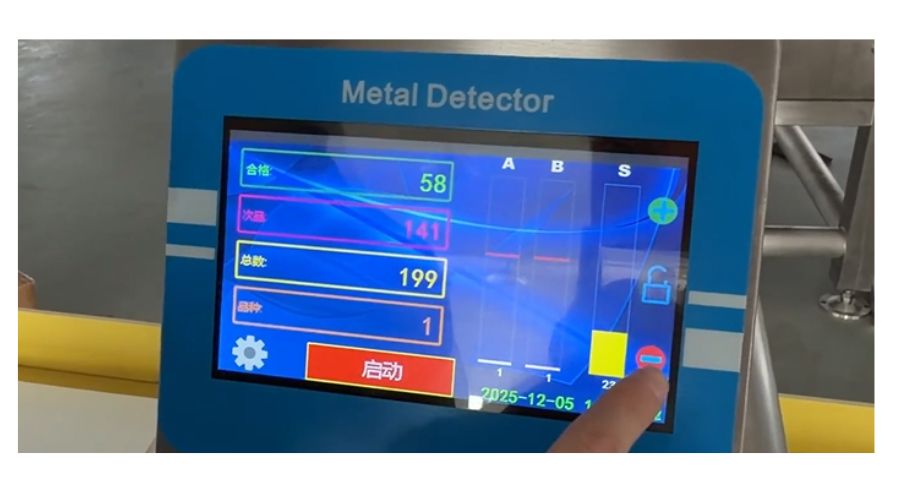
Human and operational errors contribute significantly to false rejects in metal detector for food production line installations. Improper setup of detection heads, inconsistent conveyor operation, or lapses in routine maintenance can all affect how does a metal detector work.
For instance, misalignment of the detector aperture with the conveyor, incorrect belt tension, or irregular cleaning routines may introduce mechanical or signal disturbances. Operator errors in adjusting sensitivity or ignoring calibration procedures can further exacerbate false rejects.
Investing in staff training, standardized operating procedures, and preventive maintenance programs ensures that metal detector in food industry systems deliver consistent detection accuracy, enhancing food safety, reducing waste, and improving overall production efficiency.
Consequences of Frequent False Rejects
Increased Product Waste and Production Downtime
Frequent false rejects directly lead to increased product waste in food production. Even when no actual contamination is present, products may be unnecessarily removed from the line due to signal interference, improper calibration, or inconsistent conveyor conditions.
This not only increases material loss but also causes production downtime as operators investigate alarms and reset systems. Understanding how a metal detector works and identifying the root causes of false rejects allows manufacturers to minimize unnecessary product disposal, maintaining both food safety and cost efficiency in high-speed operations.
Reduced Operational Efficiency and Line Throughput
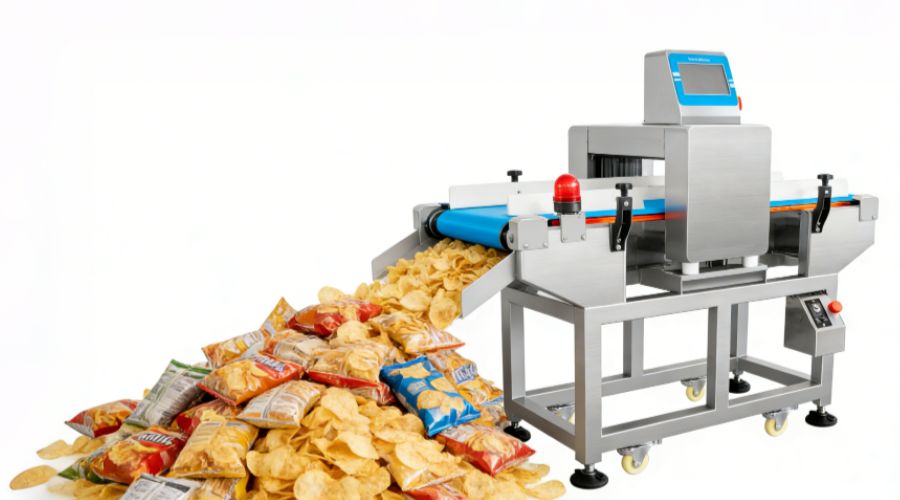
False rejects disrupt the flow of production, reducing overall line throughput and operational efficiency. Frequent stops or slowed processes for inspections and rejections can cascade into longer production cycles, missed delivery targets, and underutilization of equipment.
Even advanced food industry metal detectors can suffer from throughput limitations if the system generates too many unnecessary alarms. Optimizing detection sensitivity and conveyor interaction ensures how the metal detector works reliably without compromising production efficiency, helping manufacturers maintain stable output and consistent product quality.
Potential Misinterpretation of Contamination Risk and Food Safety Implications
False rejects can also lead to misinterpretation of contamination risk, potentially causing confusion in quality control and food safety management. When clean products are repeatedly rejected, operators may incorrectly assume contamination issues exist, diverting resources to unnecessary investigations.
This situation can obscure real contamination events, affecting what do metal detectors detect and what can a metal detector detect. Proper calibration, system integration, and staff training are essential to ensure accurate interpretation of detection signals and maintain robust food safety standards.
Compliance and Regulatory Risks in Metal Detector in Food Industry Applications
Inconsistent detection and frequent false rejects may also have regulatory implications. Food manufacturers are required to comply with HACCP, GFSI, and other industry standards, which demand accurate record-keeping and reliable foreign body detection.
Excessive false rejects can distort data logs from a metal detector for food production line, complicating audit trails and potentially leading to non-compliance findings. Ensuring how the metal detector works in conjunction with proper conveyor design, routine calibration, and preventive maintenance is critical for demonstrating regulatory compliance and protecting both brand reputation and consumer safety.
Strategies to Minimize False Rejects
Proper Metal Detector for Food Production Line Calibration and Sensitivity Adjustment
A key step in reducing false rejects is accurate calibration and sensitivity adjustment of the metal detector for food production line. Proper calibration ensures that the detector is tuned to the specific product type, size, and packaging material, helping maintain high detection reliability without unnecessary product loss.
Understanding how a metal detector works and the principles behind signal processing allows operators to adjust detection thresholds appropriately. This ensures that what do metal detectors detect—ferrous, non-ferrous, or stainless steel contaminants—is accurately differentiated from harmless product characteristics, supporting both food safety and consistent line throughput.
Conveyor Optimization: Product Spacing, Stable Belts, And Low-Interference Materials
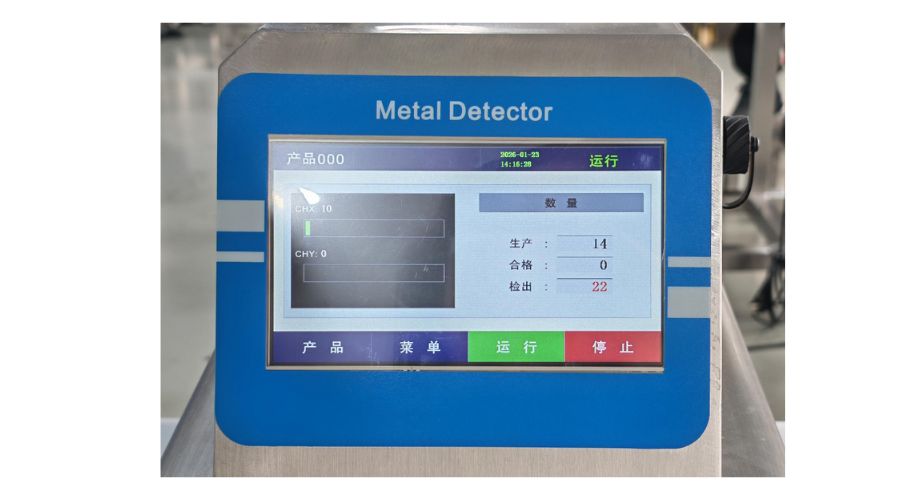
The design and operation of the conveyor system significantly influence how the metal detector works. Optimizing conveyor parameters—such as consistent product spacing, stable belt materials, and minimal metallic interference—can greatly reduce signal fluctuations and false alarms.
Using non-metallic or low-interference components in critical areas ensures what can a metal detector detect is not masked by environmental noise. Properly configured food industry metal detectors integrated with well-designed conveyors improve inspection accuracy while maintaining efficient production flow, ultimately protecting product integrity and reducing waste.
Environmental Control: Minimizing Vibration, Electrical Interference, And Temperature Fluctuations
External factors such as vibration, electromagnetic interference, and temperature changes can distort detection signals and increase false rejects. Managing these environmental variables is essential to maintain how a metal detector works at peak performance.
Installing vibration-dampening supports, shielding motors and electrical components, and maintaining consistent ambient conditions help stabilize detection fields. This enhances the ability of metal detector in food industry applications to identify actual contaminants while avoiding unnecessary rejections, reinforcing food safety compliance and operational efficiency.
Staff Training and Consistent Operational Protocols
Even with advanced food industry metal detectors and optimized conveyors, human factors play a critical role. Comprehensive staff training on how does a metal detector work, correct setup procedures, and routine maintenance protocols ensures consistent operation and reduces operator-induced errors.
Standardizing operational procedures—including product loading, conveyor speed management, and reject system handling—helps maintain stable detection signals. By ensuring that operators understand what do metal detectors detect and what can a metal detector detect, manufacturers can minimize false rejects, improve line efficiency, and strengthen overall food safety performance.
Advanced Technologies to Reduce False Rejects
Staff Training and Consistent Operational Protocols
Modern metal detector for food production line technologies often employ multi-frequency or multi-simultaneous detection systems to enhance detection reliability. By using multiple electromagnetic frequencies simultaneously, the system can better differentiate between actual metal contaminants and product characteristics such as moisture, salt content, or packaging materials.
Understanding how a metal detector works, these advanced systems dynamically adjust their sensitivity to maintain consistent detection without increasing false rejects. This allows manufacturers to accurately identify what do metal detectors detect—ferrous, non-ferrous, and stainless steel—while maintaining high throughput and improving overall food safety compliance.
Integration with Vision Inspection or X-Ray Systems for Verification
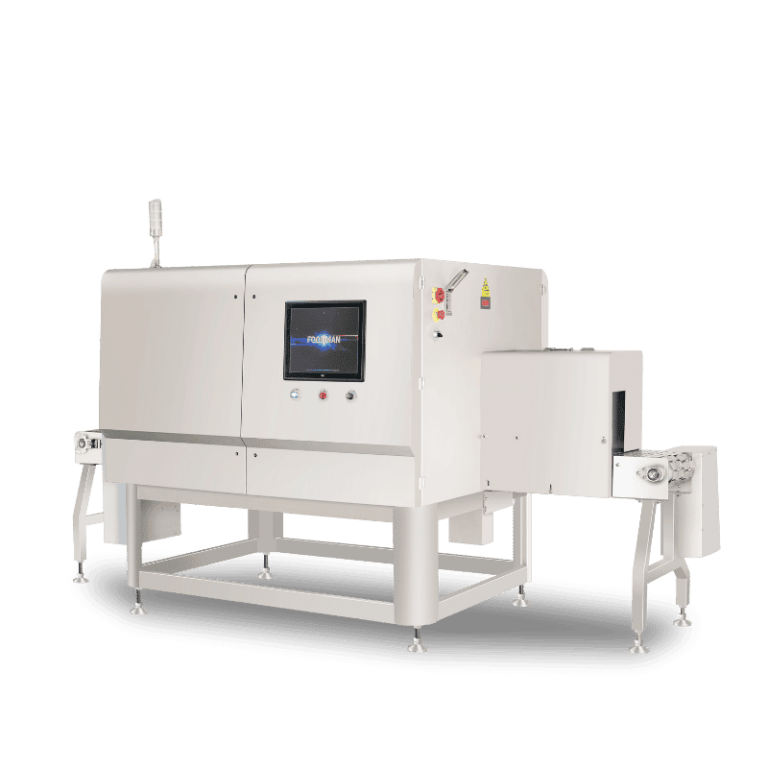
To further minimize false rejects, many food manufacturers integrate metal detector in food industry applications with complementary inspection technologies, such as vision systems or X-Ray inspection machines.
This multi-layered approach verifies suspected contaminants flagged by the metal detector, providing additional confidence in what can a metal detector detect and preventing unnecessary product disposal. Combining food industry metal detectors with visual or X-Ray verification supports accurate contamination control, strengthens quality assurance, and reduces operational losses due to false alarms.
Use of Iot Monitoring and Predictive Analytics for Early Detection of False Reject Patterns
The adoption of IoT-connected metal detector for food production line systems enables real-time monitoring of detection performance, reject events, and line conditions. By applying predictive analytics, manufacturers can identify patterns that may lead to false rejects—such as vibration spikes, belt wear, or environmental changes—before they impact production.
Understanding how a metal detector works in conjunction with cloud or edge analytics allows operators to proactively adjust settings, reducing unnecessary rejections and optimizing inspection efficiency. This integration improves detection accuracy, enhances food safety, and ensures consistent quality across high-speed production lines, supporting long-term compliance and operational efficiency.
Best Practices for Food Manufacturers
Regular preventive maintenance and audit of metal detectors
Maintaining consistent performance in a metal detector for food production line begins with regular preventive maintenance and routine audits. Proper inspection and calibration ensure the system continues to operate at peak sensitivity, accurately detecting metal fragments in diverse product types.
Understanding how a metal detector works allows operators to identify potential sources of signal interference, such as worn rollers, loose conveyor components, or electrical noise. By proactively addressing these issues, food manufacturers can reduce false rejects, maintain food safety, and maximize operational uptime, ensuring that what do metal detectors detect remains reliable across production batches.

System-Level Optimization: Aligning Conveyor + Metal Detector + Product Handling
For optimal detection performance, a metal detector in food industry should never be viewed in isolation. System-level optimization involves aligning the conveyor design, product handling mechanisms, and detector settings to create a stable, predictable inspection environment.
This alignment improves how a metal detector works by minimizing product tumbling, vibration, and signal interference, which can otherwise compromise what can a metal detector detect. A well-integrated setup enhances contamination control, reduces unnecessary product waste, and ensures consistent inspection results in high-speed production lines.
Data-Driven Monitoring for Continuous Improvement in Detection Reliability
Leveraging data from modern food industry metal detectors allows manufacturers to track performance trends, analyze false rejects, and identify opportunities for improvement. Monitoring metrics such as detection events, reject rates, and line throughput provides actionable insights into how a metal detector works under real production conditions.
With data-driven approaches, operators can optimize sensitivity settings, conveyor speed, and product presentation to enhance detection reliability. This continuous improvement cycle strengthens food safety, ensures compliance with HACCP and GFSI standards, and maximizes the return on investment in metal detector for food production line systems.
Conclusion
Summary of Why False Rejects Occur and Their Operational Impact
False rejects in a metal detector for food production line occur due to a combination of factors, including product variability, conveyor instability, detector sensitivity settings, and environmental interference. Understanding how a metal detector works and what do metal detectors detect in different conditions is crucial for identifying the root causes.
Frequent false rejects can lead to significant operational impacts: increased product waste, reduced line throughput, higher labor costs, and potential misinterpretation of contamination risks. For food manufacturers, this not only affects operational efficiency but also compromises food safety and brand integrity if contaminants are missed or unnecessary rejects disrupt production.
Key Takeaways on How to Minimize False Rejects While Maintaining High Food Safety Standards
Minimizing false rejects requires a system-level approach that considers how the metal detector works in conjunction with conveyors, product handling, and environmental controls. Key strategies include:
Proper calibration and sensitivity adjustment of metal detector in food industry applications.
Conveyor optimization with stable belts, consistent product spacing, and low-interference materials.
Controlling vibration, electrical noise, and temperature fluctuations to enhance detection reliability.
Staff training and consistent operational protocols to ensure proper use of equipment.
By implementing these measures, manufacturers can maintain high detection accuracy, reduce unnecessary product loss, and uphold strict food safety standards without compromising line efficiency.
Final Recommendations for Manufacturers to Optimize Metal Detector in Food Industry Performance and Reduce Product Loss
For manufacturers aiming to optimize food industry metal detectors, several best practices are recommended:
Invest in a metal detector for food production line that matches product types, line speeds, and detection requirements.
Integrate conveyors, reject mechanisms, and inspection equipment to ensure smooth product flow and reliable detection.
Regularly audit and maintain the system to sustain how a metal detector works at peak performance.
Utilize data-driven insights from detection events to fine-tune settings and minimize false rejects over time.
Emphasize continuous staff training to ensure proper operation, maintenance, and compliance with food safety regulations.
By adopting these recommendations, food manufacturers can enhance what can a metal detector detect, reduce false rejects, maintain product integrity, and achieve long-term operational efficiency and contamination control.
FAQ
Q: What can a metal detector detect more effectively with proper conveyor design?
A: Proper conveyor design ensures stable product presentation and minimal interference, improving detection of small or low-density metal fragments and reducing false rejects.
Q: How can food manufacturers minimize false rejects?
A: False rejects can be minimized by calibrating sensitivity settings, stabilizing conveyors, controlling environmental factors, and training staff to follow consistent operational protocols.
Q: Why is a system-level approach important for metal detector in food industry?
A: A system-level approach aligns the metal detector, conveyor, reject mechanisms, and staff operations, maximizing detection accuracy, reducing false rejects, and supporting food safety compliance.