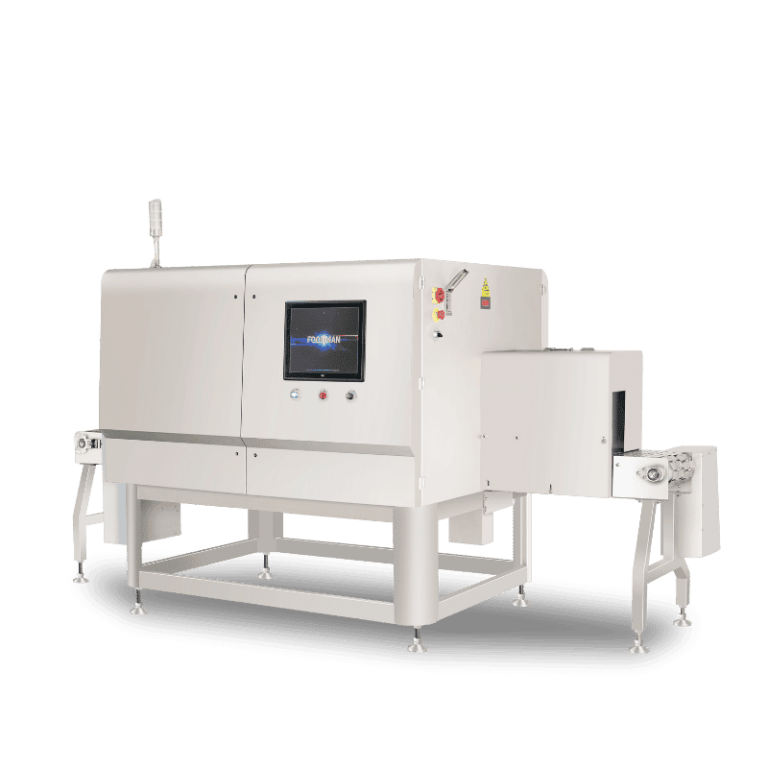

Introduction: Coffee Safety and the Hidden Threat of Metal Contamination
Coffee is far more than just a beverage; it is a global commodity, a daily ritual, and a product that must adhere to increasingly stringent food safety standards. From the sourcing of green beans to roasting, grinding, and packaging, every stage of coffee processing harbors potential risks. One of the most critical—yet often underestimated—of these risks is the threat to food safety inherent in the processing workflow, particularly metal contamination.
Metal fragments can enter the production stream through worn machinery, damaged screens, transport equipment, or even during the harvesting process itself. These contaminants—ranging from ferrous metals and non-ferrous metals to stainless steel—pose a serious threat to consumer safety, brand reputation, and regulatory compliance.
For modern manufacturers, equipping their coffee processing lines with reliable metal detectors is no longer an option, but a necessity. Among the many technologies currently available, high-sensitivity free-fall metal detectors stand out as a trans formative solution, particularly well-suited for bulk materials such as coffee beans. By integrating bulk-material metal detection systems, manufacturers can significantly mitigate contamination risks while simultaneously boosting operational efficiency—often by as much as 30%.
Working Principles and Advantages of Free-Fall Metal Detectors
Understanding the operating principles behind free-fall metal detection technology helps explain why these systems excel in coffee applications. Unlike conveyor-based systems—which inspect products while they are stationary or moving along a belt—free-fall detectors harness the natural dynamics of product flow under the influence of gravity to achieve exceptionally high detection sensitivity.

The Physical Principles of Detection
At the core of all bulk flow metal inspection system lies a sophisticated electromagnetic field structure. The detector generates a high-frequency electromagnetic field using precisely wound coils arranged in a balanced configuration. As coffee beans or granules pass through this electromagnetic field during free fall, the system continuously monitors for any disturbances caused by the presence of metal objects.
Ferrous metals induce a specific type of field disturbance: they concentrate magnetic flux lines, thereby generating a strong, characteristic signal. Non-ferrous metals—such as aluminum and copper—generate eddy currents, which in turn create a counter-magnetic field, producing a distinct yet equally detectable signal. Stainless steel—particularly non-magnetic grades like 304 and 316—presents the greatest detection challenge due to its low electrical conductivity and low magnetic permeability. Advanced, high-sensitivity free fall metal detector for coffee processing systems employ multi-frequency technology and sophisticated digital signal processing techniques to ensure that even minute fragments of stainless steel can be reliably identified.
Key Advantages
1. Ultra-High Sensitivity. Free-fall metal detection systems are optimized for bulk materials, enabling the detection of even minute metal particles—even within high-density streams of coffee.
2. Minimal Product Impact. Coffee beans—whether green or roasted—exhibit relatively low variability in conductivity and moisture content; this makes them an ideal application for the high-sensitivity free-fall metal detectors utilized in the coffee industry.
3. High Processing Efficiency. Since the system operates in-line using gravity, it facilitates continuous processing without compromising production speed—a critical factor for large-scale manufacturing facilities.
4. Compact and Hygienic Design. Modern metal detection units for bulk materials feature a design that facilitates easy cleaning, occupies minimal floor space, and fully complies with food safety standards.
System Integration: Embedding Metal Detection into Coffee Processing Lines
To fully leverage the benefits of high-sensitivity free fall metal detector for coffee bean inspection, proper system integration is paramount.
To maximize protection against food safety risks during coffee processing, bulk flow metal inspection system should be installed at Critical Control Points—locations where contamination is most likely to occur and where interception offers the greatest value.

Common integration points include:
Installation after cleaning and before roasting: This placement allows for the capture of contaminants introduced during the picking, drying, hulling, and initial cleaning stages. This positioning serves a dual purpose: it protects expensive roasting equipment from damage while ensuring that contaminants are removed before the coffee’s flavor profile is established.
Installation after roasting and before grinding: This setup intercepts metal fragments potentially introduced during the roasting process (e.g., debris resulting from drum wear or component failure), while simultaneously protecting downstream grinding equipment. This placement is particularly critical for producers who prioritize both equipment protection and food safety.
Final inspection before packaging serves as the last line of defense against contamination. For coffee packaged in aluminized films or aluminum foil laminate bags, this installation point is essential; once the product enters conductive packaging, traditional metal detection methods become ineffective. Free-fall metal detectors perform an immediate inspection just before the product enters the packaging machine, ensuring that only contamination-free coffee makes it into the final packaged product.
High-sensitivity free-fall metal detectors designed for coffee inspection strike a perfect balance between detection speed and precision.
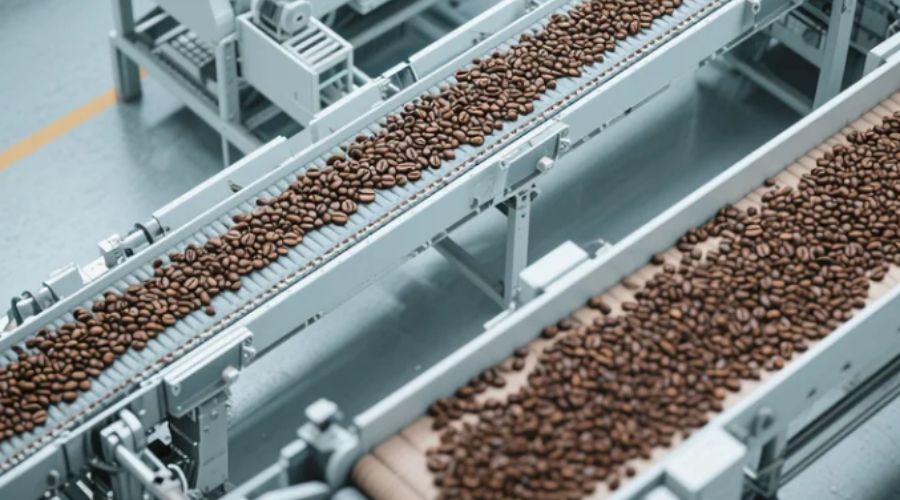
Operational Guidelines: Calibration, Inspection, and Maintenance
To ensure long-term operational reliability, bulk metal inspection system used for coffee bean inspection must be operated in strict accordance with established protocols.
Routine Calibration: Conduct daily sensitivity checks using ferromagnetic, non-ferromagnetic, and stainless steel test samples to verify the accuracy of the rejection mechanism.
Preventive Maintenance: Metal detection systems for bulk materials should undergo the following maintenance: regular cleaning to prevent buildup, inspection for mechanical wear, and verification of sensor stability.
Operator Training: Even the most advanced, high-sensitivity free-fall metal detectors for coffee require skilled operators to manage them. Operators must be proficient in the following areas: interpreting system alerts, executing calibration procedures, and implementing emergency response protocols.
Exception Handling: Automated Rejection and Traceability Mechanisms
Upon the detection of metal contaminants, a bulk material metal detection system will be respond immediately.
For metal detectors used in coffee bean inspection, common rejection methods include a variety of selectable options, such as flip down rejector, divider, and air-blast rejection systems, etc. These systems ensure the effective reject of contaminated products without interrupting the production workflow.
Modern food safety protocols require not only the removal of contaminants but also comprehensive documentation to demonstrate control over the entire production process. Free-fall detection systems meet this requirement through integrated data management capabilities. Modern, high-sensitivity free-fall metal detection solutions designed for coffee inspection typically feature the following functions: time-stamped event logs, production batch tracking, and integration with Enterprise Resource Planning (ERP) systems. These capabilities enable manufacturers to rapidly trace the source of contamination and implement appropriate corrective actions.
Compliance: Adherence to HACCP and Global Food Safety Standards
Meeting regulatory compliance requirements is one of the key driving forces behind a company’s decision to select metal detectors for coffee beans.
HACCP System Integration
Metal detection systems for bulk material flow can serve as “Critical Control Points” (CCPs) within a HACCP plan. Their functions include identifying potential contamination risks, monitoring the operational performance of detection equipment, and recording and archiving compliance data.
International Standard Certification
High-sensitivity, free-fall metal detectors designed for coffee help companies meet the requirements of various standards and regulations, including: U.S. FDA regulations, EU food safety directives, and BRCGS and IFS certification standards.

By deploying reliable metal detectors for coffee beans, manufacturers clearly demonstrate their unwavering commitment to minimizing food safety risks throughout the coffee processing chain.
Conclusion: Elevating Coffee Quality and Building a Robust Safety Defense
In an industry where quality and safety serve as the cornerstones of success, investing in high-sensitivity, free-fall metal detectors for coffee is undoubtedly a highly strategic decision. By integrating a robust metal detection system for bulk materials, coffee producers can: mitigate contamination risks, boost operational efficiency by up to 30%, enhance brand trust, and ensure regulatory compliance.
Ultimately, metal detectors for coffee beans are more than mere detection tools—in a fiercely competitive global market, they stand as the guardians of quality, safety, and reputation.
Frequently Asked Questions
Given the inherent food safety risks within the coffee processing workflow—including potential contamination stemming from both mechanical equipment and human handling—metal detectors designed for coffee beans are essential for identifying and removing harmful foreign objects.
Yes, a properly configured metal detection system for bulk materials is capable of detecting extremely minute contaminants, including ferromagnetic, non-ferromagnetic, and stainless steel particles.
Upon detecting a metal foreign object, the bulk material metal detection system activates a rejection mechanism to remove the contaminated product without the need to halt production or stop the processing line.
Yes; whether the product is in granular or powdered form, as long as it is a bulk coffee material, the system can detect and remove metal foreign objects.