Introduction
For decades, the meat processing industry has used manual sampling or destructive testing methods to determine fat content. These procedures are not only time-consuming, but they also often fail to ensure accuracy due to the inherent compositional variety of meat products. In addition, they all have intrinsic limitations: they are either destructive, slow, surface-sensitive, or rely heavily on operator expertise.
Today’s landscape is changing. Meat manufacturers across the world are under unprecedented pressure from regulatory bodies, retail giants, and astute customers who demand total nutritional labeling clarity. The term “Chemical Lean” (CL) evolved from a technical specification to a financial metric with major ramifications for pricing, yield optimization, and brand reputation.
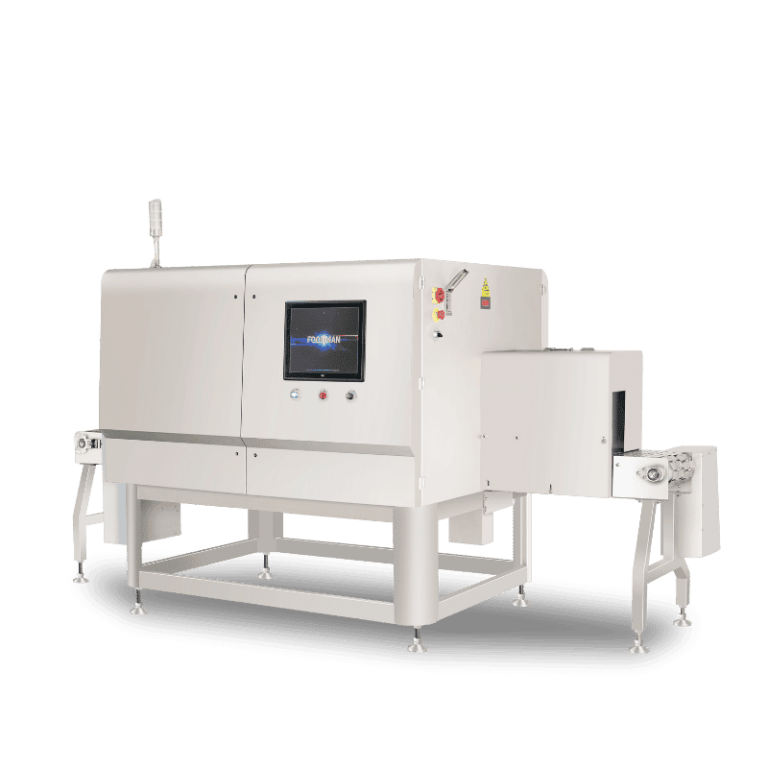
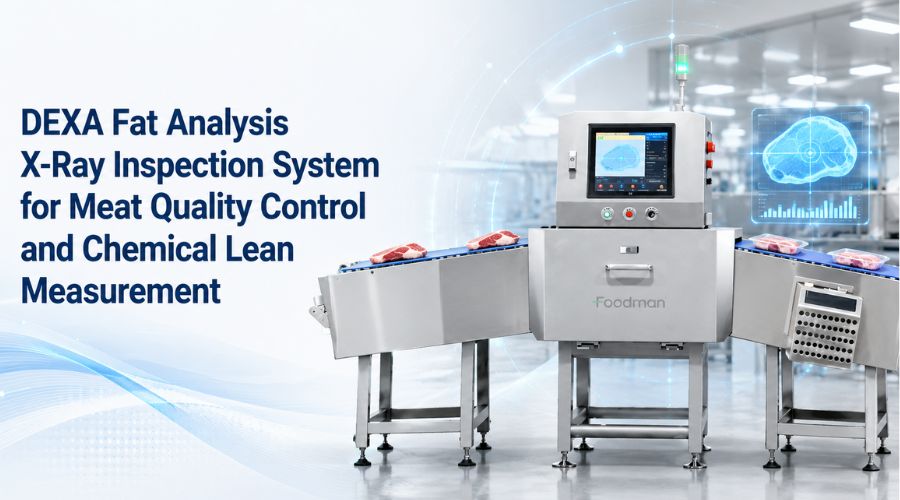
It is against this backdrop that DEXA fat analysis X-ray inspection systems have emerged as a transformative solution. By integrating DEXA (Dual-Energy X-ray Absorptiometry) fat analysis technology into production lines, processors can achieve 100% inspection, changing quality control from reactive sampling to proactive, real-time, science-based management.
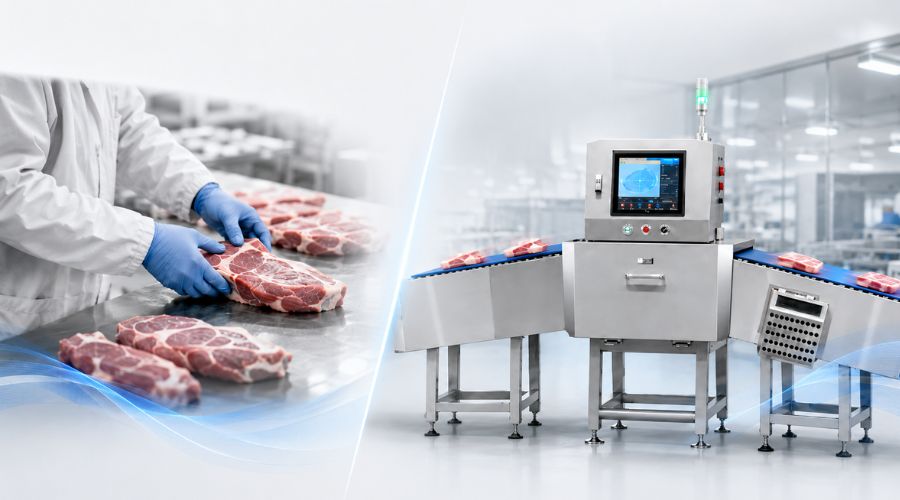
For companies like Foodman—which specializes in advanced inspection equipment such as checkweighers, metal detectors, X-ray foreign object detectors, and vision sorting systems—integrating DEXA technology represents a natural step toward comprehensive, data-driven quality control.
What is a DEXA fat analysis X-ray inspection system?
Principles of Fat Analysis
The core of the DEXA fat analysis X-ray inspection system is dual-energy X-ray absorptiometry (DEXA). Unlike traditional X-ray equipment that measures density using a single energy level, DEXA technology emits X-rays at two distinct energy levels. As the product passes through the inspection channel, the high- and low-energy X-rays The inspection channel absorbs high- and low-energy X-rays differently as the product passes through, depending on the fat, lean tissue, and connective tissue. Differently by fat, lean tissue, and connective tissue. Because fat, lean tissue, and bone absorb these energy levels at varying rates, the system can calculate the product’s chemical composition with extremely high mathematical precision.
DEXA vs. Traditional Methods
Compared to traditional fat analysis techniques, the advantages are clear:
While very accurate, solvent extraction (Soxhlet method) causes harm to the substance and requires hours of laboratory processing, making it unsuitable for real-time process control.
Near-infrared spectroscopy (NIR): Although quick, NIR spectroscopy only penetrates the surface for a few millimeters. Readings may be off for items with uneven fat distribution or multilayer designs.
Vision inspection/grading: Highly subjective. For products with uneven fat distribution, the margin of error can exceed 20%, resulting in significant financial losses on premium cuts of meat.
In contrast, DEXA-based fat analysis systems provide non-destructive, timely, and full-volume analysis. They also incorporate foreign object detection and precise weight measurement, integrating three critical control points into a single, streamlined workstation.
How does DEXA achieve precise analysis of the fat-to-lean ratio in meat?
The secret lies in leveraging differences in “mass attenuation coefficients.” As X-rays pass through the meat, the dual energy X-ray fat analysis system measures the degree of energy attenuation. By analyzing the ratio between low-energy and high-energy signals, the system’s software can identify the specific compositional makeup at the pixel level.
Whether dealing with trim, ground meat, or whole cuts, the system calculates the ratio of lean meat to adipose tissue. This provides accurate “Chemical Lean” (CL) data, enabling profit maximization while minimizing waste caused by excessive leanness (i.e., “over-lean” product).
For which meat products is the DEXA fat analysis system suitable?
One of the most compelling advantages of DEXA technology is its versatility. The Foodman DEXA system, a leading meat fat analysis technology, has been specifically designed to handle a wide range of meat categories and product formats.
Whole muscle cuts, including beef ribeye, hog tenderloin, and lamb chops, benefit from precise fat-trimming directions that save waste and maximize efficiency.
Ground and emulsified meat: For sausages, burgers, and meatballs, the technique ensures that both raw materials and prepared blends meet the exact fat content requirements.
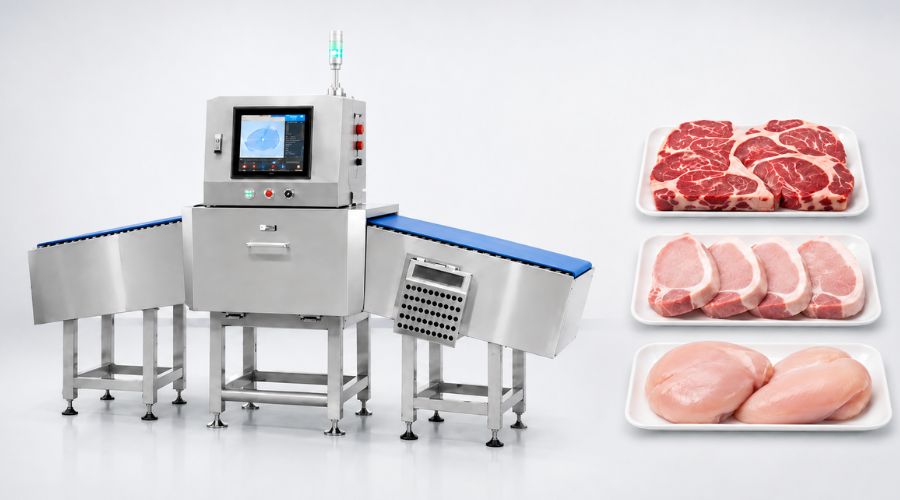
Poultry: Thanks to advanced bone-exclusion algorithms, whole birds, chicken breast fillets, and chicken leg meat can be easily analyzed, regardless of variations in bone structure.
Processed meat blocks: Even frozen blocks and co-extruded products can be inspected without thawing, saving time and preserving product integrity.
Bone-in and boneless foods: The software accurately distinguishes between bone and fat, ensuring that bone-in products are not penalized for minor density differences.
Whether you’re processing fresh, cured, cooked, or frozen food, the system adapts to your production workflow without requiring major modifications.
Enhancing Quality Control with Online Fat Analysis
Implementing meat fat analysis equipment can revolutionize production efficiency. Production managers gain access to real-time data without having to wait for laboratory test results. This transparency delivers the following benefits:
Batch Consistency: Every carton of product leaving the facility meets the precise lean content (CL) percentage specified by the customer.
Waste Reduction: Processors can achieve significant savings on raw material costs by avoiding the production of batches that are “overly lean.”
Integrated Safety Features: The system offers dual functionality—performing DEXA fat analysis while simultaneously detecting foreign objects such as metal, bone, or glass—thereby satisfying both quality and safety audit requirements.
Key Advantages of the Foodman DEXA Fat Analysis X-Ray System
As a trusted manufacturer of inspection solutions, Foodman integrates decades of engineering expertise into the design of its meat fat analysis equipment. Our system is not a one-size-fits-all solution but a customizable platform designed to address the specific challenges of modern meat processing.
1. Integrates easily with existing X-ray and vision systems
Foodman offers modern X-ray, metal detection, and vision inspection technology. The DEXA module is intended to work seamlessly with these technologies, creating a full inspection hub that checks for pollutants, weight accuracy, and fat content in a single pass.
2. Superior Algorithm Development

Our proprietary algorithms were trained on data from millions of scans, which included a variety of species (beef, pig, poultry, and lamb) and product parameters. This extensive database ensures accurate DEXA-based fat analysis while avoiding calibration drift.
3. Robust Industrial Design
Foodman systems are built to survive the extreme conditions of food processing settings, with IP66-rated enclosures, easy-to-clean surfaces, and reliable radiation shielding. Even in washdown environments with high humidity and high temperatures, reliable operation is guaranteed.
4. User-Centric Software Interface
The system possesses an intuitive dashboard that displays fat percentage, Chemical Lean (CL) measurements, and Statistical Process Control (SPC) charts in real time. Operators can quickly generate reports, analyze trends, and export data to ERP or MES systems for additional analysis.
5. Global Service and Support
We understand that uptime is critical. Our global service network ensures timely calibration, maintenance, and technical support, helping you maximize your return on investment.
How to choose the right meat fat analysis equipment
When shopping for meat fat analysis equipment, consider these key factors:
Throughput requirements: Ensure system throughput matches your production line’s maximum speed.
Sensitivity needs: Does the resolution of the DEXA (dual-energy X-ray absorptiometry) fat analysis device meet your specific meat cut size requirements?
Integration capabilities: Can the device interact with your existing ERP or production management software?
Supplier support: Choosing a partner like Foodman—one that is both well-versed in meat fat analysis and has a broad range of inspection technologies, such as metal detection and vision systems—ensures a smoother project implementation.
Future Trend: Technology Integration
The field of fat analysis in meat products is continuously expanding. We are currently witnessing the integration of DEXA technology with hyperspectral imaging, the latter of which can detect surface contaminants and color variations. Additionally, terahertz technology is being explored for ultra-high-precision moisture and fat measurement. As artificial intelligence (AI) develops, these systems will become increasingly “smart,” evolving into self-calibrating models that operate autonomously and automatically adapt to seasonal fluctuations in meat properties.

Conclusion
In an industry characterized by tight margins and ever-rising consumer expectations, precision is paramount. The days of relying on fat content estimates are over. The DEXA fat analysis X-ray system is more than just an addition to your quality control lineup; it is a strategic investment that delivers quantifiable returns by boosting yields, ensuring exceptional consistency, and guaranteeing strict compliance.
For Foodman, integrating this advanced dual-energy X-ray fat analysis system into our product portfolio underscores our unwavering commitment to providing the meat processing industry with solutions that are both intelligent and reliable. By combining fat analysis technology with our established expertise in automatic checkweighing, metal detection, and vision inspection, we empower our customers to achieve comprehensive quality assurance with maximum efficiency.
FAQ
A1: Absolutely. Unlike near-infrared (NIR) or other optical systems, X-ray technology is not affected by frozen moisture. The technology accurately detects fat content and chemical leanness in both fresh and frozen meat without the need for thawing, preserving product quality and reducing waste.
A2: When calibrated properly, our instrument achieves industry-leading accuracy (typically within a 1% margin of error), significantly beating traditional sample methods.
A3: Yes. We design every system to ensure seamless integration with existing conveyors, sorting equipment, and software ecosystems. We provide customized installation plans and integration support to minimize downtime during installation.