
Introduction
Many bakery products include egg yolk, include custard mooncakes, egg tarts, salted egg yolk pastries, and sponge cakes. These goods are popular due to their rich flavor and unusual texture. At the same time, their creation requires more ingredients and processing steps than most other baked items.
Flour, sugar, nuts, fillings, eggs, and packaging materials may all enter the production process. Depending on the product, the process may involve shelling, yolk separation, mixing, filling, molding, baking, cooling, and final packing. With so many procedures involved, extraneous matter can enter the product at many points.
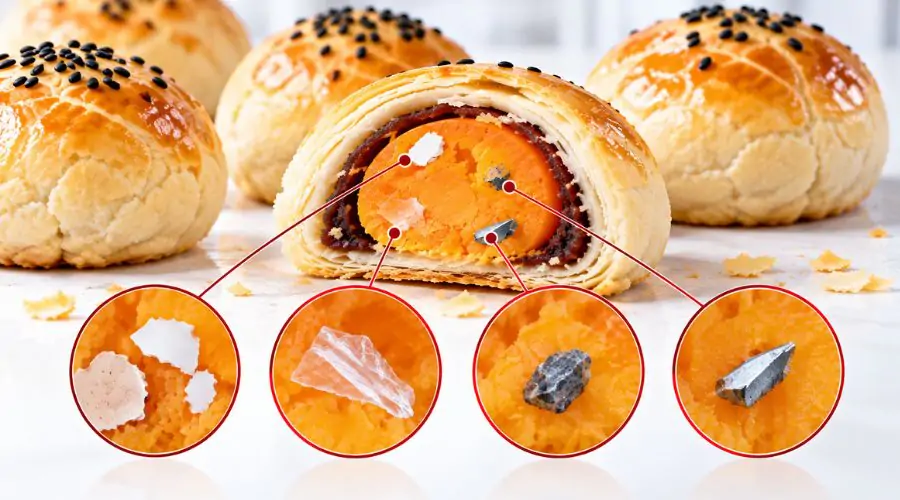
Metal shards, pieces of plastic, glass, stones, and eggshells are some of the potential hazards that must be addressed. The risk is especially serious for ready-to-eat bakery items, that frequently undergo no further processing before reaching the consumer. The FDA also identifies hard or sharp foreign objects in food as potential causes of injury, making effective preventive measures a vital aspect of food safety management.
For manufacturers, foreign item recognition is just one aspect of the whole quality process. Metal detectors, X-ray inspection systems, and vision systems all serve different functions. Choosing the proper mix is determined by the product, packaging, production pace, and types of contamination to be controlled.
This article addresses the most frequent foreign object dangers in egg yolk baked items, in addition to the function of food safety and inspection equipment. It also illustrates how metal detectors, X-ray inspection systems, and vision inspection systems can be used combined to improve product safety, quality control, and bakery productivity.
Common Foreign Body Risks in Egg Yolk-Based Baked Goods Production
Understanding the causes of contamination is the first step toward effective prevention. Foreign substances in baked foods containing egg yolk are commonly classified into four groups.
Contamination of raw materials is one of the most difficult problems. During harvesting and transportation, ingredients such as eggs, flour, sugar, and dairy products may become contaminated with stones, eggshell fragments, or metal particles. Dried fruits, nuts, and salted egg yolks may also include hard shards that can survive the amalgamation and baking processes.
Wear and tear on processing equipment can introduce metal debris—such as fragments from worn blades, sieves, mixers, and conveyor belt components—into the product. While stainless steel and iron particles are common, non-ferrous metal particles like aluminum and copper can also find their way into the production line.
Risks associated with packaging and the production environment include glass fragments from lighting fixtures, plastic shards from containers, and personal items carried by staff. These dangers are particularly high for facilities that handle both glass jars and stiff packaging.
Cross-contamination is a major food safety concern during the filling and decoration of egg yolk-based products. At manual or semi-automated filling stations, foreign bodies can accidentally enter the product and become concealed within thick, opaque fillings.
This makes visual inspection alone an unreliable approach to quality control, particularly when dealing with small metal fragments, transparent glass pieces, or stones that may be hidden inside dark-colored fillings. To achieve more effective food safety and inspection, manufacturers need advanced detection technologies that can identify contaminants beyond the limits of conventional visual checks.
Critical Control Points for Quality Control in Egg-Yolk-Based Baked Goods
A comprehensive foreign object detection program enables the identification of Critical Control Points (CCPs)—the stages where contamination is most likely to occur and where detection is most effective. In the production of egg-yolk-based baked goods, the following CCPs warrant particular attention.
A typical production process may include: raw material receipt → raw material preparation → egg yolk processing → mixing → filling → forming → baking → cooling → packaging → final inspection → finished product storage. Each stage presents distinct risks.
Raw Material Receiving
Incoming flour, sugar, egg products, nuts, fillings, and other raw materials must be managed through supplier controls and incoming inspections. Supplier approval and raw material inspection remain critical. Automated inspection equipment should serve to complement—not replace—Good Manufacturing Practices (GMPs) and preventive controls.
Mixing and Forming
Equipment such as mixers, pumps, and forming machines, as well as conveyor systems, can introduce mechanical risks. Equipment maintenance, sanitary design, and preventive maintenance are essential components of food safety and inspection.
Baking and Cooling
The baking stage alters the product’s physical characteristics. Upon completion of baking, the finished product may become harder, denser, or structurally more complex. Consequently, inspection performance should be validated using actual finished products rather than relying solely on theoretical sensitivity values.
Packaging
Packaging-stage inspection provides an additional safeguard against contaminants entering the product during wrapping, boxing, and palletizing. The need for effective inspection becomes even more important when bakery products are packed in glass containers or rigid plastic packaging, where packaging materials can also become a potential source of contamination.
Once these critical control points have been identified, bakery manufacturers can build a multi-layered food safety system. Combining preventive measures with reliable inspection, detection, and automatic rejection helps control contamination risks throughout the packaging process.
The Role of Food Safety and Testing in Bakery Production
Food safety and testing go beyond regulatory compliance. They help protect brand reputation, maintain consistent quality, and reduce production risks. In bakery production, testing mainly supports three areas: compliance, quality assurance, and risk management.
Food safety requirements from the FDA, the EU, and local authorities increasingly focus on preventive controls, process monitoring, and verification. For egg-based baked goods, this necessitates the establishment of documented testing protocols, the use of calibrated equipment, and the maintenance of traceable records regarding rejected products.
The benefits of quality assurance extend far beyond food safety alone.
Consistent testing helps reduce customer complaints, rework, and product variation. When consumers trust that baked goods are free from foreign matter, confidence in the brand can increase.
Effective risk mitigation is another key benefit of food safety testing. Recalls involving egg-yolk-containing baked goods may lead to lost sales, legal costs, and damage to brand reputation. Early contaminant detection helps manufacturers identify potential problems before products reach the market.
Modern testing systems also provide useful production data. Rejection records can reveal recurring contamination patterns, helping manufacturers identify root causes, such as worn mixing components or inadequate supplier controls.
Metal Detectors for Baked Goods: A First Line of Defense
For many bakeries, metal detectors offer a practical and cost-effective inspection solution. As products pass through the aperture, the system detects changes in the electromagnetic field caused by ferrous, non-ferrous, and stainless-steel contaminants.
For egg-yolk-filled baked goods, metal detection provides fast and reliable inspection with easy integration into conveyor lines. Modern systems can support high-volume production and inspect both dough and finished products, helping identify metal fragments from equipment wear or raw materials.

However, metal detectors cannot identify non-metallic contaminants such as glass, stones, or plastic. High moisture or salt content may also create product effects that affect detection performance. Because egg-yolk fillings can be dense and conductive, proper calibration and product-specific settings are important for accurate inspection.
Despite these limitations, a well-maintained metal detector remains a cornerstone of food safety and inspection systems. Combining this with upstream preventive measures and downstream X-ray inspection creates a robust, multi-layered defense system.
Solutions for In-depth Inspection of Egg-Yolk-Filled Baked Goods
Overcoming the limitations of metal detection: X-ray systems utilize low-energy beams to detect a wide range of foreign objects—including glass, stone, bone, metal, and high-density plastic—unaffected by product composition.
Non-destructive inspection for baked goods: Comprehensive scanning of sealed egg-yolk-filled pastries, as well as products with complex shapes or overlapping components, is possible without compromising the packaging.
Comprehensive quality control: Simultaneous verification of fill levels and component presence, alongside checks for structural integrity and proper product shaping.
Key selection criteria: Prioritize equipment featuring stainless steel construction, an IP65 or higher washdown rating, adjustable conveyor speeds, and an intuitive user interface designed specifically for the baking industry.
Hybrid inspection strategy: Combining primary metal detection with secondary X-ray verification maximizes foreign object detection rates while effectively minimizing false rejection rates.
X-Ray Inspection vs. Metal Detection
The answer is not that one technology is superior in every respect; rather, different technologies address different risks.
Metal detectors designed for bakery products specifically target metal contamination, offering a cost-effective solution when metal is the primary physical hazard.
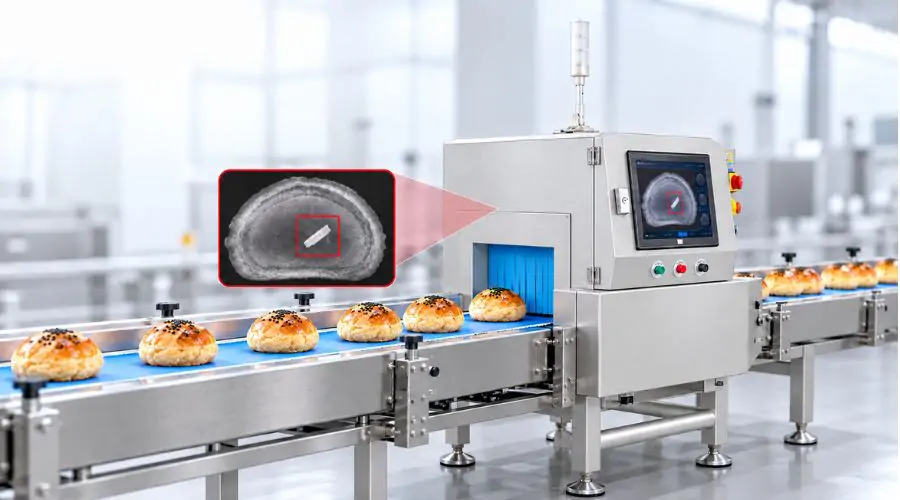
X-ray inspection systems provide broader foreign object detection capabilities, making them particularly suitable when manufacturers are concerned about high-density non-metallic materials such as glass or stone.
For higher-risk or more complex applications, combining multiple technologies can provide more comprehensive inspection coverage.
Integrating Food Safety Inspection into the Production Line
Technology alone cannot guarantee safety. Effectively integrating food safety inspection into the production line requires meticulous planning, operator training, and continuous monitoring.
Layout Design
Position inspection systems immediately adjacent to the packaging stage to minimize the risk of post-processing contamination.
Rejection Mechanism
Automatically divert contaminated products to a secured area and log the events to ensure traceability.
Calibration Testing
Check the system’s sensitivity at regular intervals using test pieces that represent the contaminants typically encountered in production, such as metal, glass, and stone. Follow a documented testing schedule and record the results so any change in detection performance can be identified promptly.
Data Integration
Connect the inspection system with the relevant production software to support real-time monitoring and batch traceability. Maintaining inspection records also makes it easier to identify affected batches and respond quickly if a product recall becomes necessary. This can be particularly useful for baked goods containing egg yolk, where multiple production batches may be processed each day.
Personnel Training
Operators should know how to respond when the system triggers an alarm and what to check when an unexpected result occurs. Regular training helps staff handle routine alarms, identify basic equipment issues, and follow the correct escalation procedure. In practice, well-trained operators provide an additional layer of protection on the production line—a practical “human firewall.”
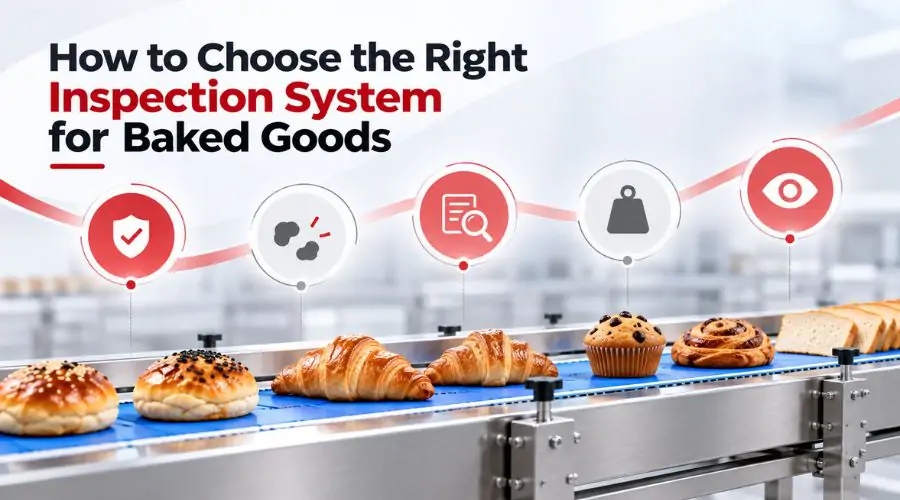
Selection Guide: How to Choose the Right Inspection System
Choose inspection equipment based on the product and its contamination risks, not just machine specifications.
1. Identify Contamination Risks
Start with the contaminants you need to detect. For ferrous, non-ferrous, and stainless-steel contamination, a metal detector may be suitable.
If glass, stone, or other high-density non-metallic contaminants are also a concern, an X-ray inspection system can provide broader detection capabilities.
2. Consider Product Characteristics
Consider factors such as product size, density, temperature, moisture, composition, and packaging. These conditions can affect inspection performance and detection sensitivity.
3. Evaluate Production Speed
Make sure the equipment can keep up with your production line. For high-speed, continuous production, choose an inspection system designed for industrial operating conditions rather than laboratory use.
4. Consider hygiene requirements
The baking environment demands equipment capable of withstanding regular cleaning while maintaining stable operation. Features such as stainless steel construction, appropriate ingress protection ratings, easy-to-clean surfaces, and well-designed conveyors can simplify maintenance.
5. Verify performance using actual products
Product testing is the most critical step in the selection process. Manufacturers should evaluate the actual egg-yolk-based baked goods using representative test samples and packaging configurations. A capable supplier should be able to assess the product, understand the production line, recommend suitable inspection points, and provide support during commissioning.
Application Cases and Typical Scenarios
Salted Egg Yolk Pastries
Salted egg yolk pastries contain multiple ingredients, with fillings that can vary in density. A metal detector for baked goods can detect metal contamination, while an X-ray inspection system can also identify high-density non-metallic foreign objects such as glass and stone.
Egg Yolk Mooncakes
Egg yolk mooncake production often reaches high volumes during the seasonal peak. Production lines need to maintain speed and consistent product quality while ensuring accurate packaging.
An integrated solution combining dynamic checkweighing, metal detection, X-ray inspection, and machine vision provides multiple inspection points. This helps manufacturers control weight, detect foreign objects, check product quality, and maintain stable performance during high-volume production.
Egg Yolk Cookies
For high-speed cookie production lines, compact conveyor-based inspection systems can be installed after baking or prior to final packaging. The objective is to detect physical contaminants while maintaining line efficiency.
Filled Baked Goods
Products with complex fillings can be more challenging to inspect due to density variations. Manufacturers utilize X-ray inspection systems to examine the internal structure of packaged goods, going beyond mere external visual inspection
Conclusion
Foreign object detection in egg-yolk-containing baked goods is an ongoing part of food safety management, not simply a one-time equipment purchase. As customer expectations and regulatory requirements continue to grow, bakery manufacturers need practical, multi-layered inspection controls.
Metal detectors provide effective protection against metal contaminants. X-ray inspection systems can detect metal as well as high-density foreign objects such as glass and stone. Vision systems add another inspection layer by checking product appearance and surface defects. Used together, these technologies support a more complete food safety inspection process.
For modern bakeries, the aim is not only to remove foreign objects from finished products. A well-designed inspection system can also support consistent quality, stable production, and greater confidence in the final product.
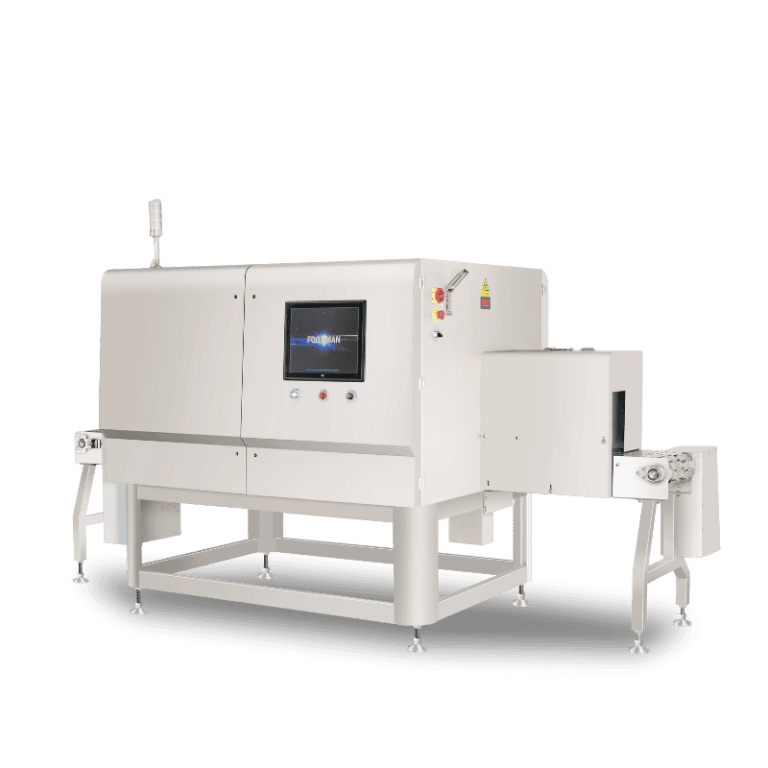
Foodman is dedicated to providing advanced inspection solutions—including metal detectors, X-ray systems, and vision systems—to the baking industry. Our team works closely with manufacturers to design inspection solutions tailored to the unique challenges associated with egg-yolk-containing baked goods.
FAQs
Egg-yolk-based baked goods typically contain multiple ingredients and undergo various mechanical processing stages. Foreign objects can be introduced during ingredient handling, mixing, forming, baking, cooling, or packaging. Automated food safety inspection helps identify contaminated products before they leave the factory.
Metal detectors for baked goods are primarily used to identify metal contaminants, including ferrous metals, non-ferrous metals, and certain types of stainless steel. Actual detection performance depends on product characteristics, equipment configuration, and operating conditions.
X-ray inspection systems can detect many high-density foreign objects (including glass and stones), with effectiveness depending on the object’s size and density, product composition, and system configuration. Product testing should be conducted to determine expected detection performance.