Introduction
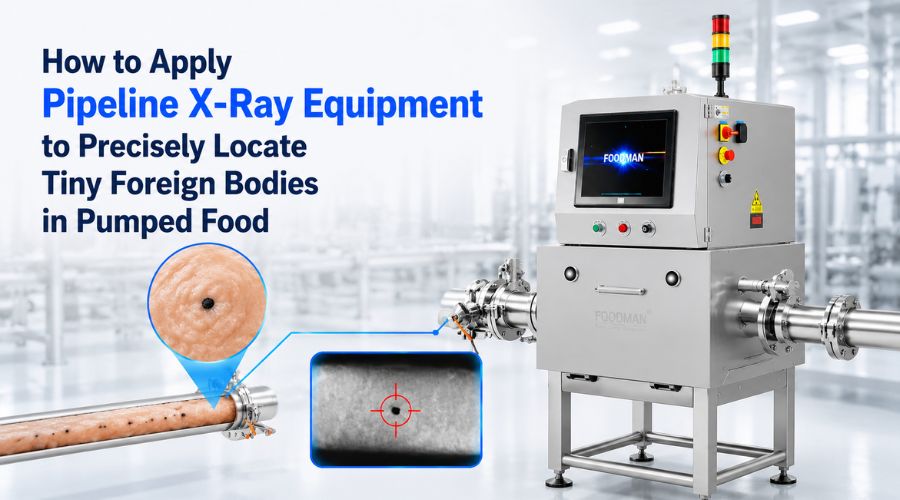
One of the greatest threats to food safety in the modern food industry is the presence of foreign products, notably small glass shards. This is particularly true for food items that can be pumped, such as minced meat, sauces, liquid eggs, dairy products, and soups, where the constant flow of material through pipelines makes it difficult, if not impossible, to use traditional inspection techniques.
As a consequence, finding and eliminating foreign items in these product categories has long been a recurring issue in the field of food safety.
Particularly likely to become deeply entrenched in high-viscosity materials are contaminants like glass shards, metal particles, bone fragments, and high-density polymers; this makes human examination techniques and conventional foreign object detection equipment completely useless. If such tainted goods unintentionally make it onto the market, they will unavoidably cause product recall issues and a disastrous decline in customer trust in the brand.
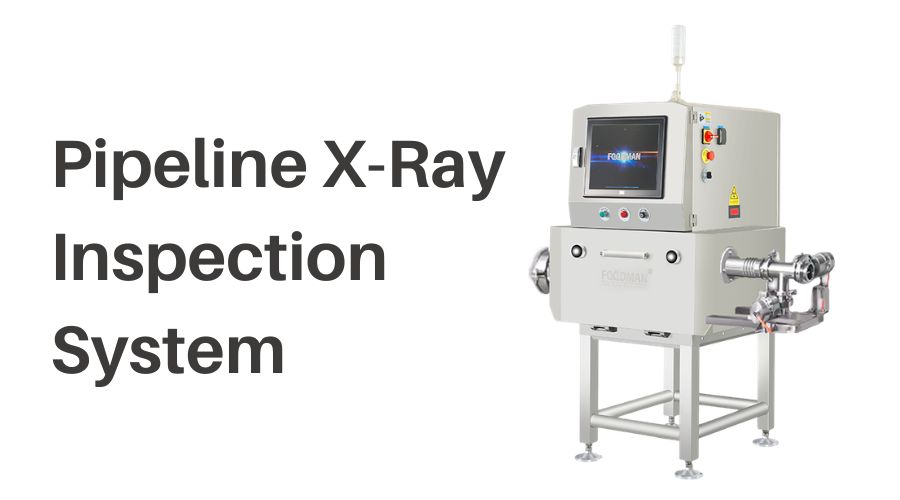
Specialised in-line pipeline X-ray inspection systems were designed to meet this challenging issue. These systems overcome the drawbacks of conventional post-packaging spot-checking by carrying out continuous, real-time inspections before product packing, allowing for the smooth, real-time monitoring of goods moving through closed pipeline networks.
In the particular context of pumpable food applications, this article will go into great detail on how contemporary pipeline X-ray equipment precisely detects minute foreign particles. It will also explain why this technology is quickly becoming an essential tool for food manufacturers all over the world.
A pipeline X-ray inspection system: what is it?
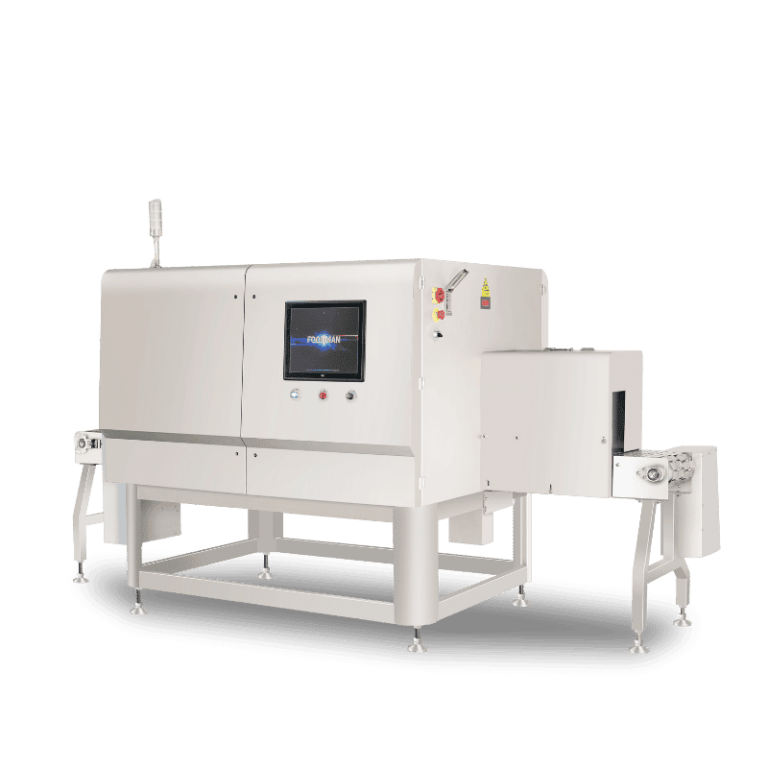
A pipeline X-ray inspection system is a specialised detecting device made especially to check pumpable, high-viscosity, liquid, and semi-liquid food items as they pass through enclosed pipelines. This kind of equipment connects directly into the manufacturing line, allowing for continuous scanning and inspection while the product is in transit, in contrast to conveyor-belt-based inspection systems.
The system emits a controlled X-ray beam through the product flowing through the pipe, while integrated detectors capture information regarding density variations within the food stream. Subsequently, sophisticated software algorithms perform an in-depth analysis of the captured images to identify anomalous particles—specifically those exhibiting a density distinct from the product matrix itself. The system then signals a rejection mechanism to divert these contaminated products, expelling the foreign objects through a dedicated rejection port.
Tailored to the specific production characteristics of pumpable foods, pipeline X-ray inspection technology overcomes the blind spots inherent in traditional inspection methods, achieving “zero-interference” internal visualisation of fluid products. This system is capable of precisely identifying foreign objects such as glass, metal, stones, high-density plastics, and calcified bone; furthermore, it can detect stainless steel spheres and wires with an astonishing precision down to a minimum size of 0.3 millimetres, thereby ensuring the absolute safety of high-risk products such as minced meat, fruit mince, dairy products, and beverages.
Custom pipeline X-ray machines integrate directly into the production process, in contrast to X-ray glass container inspection, which targets products already packed into bottles or jars. Before the product is packaged, it analyses it in real time and modifies its parameters according to certain pipe diameters, flow rates, and densities. By totally eliminating packaging material interference with the detection signal, this approach eliminates contamination risks at their source.
What is a Pipeline X-Ray Inspection System?
A pipeline X-ray inspection system is a specialised detection apparatus specifically designed to inspect liquid, semi-liquid, high-viscosity, and pumpable food products as they are conveyed through enclosed pipelines. Unlike conveyor-belt-based inspection systems, this type of equipment integrates directly into the production line, enabling continuous scanning and inspection while the product is in transit.
The system emits a controlled X-ray beam through the product flowing through the pipe, while integrated detectors capture information regarding density variations within the food stream. Subsequently, sophisticated software algorithms perform an in-depth analysis of the captured images to identify anomalous particles—specifically those exhibiting a density distinct from the product matrix itself. The system then signals a rejection mechanism to divert these contaminated products, expelling the foreign objects through a dedicated rejection port.
Tailored to the specific production characteristics of pumpable foods, customised pipeline X-ray inspection equipment technology overcomes the blind spots inherent in traditional inspection methods, achieving “zero-interference” internal visualisation of fluid products. This system is capable of precisely identifying foreign objects such as glass, metal, stones, high-density plastics, and calcified bone; furthermore, it can detect stainless steel spheres and wires with an astonishing precision down to a minimum size of 0.3 millimetres, thereby ensuring the absolute safety of high-risk products such as minced meat, fruit mince, dairy products, and beverages.
Distinct from X-ray glass container inspection—which targets products already filled into bottles or jars—customised pipeline X-ray equipment integrates directly into the production line itself. It performs real-time monitoring of the product before it enters the packaging stage, adjusting its parameters based on specific pipe diameters, flow rates, and densities. This approach completely eliminates interference with the detection signal caused by packaging materials, thereby eradicating contamination risks at the very source.
The Challenges of Detecting Minute Foreign Objects in Liquid and Semi-Liquid Foods
Detecting minute contaminants in pumped food products—particularly meat slurries—presents several significant challenges:
1. Product Homogeneity vs. Contaminant Density
Meat slurry is a viscous emulsion with various quantities of protein, fat, and moisture. Due to the density of them, which is comparable to that of bone fragments, minute glass pieces—typically smaller than 1 mm—are very hard to distinguish from the surrounding product matrix. Therefore, in order to eliminate erroneous rejections, X-ray inspection systems must have extremely high picture resolution and sophisticated algorithms to accurately differentiate hazardous foreign items from approved food components (such as cartilage or dense muscle fibres).
2. Real-time processing on a millisecond scale

2 to 10 tonnes per hour is the normal throughput that these systems are capable of handling. This means that the X-ray system must finish image acquisition, analysis, and decision-making in milliseconds. Any delay could cause contaminated material to go unnoticed and mix with products that comply. As a result, in-line pipeline X-ray equipment needs to have high-performance processors that are able to keep processing data in real time and collect sensor data rapidly.
3. Hardware Resilience Under Extreme Operating Conditions
Hot-fill pipelines (up to 95°C) and high-pressure pumps (up to 10 bar) can damage standard electronic components. X-ray pipe inspection systems must therefore be equipped with thermal management systems and pressure-resistant pipeline components.
4. Balancing False Rejection Rates and Yield
Overly sensitive settings can lead to the erroneous rejection of compliant products, resulting in waste and downtime. True precision lies in striking a balance between sensitivity and product yield. Customised X-ray pipe inspection equipment offers a distinct advantage in this regard—by allowing algorithms to be finely tuned for specific products.
5. Glass Detection's "Invisible" Problems
Glass’s transparency and frequently small size make it a particularly difficult issue. While utilising an X-ray to look for glass in food, it is important to understand that glass absorbs less radiation since it has a lower atomic number than metals. Ultra-high-sensitivity detectors in conjunction with unique low-contrast amplification techniques are crucial for effectively detecting these “nearly invisible” glass defects.
In-Line X-Ray Systems: How to Find Tiny Foreign Objects with Extraordinary Precision
1. High-Sensitivity Imaging Technology: Enabling Precise Identification of Minute Foreign Objects
In-line X-ray systems use high-sensitivity imaging technology to thoroughly examine interior density changes in items. This makes it possible to easily identify even incredibly small foreign things, like microscopic metal fragments, glass shards, stones, or bone fragments. By creating a distinct visual distinction between foreign objects and the surrounding product material through improved picture contrast and resolution, this approach greatly increases detection accuracy and lowers the possibility of missed detections.
2. Stable Product Flow Control: Ensuring Detection Consistency
In pumped production lines, the stability of product flow directly impacts detection results. In-line X-ray equipment optimises its conveying structure and fluid control design to ensure that materials remain in a uniform, continuous state—free from air bubble interference—as they pass through the detection zone. This stable flow not only minimises image distortion but also guarantees the consistency of every X-ray frame captured, thereby enhancing the overall reliability of the inspection process.
3. Intelligent Image Algorithm Analysis: Automatically Identifying Anomalous Density Regions
Modern in-line X-ray inspection systems integrate advanced image processing algorithms to perform real-time analysis of scanned images. The system automatically identifies areas of anomalous density and compares them against the standard structural profile of the product, thereby rapidly pinpointing potential foreign objects.
Furthermore, the intelligent algorithms developed by Foodman continuously learn and adapt to specific product characteristics, optimising their decision-making models. This effectively reduces the rate of false alarms and boosts the operational efficiency of the production line.
4. Automated Rejection System Integration: Achieving Accurate Product Defect Separation
The automated rejection mechanism reacts quickly to remove the contaminated item from the production line when the X-ray pipe inspection finds a product that contains foreign items. This method offers quick response times and precise precision without the need for human interaction.
In addition to reducing product waste, this smooth integration of detection and rejection ensures the final outgoing products’ safety and consistency, ensuring full compliance with current food safety management regulations.
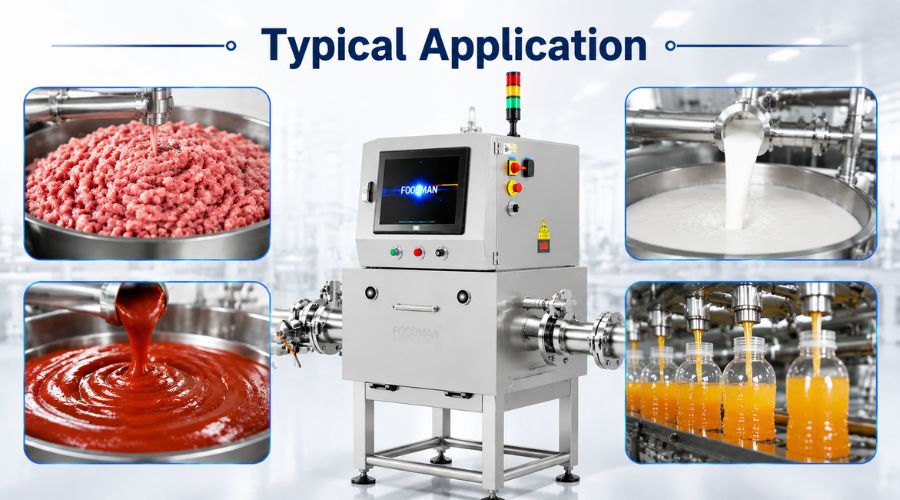
Typical Application Cases
Detection of Meat Emulsions and Sausage Batters
The meat processing industry widely utilises pipeline-based X-ray inspection equipment to detect the following:
Bone fragments
Metal particles
Dense connective tissue
Glass contaminants
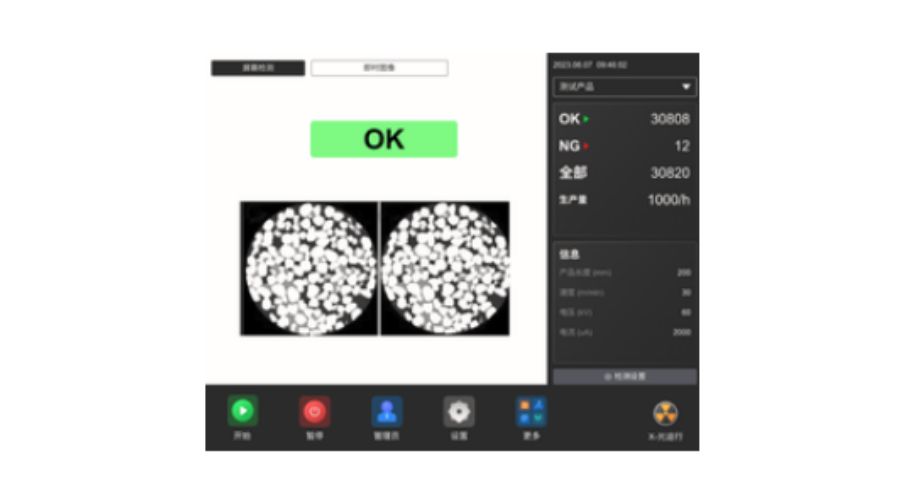
During the sausage production process, minute calcified particles can not only erode consumer trust but also pose significant food safety risks. Modern pipeline-based X-ray inspection systems deliver exceptionally stable detection performance, even when inspecting high-density meat emulsions.
Dairy and Yoghurt Production
Dairy processors utilise customised pipeline X-ray inspection system to inspect the following:
Concentrated dairy products
Yoghurt mixtures
Cream-based products
Cheese sauces
In the event of accidental bottle breakage, these systems assist manufacturers in precisely searching for and detecting glass fragments within food products using X-ray technology.
Sauce and Condiment Manufacturing
Sauce-based products present significant challenges for inspection processes due to the following characteristics:
High viscosity
Presence of particulate ingredients
Non-uniform texture
Advanced X-ray pipe inspection equipment helps identify contaminants hidden within ketchup, chilli sauce, curry paste, and mayonnaise.
Beverage and Bottled Product Processing
Many beverage manufacturers adopt a combined inspection strategy:
Utilising X-ray technology to inspect glass containers
Conducting inline X-ray pipe inspection
This “dual-protection” strategy ensures that potential contaminants are effectively detected both before and after product filling.
Important Benefits of the Pipeline X-Ray Inspection System
Enhancing Food Safety Laws and Assuring the Quality of a Final Product
The capacity of pipeline X-ray inspection gadgets to substantially boost consumer safety assurance levels is its greatest benefit. Manufacturers may instantly detect and reject possible extraneous impurities, like metal, glass, stones, and pieces of bone, by incorporating this type of technology into the production line. This non-destructive inspection technique reduces food safety hazards at the source by enabling high-precision inside scanning without sacrificing the product’s structural integrity.
Through continuous, in-line monitoring, companies can significantly raise their overall food safety standards, ensuring that every product batch meets rigors quality requirements.
Boosting Automated Production Efficiency and Reducing Reliance on Manual Labour
Unlike traditional batch-based inspection methods, this system utilises real-time, in-line detection technology that does not require process interruptions—a common drawback of conventional random sampling. The pipeline X-ray inspection system facilitates uninterrupted, continuous monitoring without disrupting normal production workflows. This not only ensures maximum production throughput but also eliminates the substantial costs associated with manual re-inspection, allowing businesses to truly enjoy the best of both worlds.
Minimising the Risks of Customer Complaints and Product Recalls
A single product recall caused by glass contamination can easily result in financial losses amounting to millions of dollars—not to mention the catastrophic damage inflicted upon a brand’s reputation.
By intercepting contaminants before products are packaged, you can nip potential crises in the bud. This proactive approach—”prevention rather than cure”—is far more cost-effective than any post-incident remediation. It minimises the risk of product recalls to the greatest extent possible, ensuring that your brand remains both credible and highly regarded within the marketplace.
Meeting International Food Safety Standards (HACCP, FDA, etc.)
As global food safety regulations become increasingly stringent, businesses are required to comply with a growing number of international standards, including HACCP, FDA, and ISO 22000.
Pipeline X-ray inspection systems provide comprehensive inspection records and robust data traceability support, enabling companies to establish a robust and sophisticated quality control framework. This capability not only facilitates successful factory audits and certification processes but also enhances a company’s competitiveness and regulatory compliance capabilities within the global market.
How to Select the Right Pipeline X-Ray Inspection Equipment
Detection Sensitivity
When selecting equipment, the primary focus should be on its ability to identify the smallest foreign objects—specifically, the minimum size of contaminants it can detect, its adaptability to varying product densities, and the stability and consistency of its detection performance under different flow rate conditions.
Hygienic Design Standards
Food-grade pipeline X-ray equipment should feature a stainless steel construction and support CIP (Clean-in-Place) procedures. Welds must be smooth and free of dead corners; the unit should possess an appropriate ingress protection (IP) rating for water resistance, and it should be easy to disassemble for routine maintenance, thereby ensuring strict compliance with food hygiene regulations.
Software and Data Traceability Features
Modern equipment should incorporate features such as real-time monitoring, data storage and management, remote access capabilities, audit trails, and automated report generation to enhance quality control efficiency and regulatory compliance management.
Integration with Factory Systems
The equipment should support seamless integration with MES (Manufacturing Execution Systems), ERP systems, and cloud platforms. This enables the interconnectivity and intelligent analysis of production data, thereby assisting enterprises in establishing a digitised production ecosystem aligned with Industry 4.0 standards.
Conclusion
As food safety standards continue to rise, manufacturers must adopt more advanced inspection technologies to ensure the precise detection of minute contaminants—even within the complex production environments of liquid foods.
Modern pipeline-based X-ray inspection systems offer highly efficient solutions for pumpable food products—such as minced meat, dairy items, sauces, seafood pastes, and beverages—striking a balance between inspection precision and production efficiency through the integration of high-sensitivity imaging, stable flow control, AI-driven analysis, and automated rejection systems.
Pipeline inspection enables manufacturers to tackle contaminant issues at the earliest possible stage—directly at the source. By adopting this technology, food manufacturers not only safeguard public health but also minimise waste, protect production equipment, and cultivate unwavering consumer trust.
FAQ
In-line X-ray inspection equipment is primarily used to inspect pumpable fluids or liquid food products conveyed through enclosed pipelines. It enables the real-time detection of foreign objects—such as glass, metal, bone, stone, and high-density plastics—without interrupting production operations.
The primary challenges include factors such as inconsistent product density, high flow rates, interference from air bubbles, and variations in product texture; during the inspection process, these factors can potentially mask or distort the signals of minute contaminants.
Yes. Many manufacturers offer customised in-line X-ray inspection equipment, specifically tailored to the unique viscosity, pipeline dimensions, production speeds, and inspection criteria of a given product.