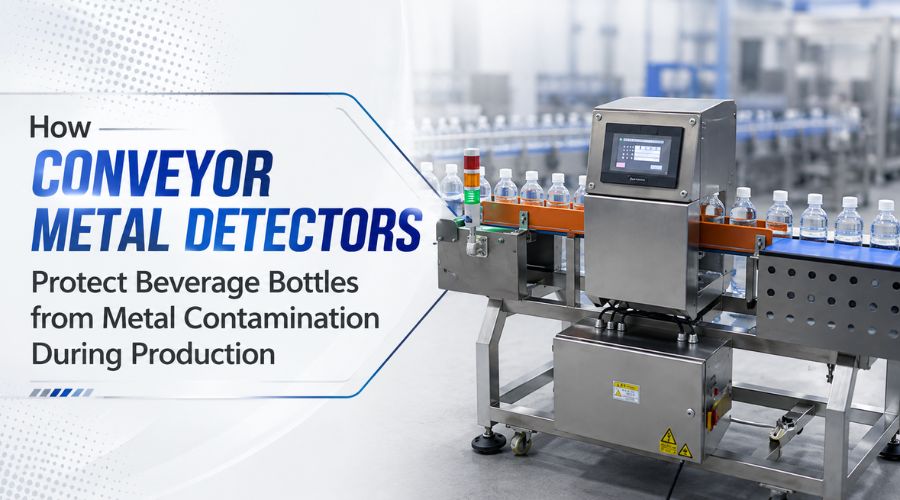
Introduction: Hidden Risks Lurking In Every Bottle
Imagine this scenario: a client opens a freshly purchased bottle of sparkling water and takes a nice sip, only to find their tongue smashed by a sharp bit of metal. Years of brand trust are lost in an instant. A single metal fragment—invisible to the naked eye during production—can trigger a potential health crisis, a product recall, and a public relations disaster.
Even minute metal fragments can pose serious food safety risks. Once contaminated products reach the market, beverage manufacturers face a host of consequences, including consumer complaints, product recalls, production shutdowns, brand damage, and financial losses. Consequently, automated foreign object detection has become a vital component of modern beverage quality control systems.
Conveyor-based metal detectors for beverages enable continuous, in-line inspection as bottles move along the production line. Unlike reliance on manual spot checks, a properly configured metal detection system automatically inspects products and triggers a rejection mechanism whenever detectable metal contaminants are found.
Foodman has dedicated decades to perfecting this technology, fully aware that in the realm of beverage metal detection, there is absolutely no room for compromise.
This article explores how metal detection conveyor systems serve as “silent guardians” of beverage quality, covering everything from detection principles to practical considerations for selecting and deploying this critical safety equipment.
Why Do Metal Contaminates Take Place In Beverage Production?
Understanding the causes of metal contamination is the first step toward prevention. Contrary to the general consensus, metal fragments rarely enter the production process via a single, evident point of failure. Instead, they frequently come from various sources, sometimes in ways that surprise even experienced quality managers.
Introduction via Raw Materials
Various beverage ingredients—such as sugar, concentrates, flavorings, water, and carbonating agents—undergo complicated supply chain go before reaching the filling line. Metal impurities may contaminate these raw materials during harvesting, processing, and transportation. For instance, when sugar is processed through milling equipment, damaged screens or worn blades can generate fine metal particles; concentrated fruit juice may contain debris from harvesting machinery; and even purified water from municipal supplies can carry trace metal particles resulting from aging pipeline infrastructure.
Equipment Wear and Mechanical Damage
Beverage production lines contain numerous moving parts. Conveyors, pumps, filling machines, capping equipment, bearings, guide rails, fasteners, and other mechanical components often operate continuously for extended periods.
Friction, vibration, corrosion, or mechanical failure can cause tiny metal particles to break off from the equipment. The risk posed by stainless steel fragments is of particular concern, given the widespread use of stainless steel in food and beverage processing environments.
Metal detectors designed for beverage conveyor lines provide an additional line of defense against these potential sources of contamination. If metal fragments enter bottles or become mixed into the finished product, the detection system identifies the signal and rejects the affected items.
Maintenance and Repair Activities
Routine maintenance is essential for ensuring the reliability of beverage production, yet maintenance activities can also introduce temporary contamination risks.
Small screws, nuts, washers, wire fragments, metal shavings, or pieces of broken tools can accidentally enter the production environment. Without automated inspection, these contaminants might go undetected until the finished product reaches the consumer.
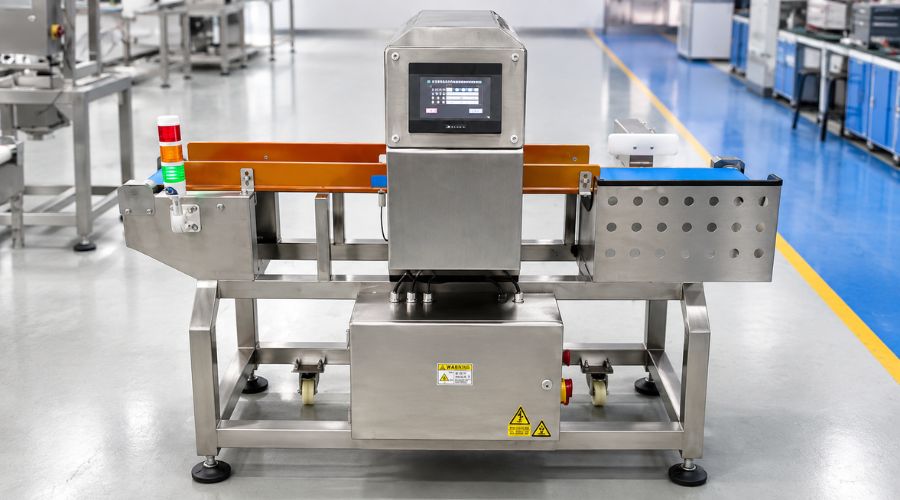
For this reason, conveyor systems equipped with metal detection capabilities are invaluable as a final or intermediate quality control measure. They provide an automated safeguard, even when the source of contamination lies outside the standard production process.
Risks During Packaging and Handling
Metal contamination can also occur during the packaging and handling stages. Depending on the production setup, items such as caps, seals, mechanical components, and packaging equipment can all pose a risk of metal contamination.
Consequently, the purpose of metal-detecting conveyor systems in the food industry is not to replace Good Manufacturing Practices (GMP), hygiene protocols, or preventive maintenance, but rather to provide an additional layer of safety.
Selecting the right metal-detecting conveyor solution for the food industry helps establish a multi-layered defense system that combines contamination prevention with contamination detection.
The Challenge of Hidden Contamination
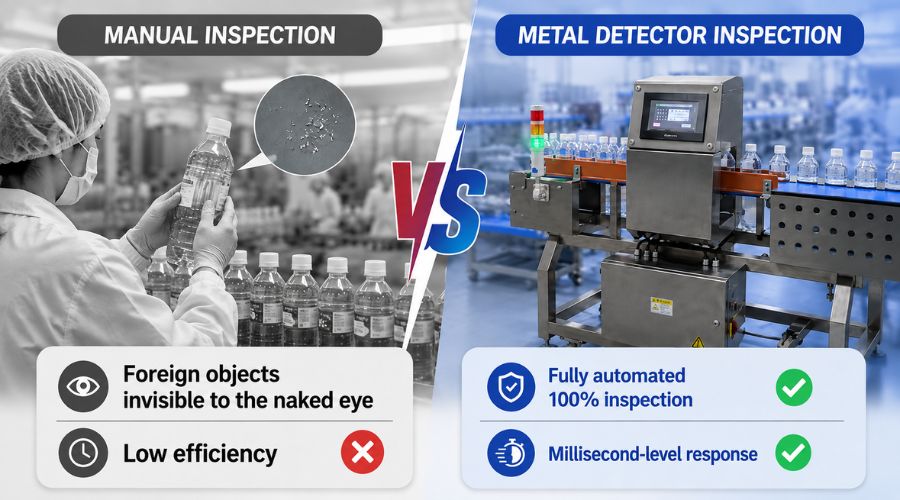
Metal contamination is particularly insidious because it is often invisible to the naked eye. Many metal particles are smaller than the limit of human visibility (typically under 2 mm), yet they are large enough to cause injury or damage downstream equipment. By the time a contaminant is spotted during a manual quality check, it has often already passed through the entire production system, potentially affecting thousands of bottles.
This reality explains why relying solely on manual visual inspection is insufficient for eliminating metal contaminants; the beverage industry requires a systematic, automated inspection solution capable of operating at production-line speeds and inspecting every single bottle without exception.
Why Do Bottled Beverage Production Lines Need Metal Detection Equipment?
In the food industry, installing conveyor-based metal detection systems goes beyond mere regulatory compliance. While meeting standards such as HACCP, BRC, IFS, and FDA is crucial, the true value of these systems lies in the comprehensive protection they provide.
Consumer Safety: Non-Negotiable
The presence of metal contaminants in bottled beverages poses a potential risk of harm to consumers. Conveyor-based metal detection systems enable in-line product inspection and the timely rejection of contaminated items, adding a critical layer of safety for every bottle.
Safeguarding Brand Reputation and Consumer Trust
A single incident involving metal contaminants can trigger customer complaints, product recalls, or even a brand crisis. In today’s era of rapid information dissemination, long-standing consumer trust can be severely compromised by a single quality incident. Metal detection equipment enables companies to maintain consistent product quality and protect their brand reputation.
Protecting Production Equipment and Minimizing Losses
Metal particles not only threaten product safety but can also damage production machinery—such as filling and capping equipment—leading to downtime and increased maintenance costs. Detecting and rejecting products containing metal contaminants during the production process helps mitigate the risk of equipment failure and enhances production line stability.
Meeting Food Safety Standards and Customer Requirements
An increasing number of food safety systems, brand owners, and retail channels require beverage manufacturers to implement robust measures for foreign object control and detection. Metal detection has become a vital component of quality control systems in modern beverage production lines.
Preventing Major Losses with a Modest Investment
Compared to the costs associated with product recalls, customer claims, production stoppages, and brand damage, a reliable metal detection system offers superior long-term value. It does more than just detect metal; it helps companies prevent quality incidents, reduce operational risks, and safeguard consumer trust.
Working Principle of Conveyor-Type Metal Detectors
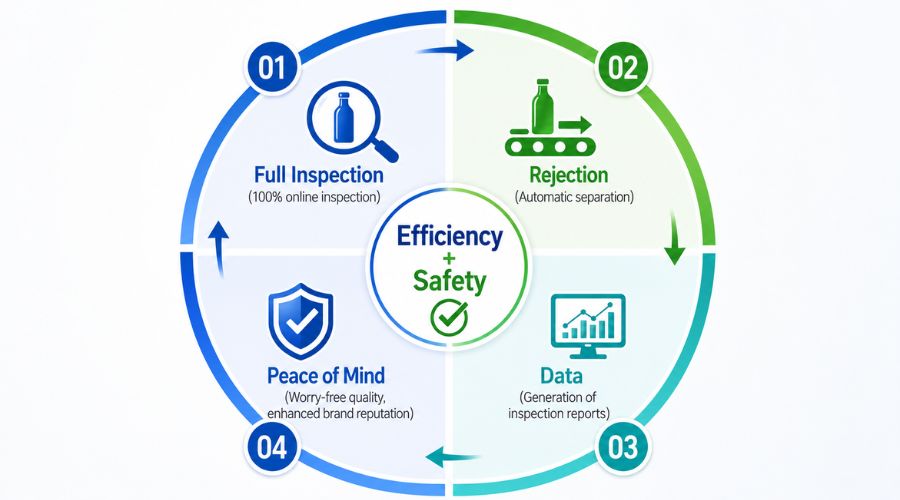
Conveyor-type metal detectors primarily utilize the principle of electromagnetic induction to perform in-line detection of metal contaminants in bottled beverages or other products passing through the inspection zone.
The basic operating process is as follows:
1. Generation of a stable electromagnetic field
The detector head contains both transmitting and receiving coils. Upon activation, the system establishes a stable, balanced electromagnetic field within the inspection zone.
2. Product passage through the inspection zone
Bottled beverages move continuously along the conveyor belt into the metal detection zone. Under normal conditions, the product does not cause any significant signal deviation from the system’s balanced state.
3. Signal changes caused by metal contaminants
If a product contains metal contaminants—such as ferrous metals, non-ferrous metals, or stainless steel—these impurities disrupt the established electromagnetic field as they pass through the inspection zone, generating signal changes that the system can detect.
4. System Analysis and Contaminant Detection
The control system rapidly analyzes the signals and, based on preset sensitivity levels and detection standards, determines whether the product contains metallic foreign objects.
5. Automatic Rejection of Non-Compliant Products
Upon detecting an anomaly, the system triggers an alarm and stops the line or sends a command to a rejection mechanism—such as a pusher, swing arm, air blast, or other device—to automatically remove the contaminated product from the production line.
Consequently, conveyor-based metal detectors enable continuous, automated in-line inspection of bottled beverages, helping manufacturers promptly identify metal contaminants—including ferrous, non-ferrous, and stainless steel—thereby enhancing product safety and quality control on the production line.
Key Selection Parameters for Bottled Beverage Metal Detectors
Selecting the right metal detection conveyor system requires a comprehensive evaluation of various technical and operational factors. A complete inspection solution must align with beverage characteristics, bottle specifications, conveying methods, production speeds, the operating environment, and quality control requirements.
1. Customizable Equipment Height and Width
Production line layouts vary widely, with significant differences often found in conveyor heights, bottle dimensions, line spacing, and available installation space.
Therefore, the physical dimensions of the metal detection conveyor system must be carefully considered during the engineering design phase.
Foodman offers equipment configurations with customizable conveyor heights and widths to better accommodate diverse production line layouts and product sizes. For instance, a narrow conveyor belt may be more suitable for transporting single bottles, whereas wider belts might be required for multiple bottles arranged side-by-side or for large-format packaging.
The goal is to seamlessly integrate the beverage conveyor metal detector into the existing production line while avoiding the creation of unnecessary production bottlenecks.
2. Detection of Ferrous, Non-Ferrous, and Stainless Steel Contaminants
A professional beverage inspection system must be capable of identifying various categories of metal contaminants based on product characteristics and operating conditions.
Common detection categories include:
* Ferrous metals
* Non-ferrous metals
* Stainless steel
Actual detection capabilities depend on factors such as product effect, aperture size, metal type, and the shape and orientation of the contaminants.
These sensitivity specifications aim to balance the need to detect potentially harmful foreign objects with the need to maintain a manageable rejection rate. However, the sensitivity actually achievable depends on product effect, aperture size, and environmental conditions.
Foodman’s beverage-grade metal detectors achieve industry-leading sensitivity through optimized coil design and advanced signal processing technology. Under typical beverage production conditions, our systems can consistently detect stainless steel particles as small as 1.2 mm, delivering performance that exceeds industry standards.
3. Interference Resistance and Environmental Adaptability
Beverage production environments pose significant challenges for electronic equipment. High-pressure washdowns, fluctuating temperatures, and electromagnetic interference from variable frequency drives (VFDs) necessitate equipment with robust construction and strong resistance to interference.
A reliable metal detection conveyor system for the food industry must be designed to operate stably within actual industrial environments.
Factors such as temperature fluctuations, vibration, humidity, cleaning procedures, and nearby electrical equipment must also be taken into account.
Environmental adaptability is particularly critical for metal detection conveyor applications in the food industry, as beverage production areas often require frequent cleaning and the maintenance of hygienic operations.
A stable detection system helps minimize false alarms while maintaining reliable detection performance.
4. Automatic Rejection System
The rejection mechanism—the method used to remove contaminated bottles from the production line—significantly impacts the system’s overall performance. Metal detectors for beverage conveyors should be paired with a rejection system suited to the specific product and production speed.
The choice of rejection method depends on the following factors:
* Bottle size
* Product spacing
* Conveyor speed
* Bottle stability
* Production capacity
* Packaging format
The rejection mechanism must remove contaminated products without disturbing surrounding bottles. The selection of the rejection method depends on bottle weight, line speed, and downstream handling requirements. Foodman offers customized rejection solutions; well-designed metal detector conveyor systems can also integrate rejection confirmation or monitoring functions as needed, minimizing product loss while ensuring the reliable removal of contaminated bottles.
5. Data Interfaces and Digitalization Capabilities
Modern food production relies increasingly on production data. The value of metal detection equipment is enhanced when inspection data can be integrated into plant management and quality control processes.
Depending on the equipment configuration, conveyor-based metal detectors for the food industry may support digital interfaces for data communication.
Useful information includes inspection records, alarm events, rejection events, product settings, and production statistics.
For manufacturers committed to digital transformation, conveyor-based metal detection solutions can serve as part of a broader connected production environment, rather than functioning merely as standalone inspection units.
How Metal Detectors Enhance Production Efficiency and Safety
Beyond their primary safety function, conveyor-based metal detection systems in the food and beverage industry offer significant operational benefits, positively impacting production economics.
Reducing Foreign Object Complaints
Consumer complaints regarding foreign objects represent one of the costliest and most damaging quality issues in the beverage industry. By implementing robust metal detection systems, manufacturers can typically reduce metal-related complaints by 90–95%. This significant improvement not only protects brand reputation but also lowers hidden costs associated with complaint handling, compensation, and regulatory reporting.
Extending Equipment Lifespan
Undetected metal fragments can cause ongoing damage to downstream equipment. Filling valves, which require precise sealing to prevent leaks, are particularly vulnerable. Even tiny metal particles can scratch valve seats, leading to leaks, inconsistent fill levels, and increased maintenance costs. Similarly, threaded components in capping machines can sustain damage, resulting in loose caps and product leakage.
By removing metal contaminants before they reach sensitive equipment, conveyor-based metal detection systems extend the service life of expensive production machinery while reducing unplanned downtime.
Reducing Unplanned Downtime
Product recalls or contamination incidents trigger immediate production line stoppages to investigate the source and implement corrective actions. Such downtime can last hours or even days, resulting in significant production losses. Effective metal detection significantly reduces contamination-related downtime, thereby improving Overall Equipment Effectiveness (OEE).
Meeting Retailer Standards
Major retailers increasingly mandate formal metal detection verification as a condition of supply. Detectors equipped with digital record-keeping capabilities streamline compliance with these requirements, providing easily accessible proof of detection capabilities and performance. This capability opens doors to premium retail channels that enforce rigorous safety standards.
Digital Traceability for Audit Compliance
Comprehensive inspection logs provide irrefutable evidence of due diligence in the event of quality incidents. Detailed records facilitate rapid investigation and targeted corrective actions when contamination occurs, minimizing the scope and severity of potential recalls.
Enhanced Integration with Quality Management Systems
Metal detection conveyor solutions for the food industry can complement other inspection technologies, such as checkweighers, X-ray inspection systems, and AI-based vision inspection systems.
For example, a beverage manufacturer might utilize an integrated system combining metal detection, checkweighing, vision inspection, and X-ray inspection, depending on specific product risks and quality requirements.
Why Choose Foodman as Your Beverage Metal Detection Partner?
For bottled beverage manufacturers, Foodman offers conveyor-based metal detection solutions tailored to specific products and production environments.
These beverage conveyor metal detectors can be configured based on factors such as bottle size, conveyor height and width, production speed, product characteristics, and rejection requirements.
The engineering process focuses on the customer’s specific application needs rather than simply selecting standard equipment from a catalog.
For metal detector conveyor systems, this involves evaluating variables such as bottle material, beverage properties, target contaminant types, production line speed, available installation space, and the required rejection method.
Foodman’s inspection portfolio also enables manufacturers to consider complementary technologies when metal detection alone cannot address all contamination risks.
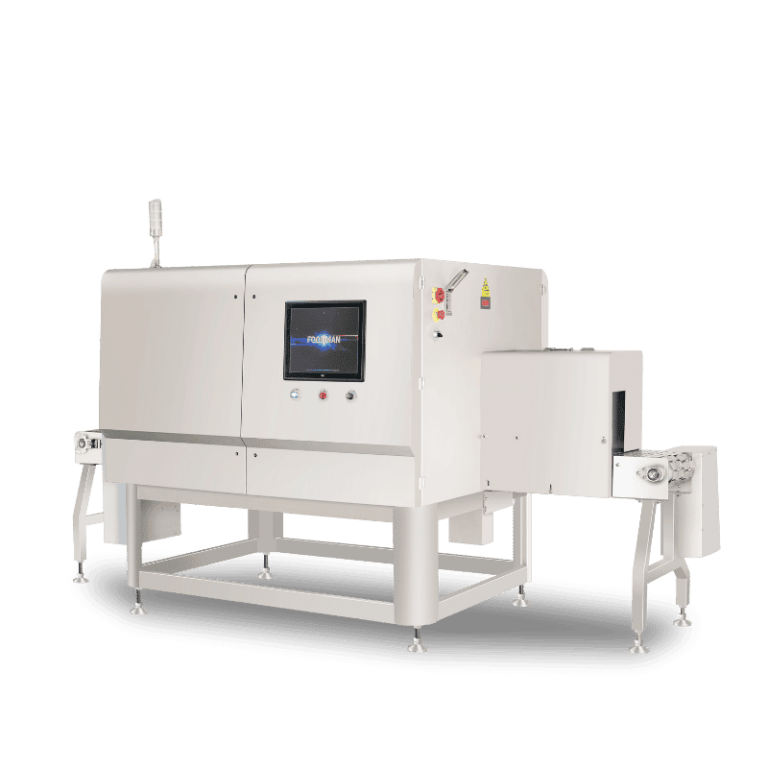
For instance, metal detector conveyor systems are ideal when the primary concern is metal contamination. However, if a customer also needs to detect glass, stones, bone, or other high-density foreign objects, X-ray inspection systems offer broader detection capabilities.
This application-driven approach makes Foodman a practical partner for manufacturers seeking to build more comprehensive inspection strategies.
Conclusion
Metal contamination in beverage production environments can originate from various sources, including equipment wear, maintenance activities, packaging machinery, and mechanical components.
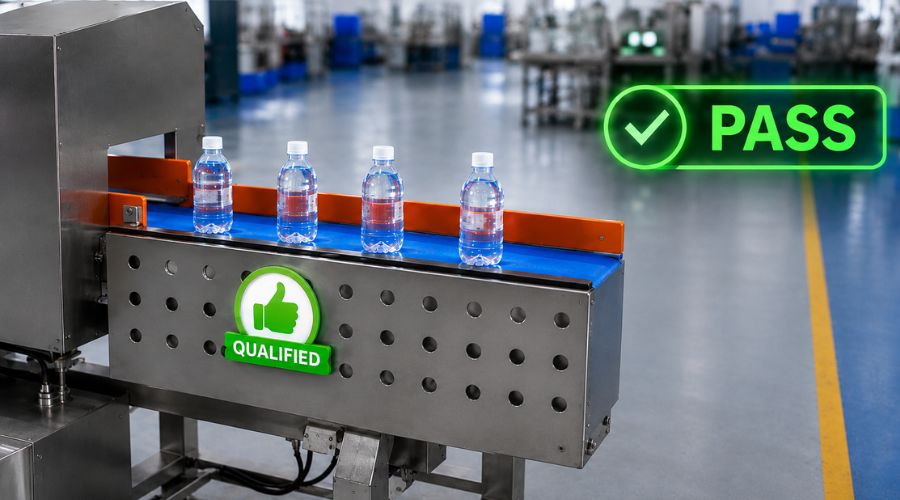
A properly configured metal detector conveyor system for beverages provides continuous in-line inspection and enables the automatic rejection of products containing detectable metal contaminants.
The effectiveness of a metal detector conveyor system depends on more than just the detector itself. Factors such as equipment dimensions, detection sensitivity, product effect, environmental conditions, conveyor speed, rejection performance, and data processing capabilities all influence the final solution.
Therefore, manufacturers should select a metal detector conveyor system tailored to the specific beverage type, bottle format, production line, and contamination risks.
A reliable metal detector conveyor system for the food and beverage industry helps establish an additional layer of protection between production and the consumer, while supporting continuous quality control and automated manufacturing.
Leveraging extensive experience in metal detection, X-ray inspection, checkweighing, sorting, and vision inspection, Foodman offers a range of inspection solutions designed to help food and beverage manufacturers enhance product safety, production efficiency, and quality control.
FAQ
A1: Beverage metal detectors are typically designed to detect ferrous metals, non-ferrous metals, and stainless steel contaminants. Actual performance varies depending on the application, product characteristics, aperture size, and the specific contaminants targeted.
A2: False rejects are usually caused by product effect, temperature fluctuations, vibration, or electromagnetic interference. Carbonated beverages, high-sugar solutions, and products with varying temperatures can generate signals that mimic those of metal. Advanced systems with auto-learning capabilities can significantly reduce false reject rates by compensating for baseline shifts.
A3: Yes. Foodman can configure conveyor-style detection equipment to meet specific application requirements, including conveyor height and width, product dimensions, production line layout, detection specifications, and rejection system configurations. Specific customization plans are determined based on the actual project requirements.