Introduction: A New Era in Meat Quality Control
In modern meat processing, precision is no longer an option—it is a prerequisite for maintaining competitiveness. As global demand for high-quality, standardized meat products continues to rise, processors face mounting pressure to ensure consistent fat content, optimize yields, and minimize waste. However, achieving accurate, real-time fat measurement has long remained a technological bottleneck.
Traditionally, fat analysis has relied on laboratory sampling or visual estimation—methods that fail to meet the speed and precision requirements of today’s high-throughput production lines. This gap has spurred an urgent need for advanced food X-ray inspection solutions—systems capable of performing not only foreign object detection but also compositional analysis.
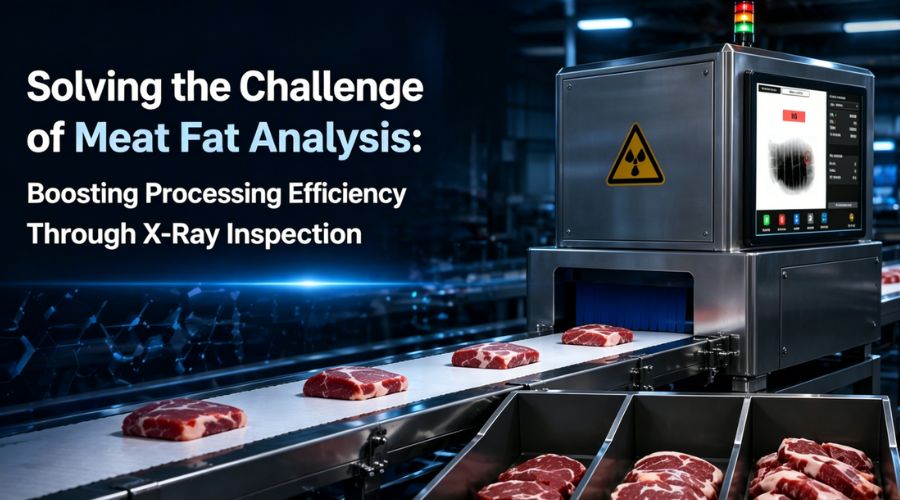
Enter the X-ray fat analysis system—a transformative technology that enables real-time, non-destructive, and highly precise fat measurement. By combining advanced imaging techniques with intelligent algorithms, X-ray systems for meat fat analysis are redefining the way processors conduct quality control and perform inline meat grading.
Industry Pain Points: The Three Major Challenges of Traditional Meat Fat Analysis
1. Detection Delays: The Cost of Data Lag
One of the most significant limitations of traditional fat analysis methods is the delay between sampling and obtaining results. Laboratory testing requires sample collection, preparation, and subsequent chemical or physical analysis—a process that often takes hours or even days.
During this interval, the entire batch of products may have already been processed, packaged, or shipped. If discrepancies are discovered only after the fact, the consequences can include product recalls, rework costs, and damage to brand reputation.
Due to the lack of real-time feedback, processors lack the agility to make immediate adjustments to production parameters. This inefficiency directly impacts both profitability and operational control.
2. Destructive Testing: Waste and Inefficiency
Traditional methods for fat analysis—such as chemical extraction or Near-Infrared (NIR) sampling—are typically destructive. To determine fat content, samples must be physically altered or destroyed; this gives rise to several issues: material waste, limited sample sizes, and the inability to inspect every single product.
Consequently, processors are forced to rely on statistical estimates rather than comprehensive inspection. This results in inconsistent product quality and undermines the reliability of grading accuracy.
3. Insufficient Accuracy: The Risk of Inconsistent Results
Visual inspection and manual grading remain widely practiced in many manufacturing facilities. However, these methods are inherently subjective and prone to human error. Even Near-Infrared (NIR) spectroscopy systems—while faster—struggle to contend with issues such as uneven fat distribution, variations in product thickness, and surface contamination.
The inability to consistently measure fat content across different cutting methods and processing conditions leads to a host of problems, including inconsistent product quality, inaccurate pricing, and diminished customer trust. These limitations underscore the urgent need for a more reliable and scalable solution—a need that X-ray fat analysis systems are uniquely positioned to fulfill, thanks to their distinct advantages.
Technical Breakthrough: How X-Rays Enable Online Fat Content Analysis
The transition from offline laboratory testing to online analysis is made possible by Dual-Energy X-ray Absorptiometry (DXA) technology. Unlike standard X-ray systems—which can only detect density differences (e.g., between bone and meat)—specialized X-ray systems for fat analysis utilize two distinct energy levels to differentiate between lean tissue and fat.
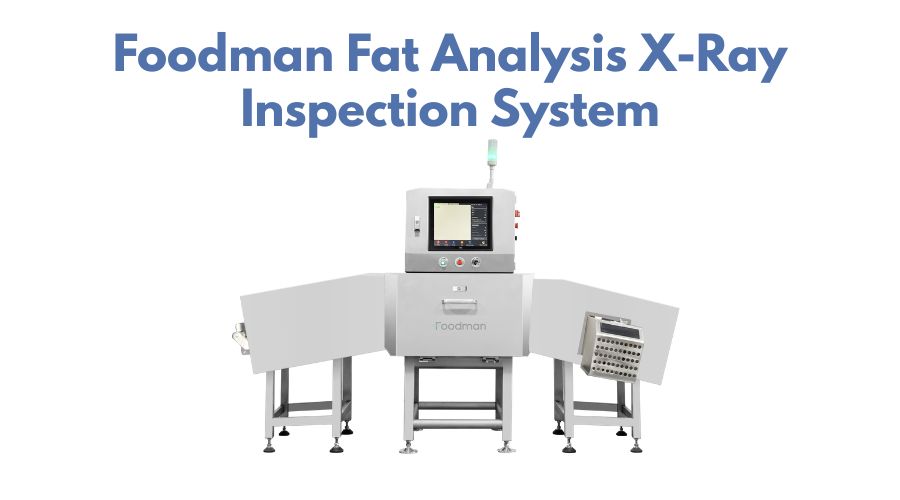
Working Principle
As meat passes through the detection channel, low- and high-energy X-ray beams interact with the product. Due to the differing chemical compositions of lean meat and fat, they absorb these rays differently. Advanced algorithms then calculate the fat percentage in real time. This process operates at production line speeds exceeding 20,000 pounds per hour, requiring no downtime or reduction in production speed.
Key Technical Advantages
Non-contact and Non-destructive: Products remain completely intact and undamaged, allowing them to be sold as normal.
Temperature-Independent: Unlike Near-Infrared (NIR) spectroscopy, X-ray performance is unaffected by freezing or thawing.
Full-Batch Coverage: Analyzes every individual piece of meat, rather than relying on a single sample.
Real-time In-line Processing: Operates directly on the production line to analyze and determine the meat-to-fat ratio, enabling true in-line meat grading.
This technological breakthrough makes true in-line meat grading a reality. Processors can now accurately sort meat in real time based on fat content—such as 5%, 15%, or 30%—and allocate each piece to its optimal application.
Application Value: Enhancing Efficiency and Profitability
1. Maximize Yield and Minimize Waste
Precise fat content measurement enables processors to optimize their cutting and blending processes. By accurately controlling fat content, businesses can: reduce excessive trimming, minimize product waste, and consistently meet target specifications. Meat Fat Content X-ray Inspection System content ensure that every product meets established standards, thereby maximizing yield and enhancing the value of raw materials.
2. Enhancing Product Consistency
Consistency is paramount to building brand trust. By utilizing specialized X-ray inspection solutions for food, processors can standardize the fat content across different product batches, thereby ensuring uniform quality.
This is particularly critical for the following products: ground meat, sausages and processed meat products, and premium meat cuts subject to strict grading requirements. By enabling precise, in-line meat grading, the system ensures that every product received by the customer consistently meets their exact expectations.
3. Optimize Production Processes
Integrating a fat analysis X-ray inspection system into existing production lines can significantly reduce the need for manual sampling and laboratory testing. The resulting benefits include faster production cycles, lower labor costs, and simplified operational complexity. Furthermore, real-time data feedback enables operators to make immediate adjustments, thereby enhancing overall process control.
4. Data-Driven Decision-Making
Modern X-ray Inspection solutions for Food generate highly valuable data that can be utilized for process optimization, quality assurance reporting, and predictive maintenance. This data-driven decision-making model empowers processors to make informed choices and facilitates the continuous improvement of their operational performance.
Foodman Solutions: An AI-Algorithm-Driven X-Ray Inspection System
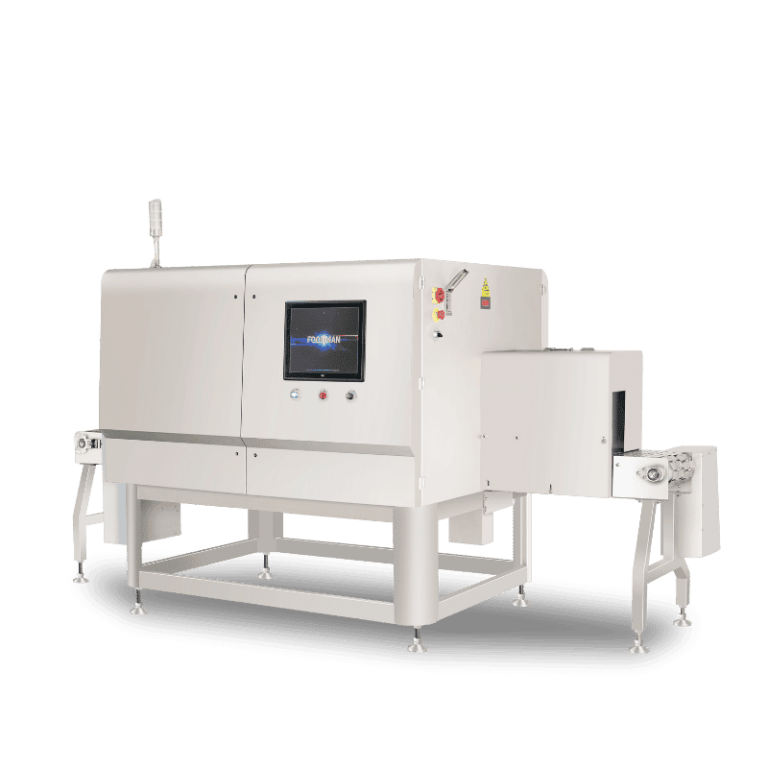
Foodman’s Fat Analysis X-Ray Inspection System represents a significant breakthrough in the field of intelligent inspection technology. Designed specifically for the meat processing industry, this system combines high-resolution X-ray imaging technology with proprietary AI algorithms to achieve unparalleled inspection precision.
Core Features and Advantages of the Foodman System
1. Deep Learning Calibration Technology
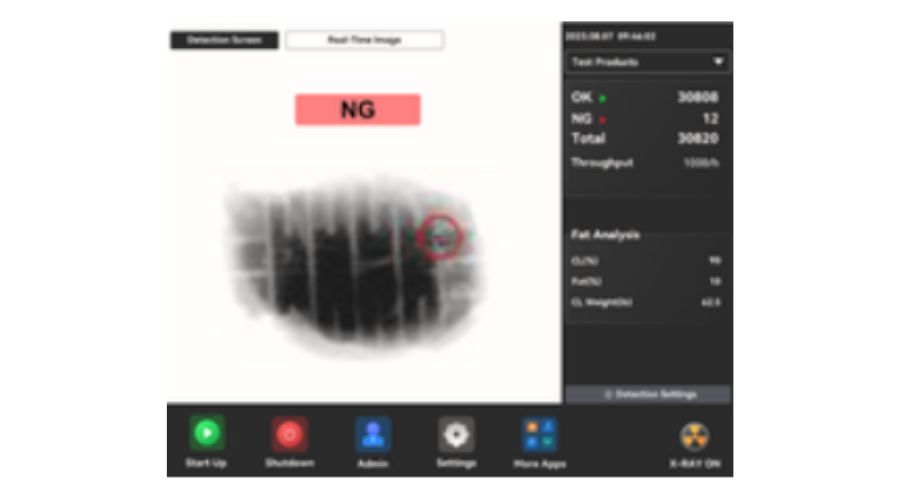
The AI integrated into the Foodman system is not merely a set of pre-programmed rules, but rather a cognitive architecture capable of evaluating each image within a dynamic environment, comprehending the internal structure of meat products, and analyzing their fat ratios.
The system is capable of autonomous learning from massive and diverse product datasets, automatically adapting to various types of meat products and fluctuating inspection conditions; furthermore, it continuously optimizes and enhances its detection accuracy over time.
This ensures that the X-ray inspection system for online meat grading content maintains a high level of reliability, even within complex and variable production environments.
2. Integration with Existing Sorting Equipment
Foodman’s system can directly output fat content data to downstream checkweighers, rejection mechanisms, and grading systems. For facilities already utilizing Foodman checkweighers or X-ray foreign object detectors, this fat analysis module enables seamless integration.
3. Comprehensive Quality Control
In addition to analyzing fat content, Foodman’s system also performs traditional foreign object detection tasks—specifically, identifying and rejecting metal contaminants, bone fragments, and various other foreign bodies. This multifunctional, integrated design comprehensively enhances overall quality control standards, making this online meat analysis and X-ray inspection system a highly valuable and comprehensive investment.
Conclusion: The Value of X-Ray Technology
For years, the application of X-ray technology in the food processing sector was virtually synonymous with “foreign object detection”—specifically, screening for contaminants such as metal, glass, stones, or bone fragments. Today, that era of singular application has come to an end. The very hardware platforms once used solely for detecting contaminants can now reveal a product’s internal compositional makeup—and fat content analysis marks the beginning of this functional expansion.
The advent of X-ray detection systems for fat analysis signals a fundamental paradigm shift: a transition from mere “quality control” to proactive “quality creation.” Processors are no longer limited to simply rejecting defective products; instead, they can actively and precisely regulate fat content to maximize yield, ensure strict adherence to product specifications, and ultimately enhance their products’ market value and pricing power. Today, inline meat grading is no longer a distant futuristic concept, but a prerequisite for boosting a company’s core competitiveness.
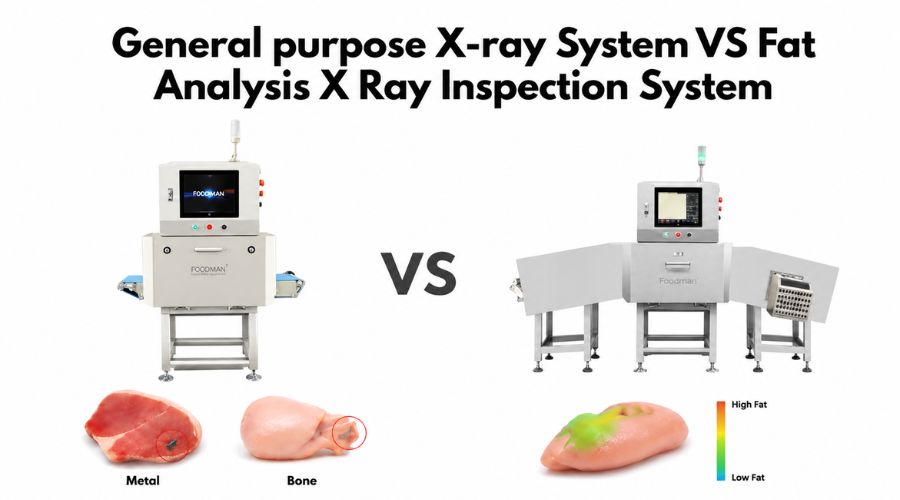
With its AI-driven X-ray system for meat fat analysis, Foodman fulfills this promise through a forward-thinking technological approach. This system not only boasts industry-leading detection accuracy and exceptional ease of integration but also delivers a rapid return on investment for its users. As regulatory pressures regarding nutritional labeling intensify and consumer demand for product quality consistency continues to soar, X-ray food inspection solutions are destined to become standard-issue equipment for every meat processing facility with a forward-looking vision. The question today is no longer whether to adopt X-ray fat analysis technology, but rather how quickly you can implement it to gain a decisive edge over your competitors.
FAQ
Yes. Advanced food X-ray inspection solutions are specifically designed to handle a wide variety of meat products—including beef, pork, poultry, and various processed meats—and can adapt automatically to the unique density and compositional characteristics of different meat types.
Yes. X-ray inspection systems for fat analysis are engineered for inline integration; they enable true “online” meat grading and inspection without causing any delays to existing production workflows.
The primary advantages include: significantly enhanced inspection accuracy, effective reduction of raw material waste, substantial improvements in production efficiency, ensuring a high degree of product quality consistency, and facilitating data-driven process optimization.