
Introduction
In modern pharmaceutical manufacturing, patient safety is a non-negotiable bottom line. Whether producing compressed tablets or filled capsules, even minute metal contaminants can lead to regulatory violations, product recalls, reputational damage, or even pose serious health risks.
This raises a common question among pharmaceutical manufacturers and nutraceutical producers:
Can a single pharmaceutical metal detection machine be used to inspect both tablets and capsules?
In short, the answer is yes—provided that the system is specifically designed for multi-product inspection within a pharmaceutical production line.
This article will explore the differences between tablets and capsules, the technical challenges involved, and how selecting the appropriate pharmaceutical metal detection machine enables accurate and reliable inspection of both product types. Today’s industry inspection systems are specifically engineered to detect both tablets and capsules with exceptional sensitivity—often capable of identifying contaminants often down to 0.8mm or smaller.
Why Tablets and Capsules Both Require Reliable Metal Detection
Metal contamination can occur at multiple stages of pharmaceutical manufacturing.
Common sources of contamination include: debris generated by wear and tear on tablet presses; fragments resulting from broken punches and dies; shards from damaged capsule-filling machine components; tiny stainless steel flakes produced by mixers; fragments left behind by maintenance tools; and contamination inherent in upstream raw materials.
During high-speed production processes, even minute ferromagnetic, non-ferromagnetic, or stainless steel fragments can become entrained within the product stream. For this very reason, within a GMP-compliant manufacturing environment, pharmaceutical metal detection systems are regarded as a critical control point.
In most manufacturing facilities, metal detectors are typically installed downstream from the following equipment: tablet presses, dedusters, capsule fillers, transfer chutes, and finished product conveyor lines. This ensures that contaminants are detected before products proceed to packaging and shipment.
Beyond fulfilling regulatory compliance mandates, the commercial value of such systems is equally significant:
Minimizing the risk of product recalls
Safeguarding brand reputation
Supporting FDA and GMP regulatory requirements
Enhancing confidence in batch release decisions
For manufacturers producing both dosage forms—tablets and capsules—utilizing a single metal detection system capable of handling multiple product types can significantly boost production efficiency.
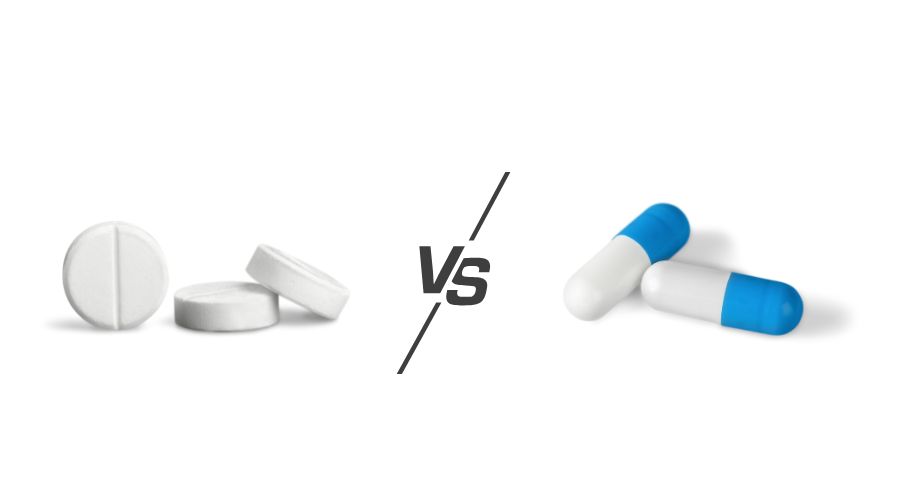
Physical Property Differences Between Tablets and Capsules
To understand why tablets and capsules behave differently under electromagnetic detection, it is necessary to closely examine their physical characteristics.
1. Characteristics of Tablets
Tablets typically exhibit the following characteristics:
High density
Robust structure
Stable geometric shape
Consistent trajectory
Low variability in motion
It is precisely because of these properties that tablets are more readily detected by pharmaceutical metal detectors. Since the trajectory of tablets is relatively predictable, the metal detector receives a more stable signal. This helps minimize false rejects and enhances the repeatability of detection results.
2. Characteristics of Capsules
The detection environment for capsules is considerably more complex.
Their typical characteristics include:
Light weight
Hollow internal structure
Shell material composed of gelatin or HPMC (hydroxypropyl methylcellulose)
Susceptibility to static electricity generation
Tendency to roll or bounce during movement
These factors can compromise signal stability within the detection aperture of a metal detector.

During the capsule inspection process, static electricity and vibration are particularly common causes of false rejections. Consequently, standard general-purpose metal detectors often fail to deliver equally superior performance when inspecting these two specific dosage forms.
Can a Single Metal Detector Be Used for Multiple Applications Simultaneously?
Yes—provided it utilizes advanced technology. Traditional single-frequency pharmaceutical metal detection systems are typically optimized for a specific product type. Without reconfiguration, switching between tablets and capsules often leads to false rejects or missed contaminants. However, modern multi-product metal detection systems are specifically engineered to handle a wide variety of product specifications.
These devices feature product-learning algorithms, multiple frequency settings, and automatic compensation for “product effect” (the inherent signal interference caused by the product itself). When configured correctly, a single metal detector on a metal detector for pharma production line can detect both tablets and capsules with high precision.
Modern detection systems are designed specifically for scenarios where both tablets and capsules are processed on the same production line.
However, achieving this goal requires meeting the following conditions:
1. Adjustable Sensitivity Settings: Different products often require different sensitivity thresholds.
For example: High-density tablets may allow for extremely high sensitivity settings, whereas lighter capsules may require optimized signal filtering to ensure effective detection. Professional-grade metal detectors designed for pharmaceutical lines should support rapid switching between different product formulation parameters. This enables a single metal detector to efficiently handle multiple distinct product SKUs (Stock Keeping Units).
2. Intelligent Product Parameter Storage:
Modern, versatile multi-product metal detectors should be capable of storing specific settings for each of the following parameters: capsule size, tablet diameter, tablet coating type, production line speed, and the timing of the rejection mechanism.
With these capabilities, operators can switch between different products with a simple “one-touch” operation.
Technical Challenges When Sharing Equipment
Although a single pharmaceutical metal detector is theoretically capable of inspecting both of these dosage forms simultaneously, several technical challenges still arise during actual shared operation.
1. Differences in Product Effect
Each product possesses unique conductive characteristics. Tablets, being denser, generate stronger “product signals” that may mask faint signals from contaminants. Capsules, conversely, generate weaker product signals but are more prone to false triggers due to air gaps and static electricity. A pharmaceutical metal detector must be capable of automatically compensating for these differences.
2. Sensitivity Trade-offs
Capsules and tablets have different sensitivities. Without specific settings tailored to a particular product, the result will be either excessive rejection (for capsules) or missed detections (for tablets). A true multi-product metal detector stores separate sensitivity profiles.
3. Static Electricity and Dust
Capsules can generate static electricity, the electromagnetic fields of which may interfere with the detection process of the pharmaceutical metal detector. Tablets generate fine dust particles that can accumulate on the surface of the detection head, leading to a decline in sensitivity over time. Consequently, environmental control becomes critically important.
Foodman Solution: Versatile Detection for Multiple Dosage Forms
The Foodman series of pharmaceutical metal detection systems directly addresses the challenges outlined above. Specifically designed for multi-product production lines, this detector series seamlessly integrates advanced Digital Signal Processing (DSP) technology with multi-frequency technology—including AutoBalance and Multi-Spectrum capabilities. Here is how Foodman enables the seamless switching between tablets and capsules:
One-Touch Product Switching: Operators simply select “Tablet A” or “Capsule B” on the Human-Machine Interface (HMI). The multi-product metal detector then automatically loads the corresponding operational parameters, such as frequency, sensitivity, phase angle, and reject delay settings.
Dynamic Sensitivity Adjustment: Utilizing real-time adaptive algorithms, Foodman detectors can precisely distinguish between product signals and contaminant signals. For capsule products, the system can boost sensitivity without triggering false rejects; for tablet products, it ensures exceptional detection stability, effectively eliminating signal drift.
Hygienic Design: Constructed from stainless steel and rated to IP54/IP66 standards, the equipment is built to withstand frequent high-pressure washdowns. Its smooth, flat internal surfaces effectively prevent dust accumulation—a critical requirement for metal detector for pharma production line.
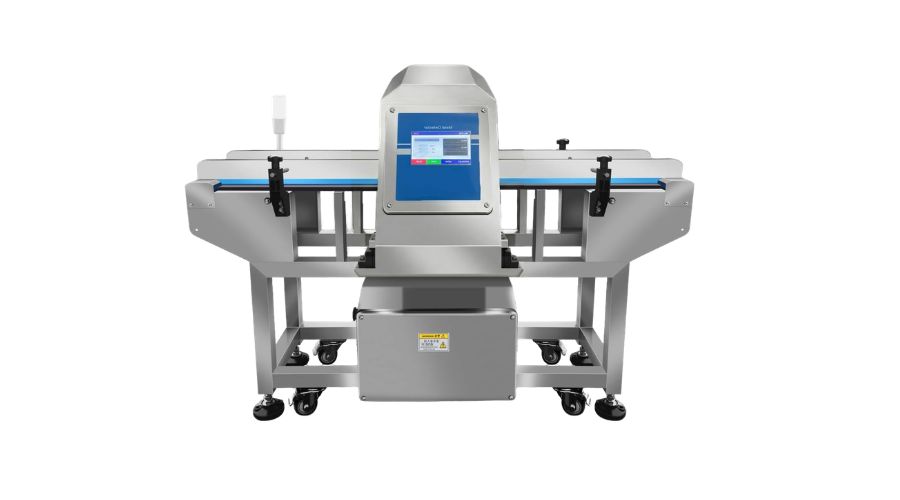
Flexible Rejection Methods: The Foodman system integrates seamlessly with various rejection mechanisms, including pusher rejection (ideal for tablets), air-blast systems (ideal for capsules), or retractable belt rejecters. A single metal detector unit on a pharmaceutical production line can be reconfigured in just minutes to accommodate different rejection requirements.
In a typical pharmaceutical manufacturing environment, a single production line often needs to process a variety of tablet and capsule products—such as solid dosage forms with differing specifications and formulations.
By introducing the Foodman pharmaceutical metal detector—with its multi-recipe storage and rapid switching capabilities—manufacturers can quickly adjust detection parameters when switching between different products. This significantly reduces downtime associated with setup and calibration, while ensuring consistent and reliable detection of metallic foreign objects. The system supports the automatic identification of tablets and capsules, along with the corresponding parameter matching, thereby enhancing production line efficiency and minimizing the risk of operational errors caused by manual configuration changes.
How to Select the Right Metal Detection Equipment for Pharmaceutical Companies
When purchasing metal detectors specifically designed for pharmaceutical applications, please comprehensively consider the following factors:

1. Product Range
What types of products does the production line need to inspect? Tablets only? Capsules only? Both tablets and capsules? Does it involve multiple sizes and specifications?
If both tablets and capsules require simultaneous inspection, a metal detector capable of handling multiple product varieties is essential.
2. Throughput Speed
High-speed production lines require a metal detector capable of maintaining stable sensitivity even during rapid throughput operations.
3. Detection Accuracy
It is crucial to verify the minimum contaminant size that the device can detect. For pharmaceutical applications, sub-millimeter-level sensitivity is paramount.
4. Environmental Suitability
Tablet production generates dust (potentially involving ATEX explosion-hazard zones), while capsules are prone to static electricity buildup. Therefore, the metal detector selected for your pharmaceutical production line should be equipped with anti-static brushes and dust-proof enclosures; furthermore, for lightweight pharmaceutical products, an air-blast rejection mechanism is typically the preferred choice.
Conclusion: One Detector for Multiple Products
Let us return to the initial core question: Can a single metal detector on a pharmaceutical production line effectively handle the inspection tasks for both tablets and capsules?
A professional metal detector capable of multi-product inspection offers:
Stable detection performance
Rapid line changeover capabilities
High sensitivity
An extremely low false rejection rate
Regulatory compliance support
For modern pharmaceutical enterprises striving for both flexibility and production efficiency, selecting the right metal detector for their production lines is no longer an optional extra—it is a strategic quality decision.
FAQ
It is generally recommended to install it downstream of the tablet press, deduster, or capsule filling machine.
No. Standard single-frequency devices lack the necessary adaptive algorithms to effectively handle the lower density of capsules and the susceptibility to static electricity interference. Therefore, you require a multi-product metal detector equipped with product-specific settings.
No. Metal detectors operate primarily by sensing an object’s conductivity and magnetic permeability, independent of its optical properties (such as color or transparency). However, certain specific capsule fillings—for instance, dietary supplements containing high levels of iron—may generate a phenomenon known as the “Product Effect.” Nevertheless, this interference can be easily compensated for and eliminated through the intelligent algorithms featured in multi-product metal detectors.