Introduction
Against the backdrop of ever-tightening regulations, product safety has long since ceased to be merely a baseline for compliance; it has become the very foundation upon which brands establish their standing and earn trust.
However, as production lines accelerate and packaging formats grow increasingly complex, manufacturers of bottled beverages, canned foods, sauces, dairy products, and various other liquid food items are being confronted with a significantly higher safety threshold—one that demands the complete elimination of all potential contamination risks prior to market release.
Among all quality control technologies, X-ray inspection systems have emerged as one of the most reliable methods for detecting foreign objects within sealed packaging. However, traditional top-down inspection methods often struggle to perform effectively when dealing with high-density containers—such as metal cans, glass bottles, aluminum packaging, and vertically filled vessels. “Blind spots”—caused by factors such as packaging geometry, uneven product distribution, thickened bottle necks, or overlapping materials—can significantly compromise detection accuracy.
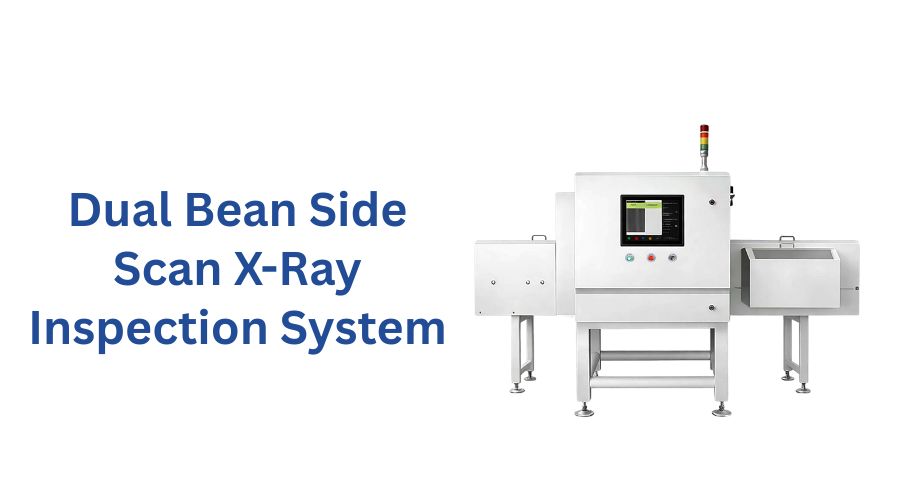
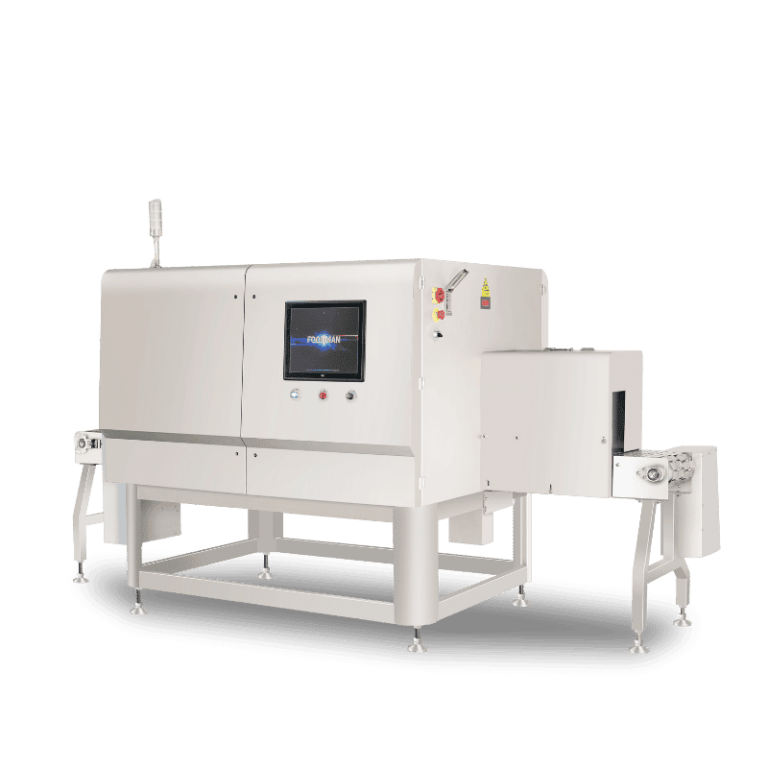
The advent of dual beam side-scan X-ray technology represents a groundbreaking innovation designed specifically to address the blind spots inherent in traditional systems. This article explores why this advanced methodology has become an indispensable component of bottled and canned food inspection, how it outperforms standard solutions, and why integrating side-scan capabilities into canned food x-ray inspection systems can revolutionize quality assurance processes. From carbonated beverages to ready-to-eat meals, we will examine the practical applications, regulatory advantages, and frequently asked questions surrounding this emerging technology.
Why Bottled and Canned Foods Specifically Require This Technology
Rigid containers—such as glass bottles, glass jars, and metal cans—are specially designed to withstand pressure, thermal processing, and the rigors of transport. However, it is precisely these structural characteristics, which make them so durable, that also make them difficult to inspect using standard quality control imaging technologies.
[Single-Beam X-ray] Creates blind spots at the cap, base, and sidewalls.
[Dual-Beam Side-View] Intersecting angles eliminate blind spots, ensuring 100% coverage.
Bottled and canned products present some of the most formidable inspection challenges in the food industry. Unlike flat-packaged foods, vertical containers create multiple zones of density interference.
The “Thick Base” (or “Dome”) Problem: The bases of most wine bottles, beer bottles, and aerosol or beverage cans feature a curved indentation (commonly referred to as a “base recess” or “dome”). While this design effectively distributes internal pressure, it results in an exceptionally thick layer of glass or metal at the bottom of the container.
Single-beam systems struggle to distinguish between the natural density of this thick packaging material and the presence of foreign objects located at the base. In contrast, dual-beam side-view inspection systems scan from multiple angles, effectively allowing them to “look around”—or cross-section—the dome, thereby enabling them to differentiate the container’s structural profile from potential internal contaminants.
Sidewall and Cap Blind Spots: Glass jars typically feature screw-on caps, prominent shoulders, and embossed brand logos. Metal cans, meanwhile, have double-seamed edges at both the top and bottom. Contaminants often adhere tightly to these edges or settle within the crevices of the bottom rim.
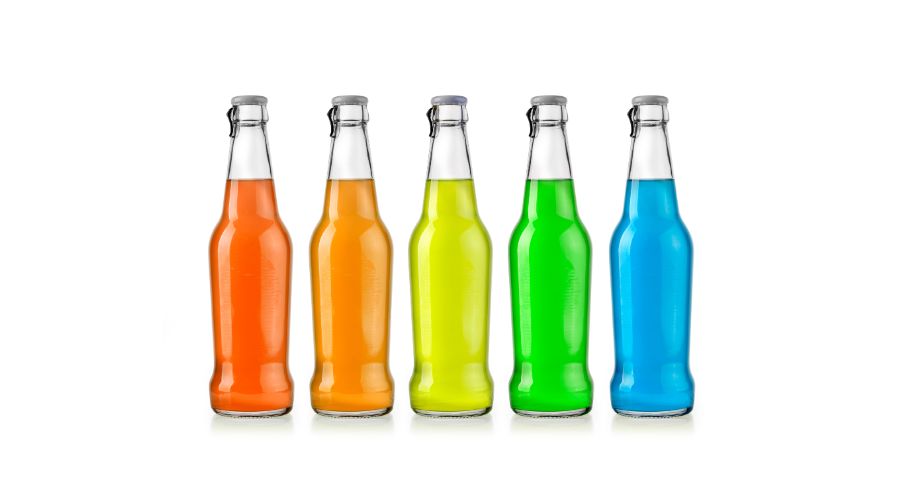
When a single X-ray beam passes directly through a metal can, “blind spots” may occur—areas where the container’s edges obscure foreign objects. Dual-beam side scan X-ray inspection systems utilize two angled beams to cross-reference and compare two separate images. An object that appears hidden behind a sidewall in Beam A may be clearly visible within the open space of Beam B.
Variations in Container Orientation: On high-speed production lines, cans and jars rotate freely. A shard of stone or glass might lie flat relative to the beam at one specific orientation (making it appear extremely thin—almost invisible), yet present a distinct, thick profile when viewed at a 45-degree offset angle. Dual-beam technology automatically compensates for this randomness, ensuring reliable canned food x-ray inspection regardless of how the product rotates on the production line.
The configuration of a dual beam X-ray inspection system significantly reduces these hidden zones by providing overlapping detection angles. This not only enhances inspection consistency but also minimizes the rate of false rejects. For manufacturers of premium bottled products, reducing false rejects is just as critical as improving contaminant detection rates, as excessive false rejections lead to increased waste and inflated production costs.
Typical Application Scenarios in the Food Industry
Canned Seafood Inspection
Seafood processing companies widely utilize X-ray inspection systems for canned foods to detect the following foreign objects:
Fish bones
Metal fragments
Shell particles
Debris from processing equipment
Since canned seafood typically contains high-density liquids and the product distribution within the can is often irregular, side-view imaging technology offers greater inspection reliability compared to traditional top-view detection systems. In the production of tuna, sardines, and shellfish products, dual beam X-ray inspection technology helps manufacturers ensure compliance with export regulations while safeguarding their brand reputation.
Bottled Beverage Inspection
The beverage industry relies heavily on reliable inspection systems for bottled products.
Typical application scenarios include:
Fruit juices and beverages
Dairy-based beverages
Functional drinks
Non-alcoholic beverages
Tea and coffee beverages
Liquid nutritional products
For traditional vertical packaging inspection systems, glass bottles present a particularly difficult challenge because the dense, heavy glass material creates intense density shadows. dual beam side-view scanning technology significantly enhances the visibility of contaminants located at the bottom of the bottle and in the areas immediately adjacent to the bottle walls. Modern inspection solutions for bottled and canned foods are also capable of simultaneously verifying the following parameters:
Fill levels
Missing caps
Cap alignment
Bottle defects/damage
Seal integrity
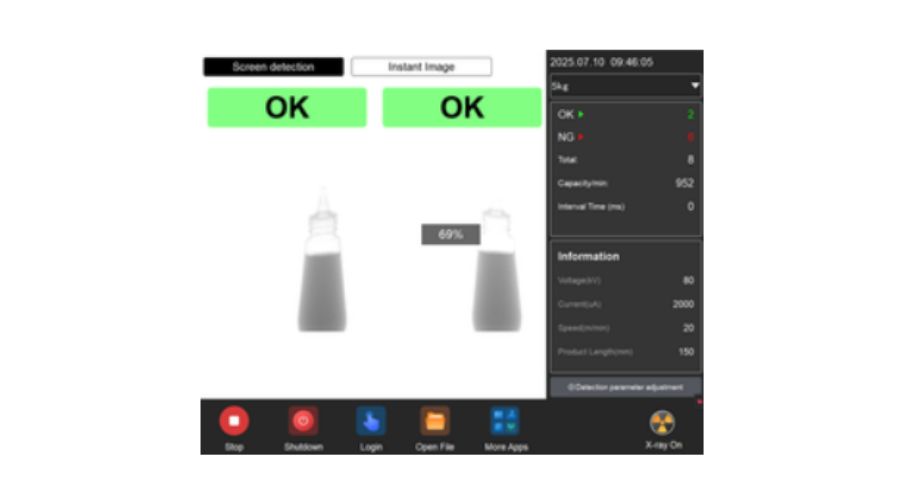
Sauce and Condiment Production
Sauces, pastes, and high-viscosity food products present unique inspection challenges, as the density of the product within the container can vary significantly.
For thick sauces, ketchup, chili paste, peanut butter, or curry products, side-scanning X-ray inspection technology improves the ability to distinguish foreign objects embedded within these dense media.
In these applications, X-ray inspection systems for canned foods are typically integrated directly downstream from the filling and sealing processes, ensuring that foreign object control is achieved before the products proceed to secondary packaging and distribution.
Dairy and Ready-to-Eat Foods
Modern manufacturers of dairy products and convenience foods increasingly rely on inspection systems for bottled and canned goods to screen a wide range of products, including:
Drinking yogurts
Puddings
Cream-based products
Ready-to-eat meals
Nutritional supplements
Protein drinks
In summary, whether dealing with the high-density liquids found in canned seafood, the heavy glass shadows inherent in bottled beverages, or the density inconsistencies of high-viscosity sauces, the complexities of vertical packaging serve as a rigorous test for inspection technology. By combining the scanning advantages of multiple perspectives, dual beam inspection technology effectively overcomes imaging interference, ensuring the precise detection and rejection of even minute foreign objects across a diverse product spectrum—from canned seafood to protein drinks—thereby truly realizing comprehensive quality assurance from the point of production to the final consumer.
Conclusion
The evolution from single-source top-down X-ray technology to dual beam side-scan technology marks a paradigm shift in the field of bottled and canned food inspection. dual beam side-scan X-ray inspection systems offer a highly efficient solution capable of effectively overcoming the limitations outlined above. By minimizing inspection blind spots, enhancing the visibility of foreign objects, and bolstering inspection reliability, this technology has become an indispensable tool in modern X-ray inspection applications for bottled and canned foods.
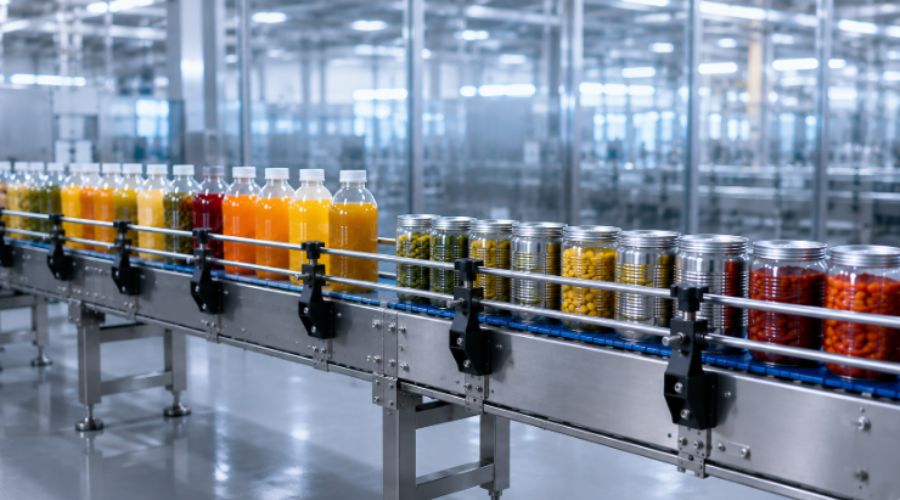
From seafood and beverages to various sauces and ready-to-eat meals, advanced inspection systems for bottled and canned foods empower manufacturers to safeguard consumer interests, mitigate the risk of product recalls, enhance regulatory compliance, and ensure that production efficiency is maintained.
As global expectations regarding food safety continue to rise, dual beam vertical package inspection technology will play an increasingly vital role in ensuring product quality and facilitating the realization of smarter, safer manufacturing operations.
FAQ
Side-view vertical packaging inspection technology effectively minimizes inspection blind spots caused by factors such as bottle necks, can seams, thick glass materials, and overlapping packaging structures.
Yes. Advanced inspection systems for bottled foods are specifically designed to inspect liquids, sauces, dairy products, beverages, and various viscous food items.
Inconsistent glass thickness can indeed pose a challenge for older, single-beam inspection equipment. However, modern dual-beam inspection systems for bottled and canned foods utilize adaptive software algorithms that automatically adjust to variations in bottle wall density distribution, thereby maintaining high sensitivity to actual foreign objects present inside the container.