Introduction
In today’s fast-paced consumer goods market, food manufacturers face strong pressure to deliver flawless products efficiently. This pressure is especially high in mixed-pack production. Several foods, weights, and packaging formats may run on the same line. Traditional manual inspection and sorting are becoming less efficient. These methods cannot meet modern production demands or consistently identify small defects that may damage a brand’s reputation.
Unlike manual inspection, AI-powered vision systems continuously monitor production. They detect defects, missing components, and incorrect package contents. The system can also reject non-compliant items automatically. AI-based vision sorting improves production efficiency. It is especially useful for manufacturers producing mixed-snack packs and multi-product assortments.
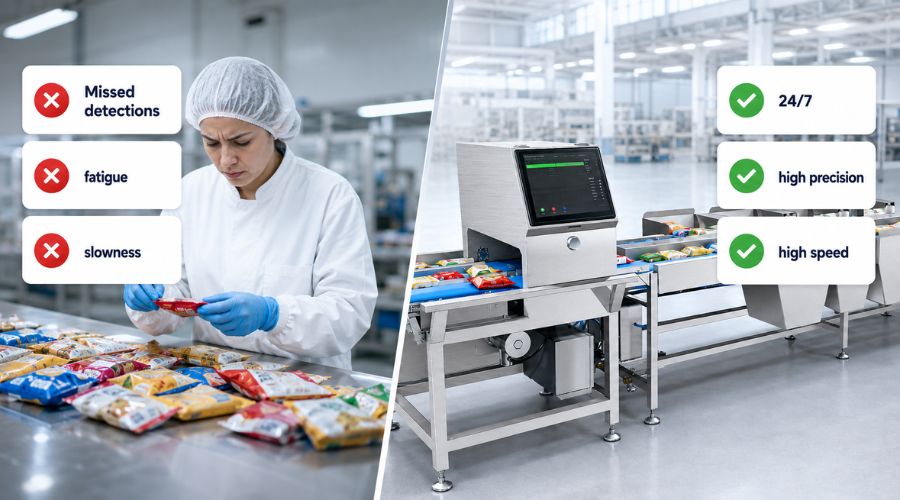
As a result, more production managers are adopting AI-driven vision inspection and sorting systems. Unlike rule-based systems, AI platforms learn from product images. Over time, they improve their ability to distinguish acceptable variations from contaminants and shape defects. AI vision technology is no longer just an extra benefit for snack manufacturers. It helps companies manage seasonal packs, trial-size products, and product variations while remaining competitive.
What are AI-based vision inspection and sorting?
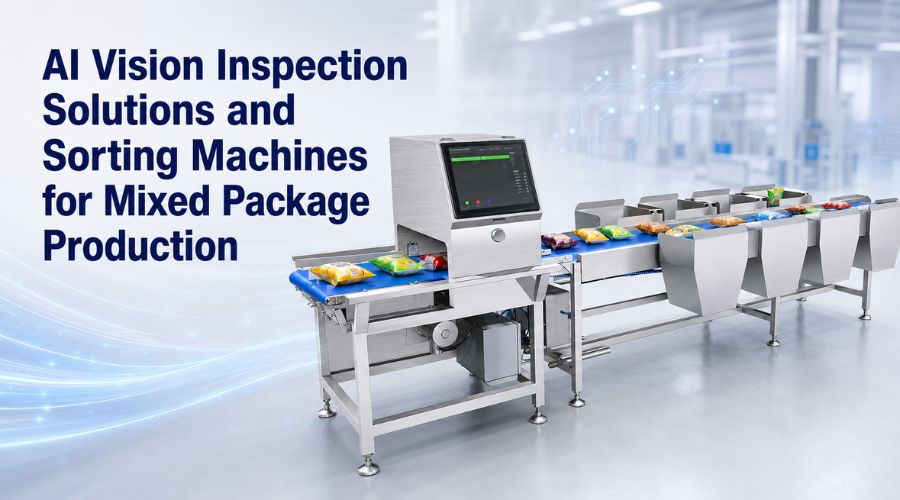
AI-based vision inspection uses advanced cameras, lighting systems, and deep learning algorithms. These technologies analyze products on the conveyor belt in real time. The system can connect with mechanical rejection or diversion mechanisms. This creates an automated vision sorting process for mixed-product lines. It sorts products by size, color, shape, surface quality, and visible foreign objects.
Traditional inspection methods rely primarily on manual vision checks of products on the conveyor belt. While experienced operators can spot obvious defects, manual inspection has several drawbacks:
Human fatigue can compromise inspection accuracy.
Inspection speed is limited by the operator’s capabilities.
Quality assessment standards may vary between operators.
It is difficult to consistently detect subtle defects.
Labor costs are steadily rising.
AI-based vision inspection systems effectively overcome the aforementioned limitations by utilizing high-resolution imaging and machine learning technologies. During production, cameras capture product images at a rate of thousands per minute. For example, AI systems examine product shape, color, dimensions, and surface condition. They can also identify missing components, incorrect combinations, wrapping defects, and obvious foreign objects.
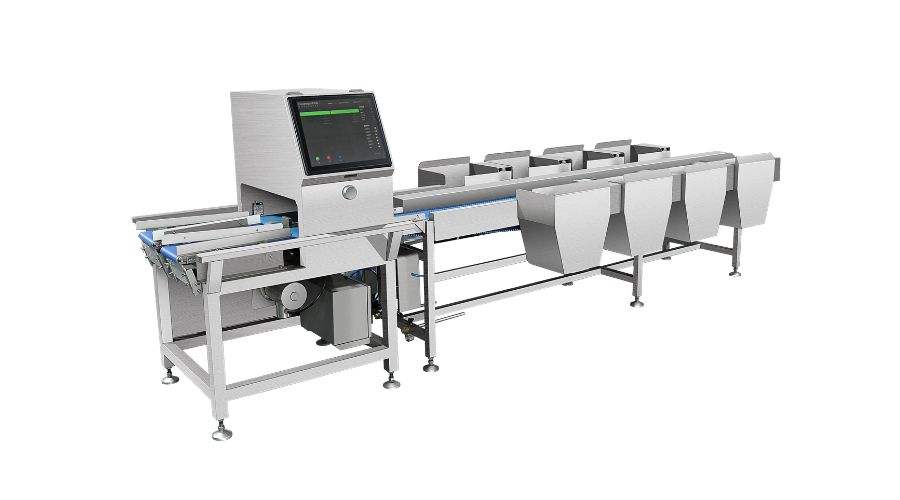
An automatic rejection mechanism receives a signal from the system when it finds an unusual product. Meanwhile, the production line continues running while the mechanism removes defective products.
Modern AI-based vision sorting technology goes beyond mere defect detection; it focuses on understanding products, making intelligent decisions, and continuously enhancing production precision.
Why is AI-based vision inspection needed for mixed-packaging production?
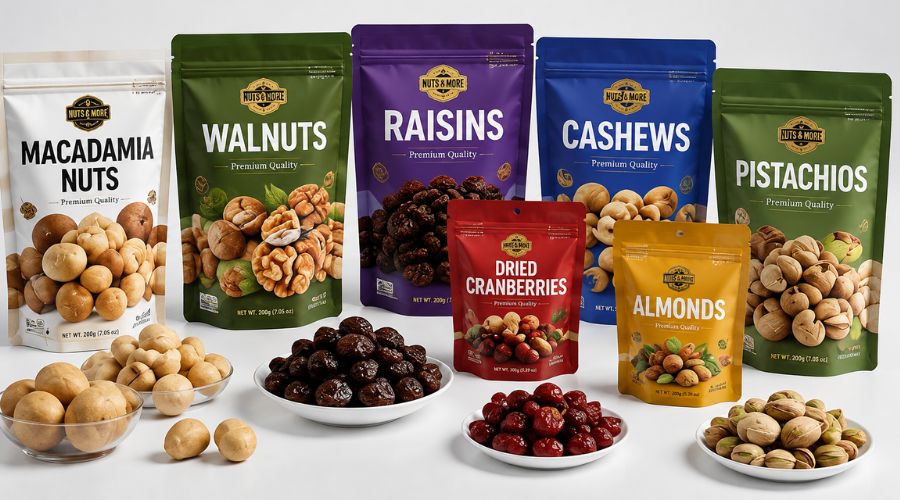
Mixed-pack production presents several challenges. Standard inspection methods may struggle to handle these changing conditions. For example, a mixed pack may contain potato chips, pretzels, crackers, and cookies. The inspection system must handle these different SKUs while maintaining speed and accuracy.
Key inspection challenges include:
High product variability: The shapes, colors, and surface textures of various desserts differ. An algorithm that is “one-size-fits-all” will unavoidably produce false positives or fail to detect real flaws.
Packaging complexity: It can be difficult to maintain consistent illumination and image capture when mixed packs include film wraps, pillow packs, or stand-up pouches with different levels of glossiness.
Diversity of contaminant: Foreign items may consist of anything from stones and metal shavings to pieces of plastic, and each category calls for a distinct degree of detection sensitivity.
Throughput standards: Manual decision-making is not possible on typical production lines, which process 60–120 packs per minute.
Regular product changes: Packaging designs may change several times during a shift, requiring adaptive sorting techniques and AI vision systems that may minimize downtime.
Manufacturers can get over these obstacles by using adaptive AI models, which automatically modify inspection settings during changes by learning the correct parameters for each SKU. This data guarantees that every mixed pack that leaves the facility meets constant quality standards, significantly reduces false rejection rates, and increases product yield.
How do vision inspection systems based by AI work?
High-efficiency AI vision inspection tools combine multiple technical tiers into a smooth process. High-resolution cameras, which are often employed in conjunction with structured light, start the process by taking multiple images of each package from different perspectives. A neural network that has been trained using thousands of annotated examples of both good and bad products then processes these images.
The workflow typically goes as follows:
Line-scan or area-scan cameras take photos of the front, back, and sides of product packages as they travel through the inspection zone.
Pre-processing algorithms enhance contrast, compensate for uneven illumination, and normalize image dimensions to ensure that incoming data is consistent.
Feature Extraction: AI programs identify key characteristics such as edge outlines, color histograms, surface reflectivity, and text alignment.
Classification: The method uses deep learning to classify each package into predefined groups.
Decision and Execution: A sorting controller receives the classification signal and instructs pneumatic jets, diverters, or robotic arms to sort the products accordingly.
Data logging: Every decision is documented, allowing for traceability and trend analysis to drive continuous improvement.
Modern platforms also feature self-learning capabilities, which enables models to be retrained as new defect types emerge without needing hardware replacement. This adaptability is particularly crucial for vision inspection and sorting solutions on mixed-packaging lines, where product combinations vary seasonally.
The Value of Vision Sorting Machines in Mixed-Packaging Production
Integrating vision sorting machines into mixed-packaging production systems offers real benefits beyond defect removal. These machines become essential for quality assurance, influencing operational efficiency, labor utilization, and brand trust.
Key value drivers include:
Eliminating human error: Manual inspections are subjective and prone to fatigue and fatigue, leading to inconsistent results across shifts. AI-powered vision sorting for mixed-packaging operations delivers reliable, objective results around the clock.
Increasing throughput: Automated sorting runs continuously at line speed, significantly enhancing production efficiency.
Reducing operating expenses: While automation requires an initial investment, it may significantly decrease long-term labor costs and product waste.
Enhancing food safety: Simultaneous detection of foreign items, seal leaks, and packaging defects protects tainted products from reaching consumers.
Supporting data-driven decisions: Real-time dashboards and historical reports assist production teams in determining the fundamental causes of recurring failures and improving upstream operations.
Flexible production capabilities: AI vision systems may be taught for a variety of items, and a single sorting machine can transition between different SKUs using saved settings—an essential feature for mixed-product lines.
Lowering training costs: Because the machine conducts more complex quality checks, new operators require less guidance, allowing staff to concentrate on supervision rather than laborious inspection activities.
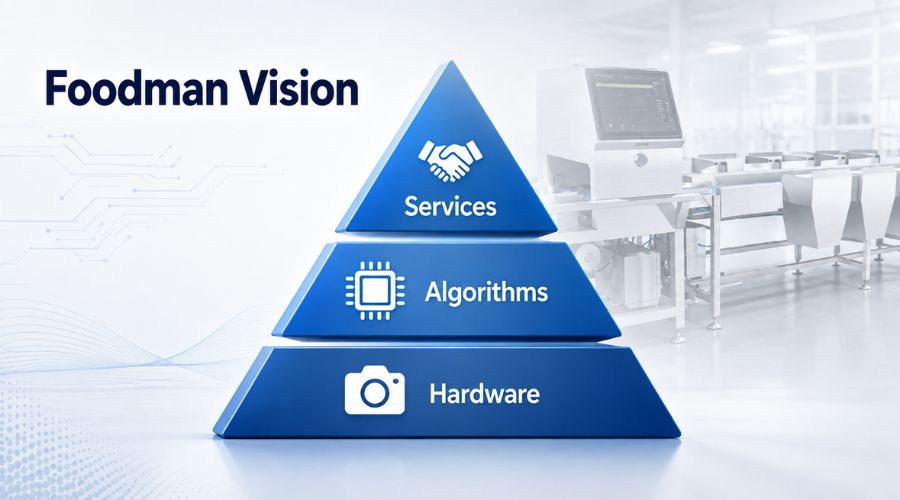
Foodman, an established manufacturer of vision sorting equipment, uses modular and scalable designs to ensure that these benefits can develop in unison to increasing production demands.
Vision Inspection And Sorting Case Studies
Case Study 1: Intelligent Sorting of Mixed Pickled Vegetable Packs
A Korean-style pickle manufacturer frequently encountered packaging errors on its mixed-product distribution lines due to the vision similarities between items such as cucumbers and eggplants. Following the implementation of the Foodman dual-camera, dual-channel AI sorting system, the equipment utilizes deep learning models to automatically distinguish differences in color and shape among various pickles, enabling high-speed classification and diversion. Operational data shows that packaging accuracy rose to over 99.6% and single-line production efficiency increased significantly, while the fatigue-induced errors associated with manual vision inspection were completely eliminated.
Case Study 2: Sorting Steaks by Specification and Quality
A high-end meat processing plant required the grading of steaks during the portioning and packaging stage based on weight class, marbling distribution, and shape integrity. Previously, sorting was performed visionly by skilled workers, resulting in inconsistent standards and fluctuating efficiency. The Foodman vision sorting system, equipped with high-precision cameras and AI models, automatically identifies steak specifications, fat coverage, and edge damage, simultaneously performing grading and diversion. Actual testing demonstrated a grading accuracy of over 99.5%, a 35% increase in production line processing speed, a 70% reduction in manual grading roles, and a significant improvement in product standardization.
Why Choose Foodman Vision?
Foodman is a professional supplier of intelligent food inspection equipment, dedicated to providing advanced quality control solutions to food manufacturers worldwide.
As an experienced manufacturer of vision sorting machines, Foodman focuses on developing reliable inspection technologies, including:
AI vision inspection systems
Vision sorting machines
X-ray inspection systems
Metal detectors
Checkweighers
Automated sorting equipment
Foodman’s intelligent solutions are designed to help food manufacturers enhance safety, efficiency, and automation levels.
Foodman's AI vision technology capabilities include:
High-speed image recognition
Intelligent defect detection
Multi-product inspection
Automatic rejection
Production data analysis
Foodman’s vision inspection and sorting techniques for modern food processing plants are comprehensive as they mix AI vision technology with other inspection methods.
Foodman customizes equipment for production lines that handle snack packages, baked goods, nuts, frozen foods, or mixed items.
Choosing Foodman means investing in a future-proof solution—one that adapts to changes in your product line, reduces total cost of ownership, and protects your brand’s reputation via consistent, quality excellence.
Conclusion
The increasing complexity of food packaging poses new hurdles for manufacturers. While mixed-product packaging provides consumers with greater choice, it also requires more precise inspection and sorting technology.
AI-powered visual inspection and sorting systems are a great way to improve production accuracy, reduce manual labor requirements, and maintain consistent product quality.
Adopting AI-driven vision sorting technology is no longer an option for businesses who produce mixed-product packaging; rather, it is a critical step toward intelligent manufacturing.
Foodman’s unwavering commitment to innovation keeps our customers at the forefront of this shift. Our vision inspection and sorting systems are designed specifically to tackle the challenges of mixed-snack manufacturing, providing consistent accuracy, relevant data insights, and a quick return on investment (ROI). Whether you’re renovating an existing production line or building a new facility, Foodman has the experience and equipment to make your quality vision a daily production reality.
FAQ
Yes. The vision-based mixed-packaging sorting system can identify different products, verify packaging combinations, and automatically reject non-compliant packages.
Manual inspection relies on human operators and is susceptible to factors such as fatigue, whereas AI vision sorting delivers consistent, stable, and high-speed inspection.
Absolutely. The Foodman system is designed for modular integration; it can share data and coordinate rejection actions with checkweighers, X-ray machines, and metal detectors to create a unified inspection zone.