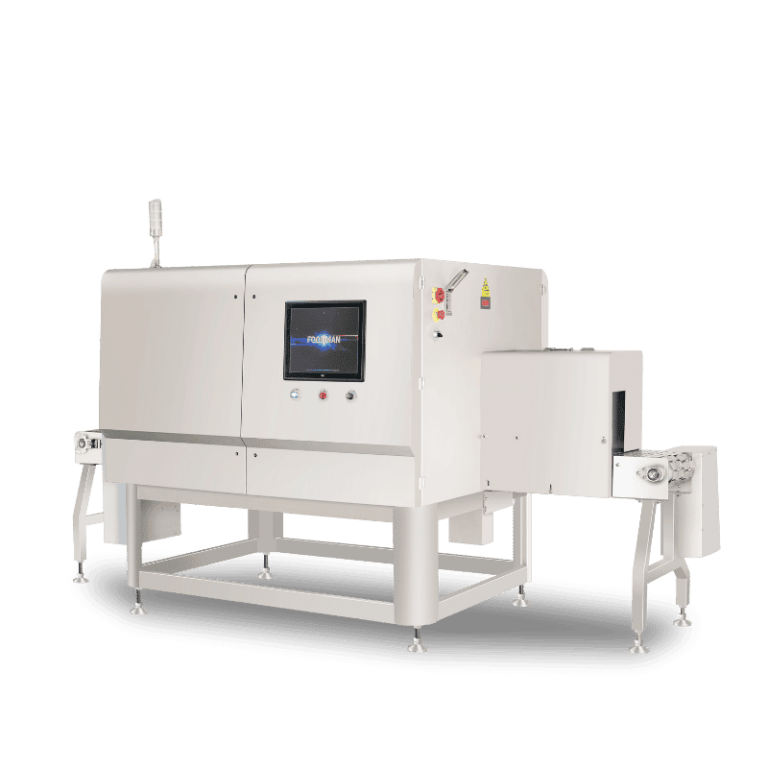

Introduction: The Rise of Bagged Coffee and the Challenges of Aluminum Foil Detection
Over the past decade, the global coffee market has undergone a trans formative shift. Consumers no longer purchase coffee solely for its flavor; they now harbor heightened expectations regarding freshness, aroma retention, shelf stability, convenience, and premium packaging. Consequently, bagged coffee products have emerged as the dominant packaging format across retail shelves, e-commerce distribution channels, and specialty coffee brands.
From roasted whole beans and ground coffee to instant coffee powders—as well as single-origin and premium blend varieties—manufacturers are increasingly relying on aluminum foil laminate pouches to safeguard product quality. Aluminum foil packaging offers exceptional barrier properties against oxygen, moisture, and UV light, while effectively locking in aroma and preserving freshness. For coffee producers, this represents one of the most effective strategies for extending product shelf life while simultaneously maintaining flavor consistency.

However, this packaging upgrade simultaneously presented a significant quality inspection challenge. Traditional metal detection equipment struggles to inspect coffee packaged in aluminum foil, as the conductive foil layer itself generates strong interference signals. This phenomenon—commonly referred to as the “Foil Effect”—makes it extremely difficult for conventional detection systems to identify actual metal contaminants hidden within the product.
As coffee production speeds continue to accelerate, manufacturers face mounting pressure to prevent product recalls, customer complaints, and export compliance failures caused by hidden metal contaminants.
Fortunately, modern detection technology has completely transformed this landscape. Today, advanced systems—such as phase-gating metal detectors, multi-frequency detection technology, and intelligent detection algorithms—have made reliable metal detection for foil-packaged products a reality, enabling manufacturers to navigate even the most challenging coffee packaging applications with ease.
For coffee manufacturers, the message is clear: aluminum foil packaging is no longer a major obstacle to effective contaminant detection.
Why is Metal Detection for Aluminum Foil Coffee package So Challenging?
Coffee itself is an inherently difficult product to inspect. Whether in the form of ground coffee or roasted beans, it naturally contains internal moisture and oils, and exhibits variations in density and temperature fluctuations. These inherent product characteristics generate what is known as the “product effect”—a form of interference—within traditional metal detection systems.
To understand why traditional detection methods fail, one must grasp the underlying physics of electromagnetic fields. Standard metal detectors designed for coffee packaging emit a high-frequency electromagnetic field. When conductive materials—such as aluminum foil—enter this field, they induce eddy currents, which in turn generate a secondary magnetic field that the detector interprets as a “signal.”
In the context of aluminum foil package inspection, the foil itself generates a massive signal—one that is typically 10,000 times stronger than the signal produced by a tiny steel fragment. Traditional systems are unable to distinguish between the characteristic signal of the aluminum foil and that of actual contaminants. Consequently, either the detector rejects every single bag (bringing production to a complete standstill), or operators are forced to lower the sensitivity settings (rendering the system incapable of detecting metal contaminants within the packaged coffee).
Furthermore, aluminum foil package vary significantly in terms of thickness, layer count, and creasing. A crumpled bag corner, for instance, generates a different signal than a flat one. This inherent inconsistency further exacerbates the difficulty faced by older technologies in accurately identifying contaminants. Therefore, metal detectors specifically designed for aluminum foil packaging must employ advanced signal processing and dynamic calibration technologies.
How Foodman Solves the Challenges of Aluminum Foil Packaging
Foodman has developed a series of specialized inspection systems designed to address highly challenging packaging inspection scenarios, such as those involving aluminum foil coffee packages. By moving beyond conventional single-frequency technology, Foodman has achieved a breakthrough in the field of metal detection for aluminum foil packaging. Their metal detectors for coffee packaging employ a multi-spectral approach:
Synchronous Multi-Frequency Transmission—The device simultaneously transmits three distinct frequencies. Aluminum foil exhibits a strong response to low-frequency signals, whereas most metal contaminants (ferrous, non-ferrous, and stainless steel) generate distinct responses at high frequencies.
Phase-Sensitive Demodulation — A proprietary algorithm compares phase angles in real time to extract and eliminate the characteristic signal generated by aluminum foil packaging.
Adaptive Threshold Technology — Instead of relying on fixed sensitivity settings, the system learns the baseline signal profile by analyzing 10–20 aluminum foil packages and then applies a dynamic masking algorithm for stable and accurate contaminant detection.
The Result: A metal detector specifically designed for aluminum foil packaging that can reliably detect metal contaminants larger than 0.8 mm inside sealed aluminum foil coffee bags, with an extremely low probability of false positives.
Specific Challenges in the Coffee Industry

Coffee is not a monolithic product; it encompasses various subcategories, each presenting unique risks regarding metal contamination within packaged coffee.
Segment-Specific Risks in the Coffee Market and Their Significance
Coffee Beans: Metal fragments generated by grinders or destoners; fragments can become lodged between the beans; creases in aluminum foil packaging can create signal noise.
Ground Coffee (Fine and Coarse): High density and magnetic properties; fine particles may be electrically conductive. Traditional metal detectors are prone to misinterpreting the product flow.
Coffee Capsules: Feature aluminum lids combined with plastic shells; the detection zone is small, necessitating a highly compact metal detector capable of detecting the aluminum foil packaging.
Flavored Coffee: Contains added syrups or spices (e.g., cinnamon, vanilla powder). Certain spices possess slight electrical conductivity, which can generate a layer of false signals.
Organic/Decaffeinated Coffee: Involves additional processing steps (such as solvent extraction or water treatment) and increased contact points with equipment, resulting in a higher probability of contamination.
For each of these subcategories, an ideal metal detector for packaged coffee must offer adjustable frequency profiles and a product-learning mode. Even when utilizing the same aluminum foil packaging material, the optimal settings required for whole-bean coffee differ significantly from those needed for finely ground espresso.
Traditional Solutions vs. Modern Detection Technology
Traditional Metal Detectors
Older-generation metal detectors were primarily designed for use with non-metallic packaging materials, such as paper or plastic.
When applied to aluminum foil coffee bags, these systems exhibit the following limitations:
Strong interference from aluminum foil; reduced sensitivity
Fixed-frequency operation; poor adaptability
Limited signal filtering capabilities; frequent false alarms
Weak detection capabilities for stainless steel; missed contaminants
Instability during high-speed operation; production interruptions
For years, manufacturers assumed that these limitations were unavoidable.
Modern systems offer: advanced features and operational advantages.
Intelligent Phase Adjustment: Reduces interference from aluminum foil.
Dynamic Frequency Optimization: Enhances sensitivity.
Digital Signal Analysis: Enables superior contaminant identification.
Automatic Product Learning: Facilitates faster setup.
Intelligent Rejection System: Ensures precise removal of contaminants.
Data Traceability: Improves compliance reporting.
Consequently, metal detection in the presence of aluminum foil is now practical, stable, and commercially viable for coffee producers.
Solution: How to Achieve Detectable Aluminum Foil Packaging

Select the Appropriate Detection Technology
Not all detection systems are suitable for aluminum foil packaging. Coffee producers should prioritize equipment specifically designed for the following applications:
Aluminum foil packaging
Metallized film pouches
High-moisture products
Powder applications
High-speed conveyors
Selecting a metal detector dedicated to coffee packaging can significantly enhance detection efficiency.
Optimizing Conveyors and Product Presentation
Detection performance depends largely on product consistency.
Manufacturers should optimize:
Bag positioning
Product height
Conveyor stability
Product spacing
Fill uniformity
Stable product presentation helps detection systems maintain reliable sensitivity.
Proper Calibration and Product Learning
Modern systems require intelligent product setup procedures. Advanced Foodman systems are capable of automatically learning product characteristics and compensating for the influence of packaging during the calibration process.
This enables operators to:
Reduce manual adjustments
Improve repeatability
Minimize operational errors
Ensure consistent performance across different product specifications
This flexibility is invaluable for facilities that process a wide variety of coffee SKUs (Stock Keeping Units).
Combining Metal Detection and X-Ray Inspection
Some manufacturers integrate metal detectors with X-ray inspection systems to ensure maximum safety protection.
While metal detectors excel at identifying metal contaminants, X-ray inspection systems can additionally detect:
Stones
Glass fragments
High-density plastics
Calcified substances
This dual-inspection strategy is becoming increasingly common among premium coffee brands destined for export.
Real-World Application Case Study: High-Speed Instant Coffee Packaging Inspection
A leading instant coffee manufacturer operating multiple vertical form-fill-seal (VFFS) packaging lines required a highly reliable solution for detecting metal contamination in aluminum foil and metallized film coffee packages at ultra-high production speeds.
However, conventional metal detector systems struggled to maintain stable sensitivity due to severe signal interference generated by conductive packaging materials. Frequent false rejects, inconsistent detection accuracy, and reduced inspection reliability created significant operational challenges across the production line.
To overcome these limitations, the manufacturer implemented an advanced multi-frequency metal detector for coffee packaging specifically engineered for aluminum foil metal detection applications. The system utilized intelligent signal processing, phase-sensitive demodulation, and adaptive threshold technology to distinguish genuine metallic contaminants from packaging-related interference.
Following deployment, the coffee producer achieved substantial improvements in overall inspection performance, including:
- Significantly lower false rejection rates
- Enhanced sensitivity to ferrous, non-ferrous, and stainless steel contaminants
- Stable detection performance at high conveyor speeds
- Improved production efficiency and reduced downtime
- Higher compliance rates with international food safety and customer audit standards
The project demonstrated how modern metal detector for aluminum film package technology can effectively solve the long-standing challenge of bagged coffee metal contamination detection in high-speed coffee manufacturing environments.

Conclusion
For years, many coffee manufacturers labored under the misconception that adopting aluminum foil packaging made effective metal detection impossible—believing the two were mutually exclusive.
Indeed, traditional detection systems did face limitations, as aluminum foil generates intense electromagnetic interference that renders contaminant detection results unreliable.
Today, however, modern detection technology has completely transformed this landscape. Advanced metal detection systems designed for aluminum foil packaging now enable manufacturers to accurately identify metal contaminants within coffee products—whether whole beans, ground coffee, instant coffee, or various specialty retail items—while maintaining high production speeds and low false rejection rates. Manufacturers can now deploy highly reliable metal detection solutions for coffee packaging that are specifically tailored to their unique production requirements.
For companies seeking to bolster food safety, enhance regulatory compliance, mitigate recall risks, and cultivate a strong brand reputation, modern metal detection technology for aluminum foil packaging offers a practical and proven solution.
Detecting contaminants in aluminum foil packaging is no longer the seemingly insurmountable challenge it once was.
FAQ
No. Standard single-frequency metal detectors—typically used for coffee packaging—cannot distinguish between the signal generated by the aluminum foil material itself and the signal from actual metallic foreign objects. Therefore, you must select a multi-frequency or multi-phase metal detector specifically designed for aluminum foil packaging.
In most cases, this is not feasible. Simply upgrading the software is insufficient, as the underlying hardware—specifically the frequency generator and receiver coils—was likely not designed for aluminum foil detection. You need to acquire a metal detector built specifically for the coffee packaging industry—a device equipped with multi-frequency transmission and adaptive filtering capabilities.
Yes—provided that you utilize true multi-frequency technology or advanced “ferrous-in-foil” detection technology. Traditional metal detectors often fail to detect 316 stainless steel because its electrical conductivity is very similar to that of many aluminum alloys. Metal detectors designed specifically for aluminum foil packaging—such as those offered by the Foodman brand—employ phase analysis technology to differentiate between these two substances.