
Introduction: Food Safety Control in Fish Processing
The global surimi industry has grown into a multibillion-dollar market, thanks largely to rising consumer demand for handy, protein-rich seafood items such as fish balls, crab sticks, fish cakes, and seafood analogs. Surimi manufacture appears simple—washing, deboning, mincing, seasoning, shape, steaming, packaging, and final distribution—but in reality, food safety or quality issues can develop at any stage of the process. As production volumes grow and supply chains span multiple nations, food safety has become the most critical factor affecting brand reputation, regulatory compliance, and consumer trust.
For manufacturers operating surimi shaping and packaging lines, selecting the right inspection equipment is no longer just about meeting the minimal legal criteria; it is a strategic decision that has a direct impact on recall risks, operational efficiency, and long-term profitability. A well-designed surimi food safety inspection system must detect fish bones, metal fragments, and other foreign objects. It should also verify product weight, label accuracy, and packaging integrity. This article discusses how to create a staged inspection plan, why X-ray technology is critical for surimi goods, and how firms such as Foodman offer integrated solutions including checkweighers, metal detectors, X-ray systems, and vision inspection systems.

Sources of Food Safety Risks in Surimi Processing
1. Raw Material Reception
The method begins with entire fish, filets, frozen fish blocks, or other marine raw materials. Incoming fish may carry stones, bone fragments, metal shards, or packaging materials into the production area.
As consequence, raw material inspection and supplier management are the first line of defense in food safety management.
2. Deboning and Meat Extraction
Deboning is a critical pre-processing step in surimi production. Mechanical deboning separates the edible meat from the skeleton, but small bones or fragments can still remain. Inspecting the meat before fine processing adds another quality control point. Removing bone-containing pieces before mincing is more practical. Finding tiny bone fragments becomes harder after the meat turns into a uniform paste.
3. Mincing and Mixing
Metal fragments resulting from equipment wear or accidental damage can pose safety hazards. At the same time, the processing environment introduces new risks associated with pumps, cutting equipment, conveyors, piping, fittings, and various mechanical components.
Metal fragments resulting from equipment wear or accidental damage can pose safety hazards. Therefore, manufacturers should consider continuous monitoring during material transport when designing a surimi inspection system.
4. Forming
Manufacturers can process surimi into fish balls, crab sticks, fish cakes, fish chunks, and other shapes. Forming machines introduce an additional mechanical processing step, which also increases the risk of foreign object contamination.
Inspection after forming offers a useful control point. The defined product shape also allows manufacturers to use specialized inspection equipment.
5. Steaming or Thermal Processing
Steaming, boiling, frying, or other thermal processing methods alter the product’s temperature, moisture content, density, and physical state. These changes can affect inspection performance.
Therefore, manufacturers should evaluate the product’s actual condition at the inspection point. They should not rely only on laboratory tests or empty-conveyor performance data.
6. Packaging
The packaging stage presents another quality control challenge. Films, trays, flexible pouches, cans, and other packaging materials can all influence the performance of inspection technologies.
When choosing the inspection point, manufacturers should consider the final packaging format. They can inspect products before packaging, after packaging, or at both stages.
Building a comprehensive line strategy
A robust inspection strategy for a surimi production line should align with the product workflow and employ specific technologies at each critical control point:
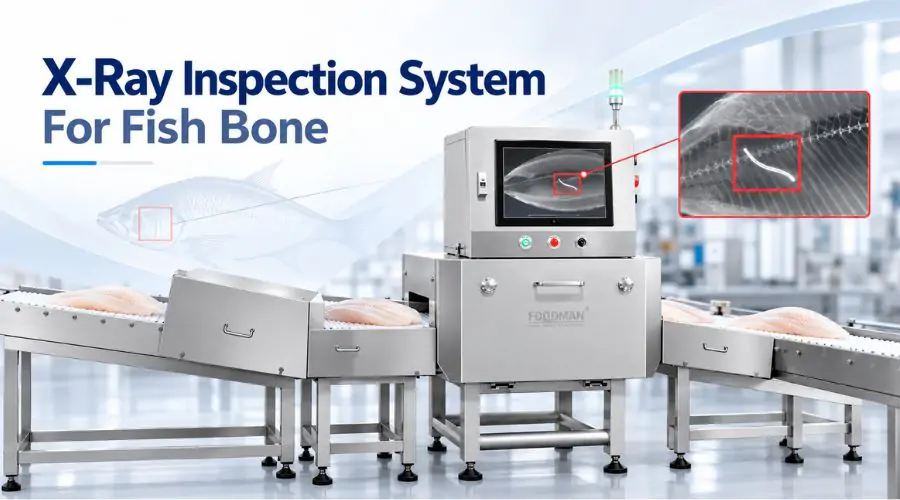
Raw fish blocks→Deboning: Use X-ray or vision systems to inspect incoming fish blocks for residual bones.
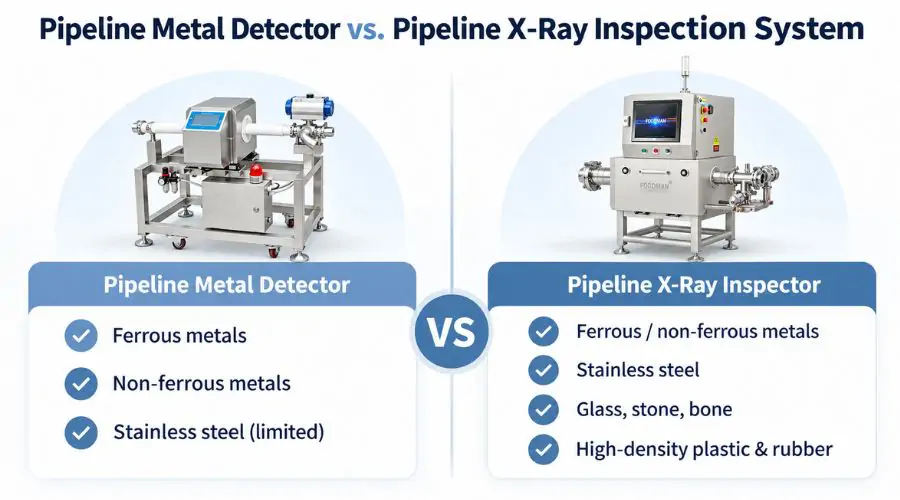
Deboning→Surimi paste: Use pipeline metal detectors and pipeline X-ray units to detect metal and foreign objects—such as stones or hard plastic—within the flowing surimi paste.
Fish ball forming: The forming equipment introduces additional mechanical contact. Depending on the product and process conditions, metal detection or X-ray inspection may be considered.
Final packing: Manufacturers may need to confirm weight, contaminants, labels, codes, and packaging appearance. Checkweighers, X-ray systems, and vision inspection equipment can be used jointly as required.
This process-based approach is more effective than simply installing a single inspection machine at the end of the line. It creates multiple opportunities to eliminate risks before they propagate further.
For surimi inspection equipment, machine placement matters as much as machine selection. Each inspection point should address a specific food safety or quality risk.
Selecting Inspection Equipment for Surimi and Fish Balls Based on Production Stages
Equipment should be selected based on the specific hazard characteristics and throughput needs of each stage.
At the pre-forming stage, X-ray bone detectors inspect deboned fish fillets or surimi paste. They target residual fish bones and cartilage. This is particularly crucial for products promoted as “boneless,” because even a little bone fragment might result in customer complaints or regulatory penalties. Pipeline metal detectors and X-ray systems inspect continuous flows of surimi paste. They can detect ferrous, non-ferrous, and stainless-steel contaminants.
Forming and cooking stage: Vision inspection systems verify shape, color, and surface defects. X-ray equipment checks for internal foreign objects. Checkweighers ensure portion control—a key measure for both quality and cost management.
Packaging stage: After packaging, X-ray inspection systems for surimi products confirm the absence of bones, metal, glass, and high-density plastic. Checkweighers verify that each package meets its target weight. Vision systems inspect labels, date codes, and barcodes to reduce labeling errors.
Palletizing and shipping: Before palletizing and shipping, manufacturers perform a final quality check. The system records inspection data and production information for traceability. If an issue occurs, operators can retrieve the relevant records by batch number. This supports faster traceability and follow-up management.
Why X-ray Inspection is Crucial for Surimi Products
Surimi products can be difficult to inspect because of their dense and fairly uniform texture. Small bone fragments or other foreign objects may remain inside the product and escape visual inspection. The moisture and composition of surimi can also limit the performance of some inspection methods.
X-ray inspection provides another approach by identifying differences in material density. Even when products are sealed in their packaging, X-ray systems can detect foreign objects—such as bone, metal, glass, rubber, and certain high-density plastics—without the need to open the package.
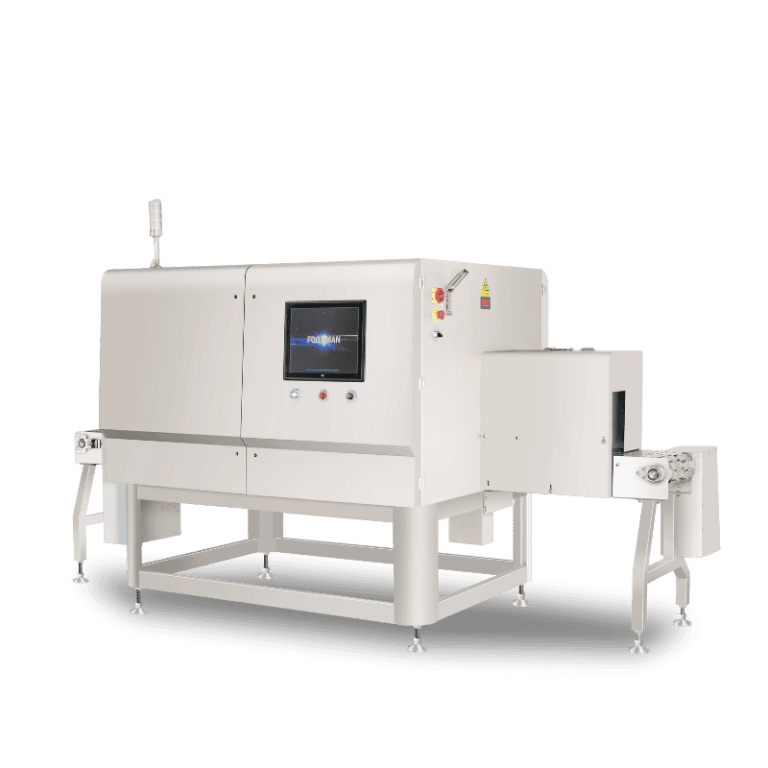
For fish and surimi production lines, X-ray equipment enables high-speed, continuous inspection and integrates with automatic rejection systems. Depending on the product and production conditions, it can also detect tiny bone fragments.
This is particularly valuable in fish ball production. A bone fragment inside a fish ball may be difficult to identify through visual inspection alone. X-ray inspection can examine the product internally, helping manufacturers find dense foreign objects before the products leave the production line.
X-ray Inspection and Metal Detection: A Combined Approach
X-ray inspection and metal detection serve different purposes, so one should not be viewed as a replacement for the other. Metal detectors are well suited to identifying ferrous and non-ferrous metal contaminants in bulk products, pipelines, and finished packages.
X-ray inspection covers a wider range of dense foreign objects, including bone and glass, as well as certain high-density materials that may not trigger a metal detector. It can also inspect the contents of sealed packages without opening them.
For surimi and fish ball production, using both technologies at suitable points on the line can provide more complete inspection coverage. Metal detection can be carried out during processing, with X-ray inspection added after packaging to check the finished product. This combination helps reduce the chance of different types of foreign objects reaching the final product.
Quality Control in Fish Ball Production: Beyond Foreign Object Detection
Quality control in fish ball production involves more than removing foreign objects. Weight, shape, color, texture, and packaging condition all affect product quality and compliance.
Checkweighers help confirm that each package meets its declared weight, reducing underweight products and unnecessary giveaway. Vision systems can check appearance, color, and label placement, while metal detectors and X-ray systems target different types of physical contamination. Used together, these systems provide broader quality control throughout the production line.
Inspection data is also useful for daily production management. Modern equipment can record rejected products, identify recurring problems, and highlight changes in contamination or quality trends. This gives operators a clearer view of production performance and helps them make timely adjustments.
Foodman Inspection Solutions for Surimi and Fish Ball Production
Foodman designs and manufactures inspection equipment specifically for surimi and fish ball production lines. Our product portfolio addresses all contamination and quality risks:
Fish Bone Detection: High-sensitivity X-ray systems detect residual fish bones and calcified bone fragments in deboned fish portions.
Metal Detection During Surimi Conveying: Pipeline metal detectors and pipeline X-ray units monitor for ferrous, non-ferrous, and stainless steel contaminants within the flowing paste. Designed for continuous processing conditions, this equipment integrates seamlessly into the production line, providing manufacturers with an additional inspection point between raw material processing and product forming.

Inspection of Packaged Fish Balls and Surimi Products: End-of-line X-ray systems verify the absence of foreign objects—such as metal, stone, or hard plastic—ensuring food safety.
Standard Weight Verification: Dynamic checkweighers ensure net weights meet standards, minimizing material waste caused by underweight or overweight products and reducing complaints regarding short-weight items.
Vision Inspection: Systems for verifying labels, date codes, and printed information prevent labeling errors and mistakes in allergen declarations.
Our X-ray, metal detection, and vision inspection systems are designed for seamless integration into existing production lines. We offer manufacturers application testing, line assessments, and customized configurations to meet specific product characteristics and regulatory requirements.
Conclusion
Selecting inspection equipment for surimi forming and packaging lines is not merely a capital investment; it is a decision that directly impacts food safety. By identifying potential hazards across the entire process—from raw fish intake to final packaging—manufacturers can deploy the optimal combination of metal detectors, X-ray inspection systems, checkweighers, and vision inspection systems at critical control points.
X-ray inspection is particularly vital for surimi products, as it reliably detects fish bones and high-density foreign objects that are difficult for other technologies to identify. Implementing a layered, three-zone inspection strategy—covering the upstream stage, post-packaging, and final verification—offers the strongest possible assurance for both consumers and the brand.
Foodman’s integrated solutions empower surimi and fish ball manufacturers to embed this level of safety assurance into every stage of their production lines. With the right inspection equipment in place, manufacturers can minimize recall risks, boost production efficiency, and deliver safe, high-quality products to the global market.
FAQs
A: Pipeline metal detectors and pipeline X-ray inspection systems are ideal for inspecting continuous flows of paste. They can detect metal and other foreign objects prior to molding, thereby protecting downstream equipment and minimizing material waste.
A: Yes, it is. Provided the product and packaging conditions are suitable, X-ray inspection can be used for packaged fish balls and other molded seafood products. It serves as a final inspection step to detect foreign objects such as metal, stones, and glass.
A: Vision inspection serves as a valuable complement to inspection equipment for finished, packaged surimi products. It is used to verify visual attributes such as labels, date codes, barcodes, and packaging appearance, as well as to detect other pre-defined defects.
A: Foodman offers X-ray inspection systems, metal detectors, automatic checkweighers, vision inspection systems, and sorting equipment. These technologies can be combined based on a manufacturer’s production processes, product characteristics, and specific inspection requirements to create practical quality control solutions for fish ball production lines.