Introduction
Brief Overview of the Growing Demand for Quality Inspection in Bottled Products
In recent years, the demand for bottled products—ranging from beverages and sauces to pharmaceuticals—has grown significantly worldwide. With this surge, ensuring product integrity and consumer safety has become a top priority for manufacturers. To meet increasingly strict quality standards. Manufacturers now widely adopt advanced technologies such as X-Ray inspection across bottling lines.

Importance of Detecting Foreign Bodies and Packaging Defects in Bottles
Foreign body contamination, improper sealing, or defects in bottle caps can lead to serious health risks and damage a brand’s reputation. Traditional inspection methods often fall short when it comes to detecting hidden threats within dense or curved containers. This makes it critical to deploy reliable inspection solutions capable of identifying even the smallest contaminants. X-Ray inspection systems effectively solve these inspection challenges. They penetrate various packaging materials while maintaining high detection sensitivity. In addition, they inspect products without opening or damaging the packaging.
Unique Challenges of Inspecting Bottled Products
Material Complexity
Bottled products come in various packaging materials—glass, plastic, PET—each with distinct physical properties. These materials have different X-ray absorption levels, which can affect the clarity and consistency of scanned images. A standard X-Ray inspection system must be finely tuned to accommodate these variations. Modern X-Ray inspection equipment uses adaptive imaging algorithms to adjust for different material opacity levels. As a result, the system maintains consistent sensitivity and inspection reliability across various bottle types.
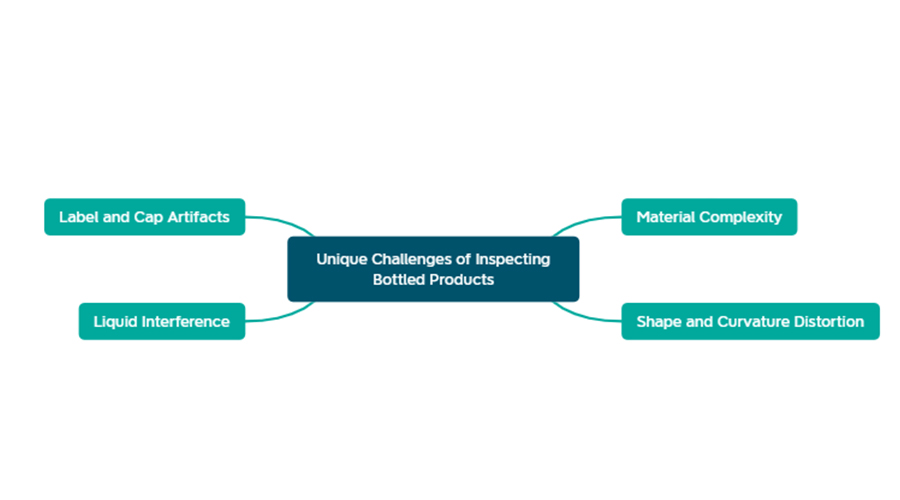
Shape and Curvature Distortion
Curved bottle surfaces and irregular shapes can distort X-Ray inspection images. This issue is especially common around the base and shoulder areas. In some cases, these distortions create blind spots that hide contaminants. To address this, Manufacturers design advanced X-Ray inspection machines with high-resolution detectors and multi-angle scanning capabilities and multi-angle scanning capabilities. These features help reduce distortion and enhance image clarity, ensuring accurate inspection even in complex geometries.
Liquid Interference
One of the most significant challenges in food X-Ray inspection for bottled items is the presence of liquids. Liquid contents, especially those that are dense or opaque, can obscure foreign bodies like small glass shards, bones, or stones. However, Modern X-Ray inspection systems detect contaminants by analyzing density differences, allowing them to distinguish between the liquid and unwanted solid materials—even when the contrast is subtle.
Label and Cap Artifacts
Labels, foil seals, and metal caps—common in bottled packaging—can complicate inspection results by creating image artifacts or triggering false positives. High-performance X-Ray detection equipment use intelligent filtering and masking algorithms during image analysis. These tools isolate non-harmful packaging elements and reduce false alarms. This reduces false alarms and ensures that only real contaminants or defects trigger rejections, maintaining both productivity and safety.
X-Ray Solutions for Bottled Product Inspection
Dual-Energy X-Ray Inspection Systems
Dual-energy X-Ray inspection systems perform exceptionally well when inspecting bottled products with complex packaging or dense contents. These systems use two energy levels to analyze product density. As a result, the X-Ray inspection machine can distinguish between materials with similar absorption characteristics. For instance, when inspecting bottles filled with viscous liquids like sauces or juices, or when foreign materials such as rubber or bone are present, a single-energy approach may struggle to differentiate them from the product itself. Dual-energy X-Ray inspection equipment provides enhanced contrast and image clarity, improving detection accuracy while reducing false rejects. This makes it a preferred solution in industries where product consistency and packaging complexity pose detection challenges.
Single Beam Side Scan X-Ray Inspection System
For many bottled products, contaminants tend to settle at the bottom or near the neck of the bottle—areas that are often difficult to inspect using traditional top-down views. Side-view detection equipment address this issue by capturing images from lateral angles, allowing clearer visibility of problematic zones such as the base, shoulders, and cap areas. This configuration is particularly valuable for products like bottled beverages, oils, and pharmaceuticals, where even a tiny glass shard or metal fragment could lead to serious safety concerns. Manufacturers can significantly reduce undetected hazards by installing side-view X-Ray inspection systems. This approach improves both product safety and regulatory compliance.
Advanced Image Processing Algorithms
Modern X-Ray inspection solution integrates powerful image processing algorithms that intelligently analyze each frame in real time. These systems are capable of learning to ignore benign elements—such as aluminum caps, shrink sleeves, and embossed logos—while focusing detection efforts on unexpected anomalies like stones, bones, or plastic fragments. These AI-driven algorithms also adapt to product variations and minimize unnecessary stoppages by lowering the incidence of false positives. By enhancing the interpretative power of the X-Ray detection equipment, these algorithms ensure that only truly defective items are flagged for rejection, which helps maintain productivity and quality assurance simultaneously.
Customized Detection Zones
One of the most impactful innovations in modern X-Ray inspection systems is the ability to configure customized detection zones within each scan. Bottled products often contain structural components—like neck rings, tamper-evident seals, and decorative foil—that do not require inspection. Using advanced shielding and masking features, operators can program the X-Ray inspection equipment to ignore these non-critical areas and concentrate on zones where contamination is most likely to occur, such as the bottle’s fill level or base. This selective approach improves inspection reliability, reduces unnecessary rejections, and optimizes system efficiency for a variety of bottle types and sizes.
Benefits of X-Ray Inspection in Bottled Production
Reliable Detection of Glass, Stone, Bone, Metal, And Dense Plastic
One of the standout advantages of using X-Ray inspection systems in bottled product lines is their ability to detect a wide range of foreign contaminants. Whether it’s fragments of glass from the bottle itself, small stones from raw material processing, or hard plastics accidentally mixed during packaging, an advanced X-Ray detection equipment can accurately identify threats based on density differences. Unlike traditional metal detectors, X-Ray inspection equipment can detect non-metallic contaminants such as bones and ceramics, which are particularly relevant for products like beverages with natural ingredients or soups in bottles. This wide detection range ensures a higher level of food and product safety, especially for premium or export-oriented products.
Compatibility with High-Speed Production Lines
Modern X-Ray inspection machines are engineered to keep up with the demanding pace of high-throughput bottling operations. With capabilities that match or exceed line speeds of up to hundreds of bottles per minute, today’s X-Ray inspection systems can perform real-time analysis without causing delays or bottlenecks. Whether integrated into a beverage line, pharmaceutical filling operation, or condiment bottling process, X-Ray inspection solution offers seamless compatibility and operational efficiency while maintaining high inspection standards.
Real-Time Rejection Reduces Contamination Risk and Product Recalls
Equipped with real-time rejection systems, X-Ray inspection machines immediately remove contaminated or defective bottles from the production line as soon as anomalies are detected. This rapid response mechanism minimizes the risk of contaminated products reaching consumers and reduces the potential for costly product recalls. In industries where product integrity directly affects consumer health and brand reputation, investing in high-performance X-Ray inspection solution is not just a quality control measure—it’s a strategic safeguard.
Traceable Inspection Data for Audits and Compliance
Today’s X-Ray inspection systems come with advanced data logging and reporting features that align with international food and pharmaceutical safety standards such as HACCP, BRCGS, and IFS. The X-Ray inspection machine stores and tracks every scan for future audits and compliance reviews, offering manufacturers complete transparency during audits and regulatory reviews. This level of documentation supports quality assurance teams in proving compliance and makes it easier to identify and resolve issues retrospectively, should a product safety concern arise.
Industry Applications and Use Cases
Bottled Beverages
In the beverage industry, especially where glass bottles are used, the risk of glass shard contamination during the filling or capping process is a critical concern. An advanced X-Ray inspection system is essential in detecting even tiny fragments of glass that may be invisible to the naked eye. Whether you’re bottling juice, carbonated soft drinks, or premium wines, a reliable X-Ray detection equipment ensures product integrity by identifying foreign materials, even through thick glass or foil-lined caps. This level of precision allows beverage manufacturers to uphold brand trust and meet global safety standards.
Bottled Sauces and Oils
Sauces and edible oils often come in glass or PET bottles, which are prone to contamination during high-speed filling or capping. Additionally, their viscous or opaque nature makes traditional inspection methods ineffective. A specialized X-Ray inspection solution setup can penetrate dense liquids and detect contaminants such as metal shavings, plastic pieces, or even bone fragments in value-added sauces. These food X-Ray inspection systems are also capable of verifying fill levels and checking for air pockets or improper sealing, ensuring consistent product quality.

Pharmaceutical Liquids or Tablet Bottles
Pharmaceutical manufacturers rely on X-Ray inspection systems to maintain the highest standards of safety and compliance. Whether it’s liquid medications in amber bottles or tablet-filled plastic containers, the risk of introducing contaminants during the manufacturing process can have serious consequences. A precise X-Ray inspection machine can detect anomalies like misplaced caps, missing tablets, or foreign substances. Moreover, the traceable data collected by these X-Ray inspection equipment units supports regulatory compliance with GMP and FDA standards.
Baby Food and Healthcare Products
For baby food and healthcare products, there is absolutely no room for error. Parents and caregivers trust brands to deliver safe, contaminant-free nutrition and medicine. Food X-Ray inspection is an indispensable solution in this sector. From fruit purées in glass jars to liquid vitamins in sealed bottles, an X-Ray inspection system ensures that each product is inspected for foreign objects like glass, stone, or plastic. These machines also verify packaging integrity and volume consistency—vital factors in gaining and retaining consumer trust.

Best Practices for Implementing X-Ray Inspection Equipment
Successfully deploying an effective X-Ray inspection system for bottled products requires more than just installing a machine on the production line—it involves strategic planning, correct configuration, and ongoing maintenance. Below are several best practices to help manufacturers maximize the performance and ROI of their X-Ray inspection solution.
Choose the Right X-Ray Inspection Machine Based on Bottle Material and Production Speed
Not all X-Ray inspection machines are built the same. When selecting equipment, it’s essential to consider the material composition of the bottles—glass, PET, or multilayer plastics—as each interacts with X-rays differently. In high-throughput environments, speed is also critical. Choosing a X-Ray inspection system with high-resolution detectors and fast processing units ensures accurate detection without slowing down production lines.
Conduct Calibration and Validation to Handle Liquid Densities
Bottled liquids present unique challenges due to their variable densities. Before deployment, manufacturers should calibrate their X-Ray inspection equipment using product-specific test samples to fine-tune sensitivity and minimize false positives. Periodic validation helps maintain consistent accuracy, especially when switching between product types.
Train Operators on Interpreting Real-Time Imaging Results
Even with the most advanced X-Ray inspection system, human oversight remains essential. Operators must be trained not only on equipment operation but also on understanding the imaging outputs—such as recognizing true contaminant patterns versus non-hazardous artifacts like air bubbles or label edges. Proper training ensures quick, accurate decision-making and minimizes unnecessary product rejection.
Maintain and Service Equipment to Ensure Consistent Performance
Routine maintenance of X-Ray inspection machines is key to preventing unexpected downtime and performance degradation. This includes cleaning sensitive components, inspecting cooling systems (especially important in humid environments), and updating software algorithms. Partnering with the original manufacturer or a certified technician ensures your X-Ray inspection equipment stays compliant and optimized for performance.
By following these best practices, manufacturers can ensure their X-Ray inspection systems deliver precise, reliable, and efficient results—protecting consumers, ensuring compliance, and safeguarding brand reputation in today’s competitive market.
Conclusion
Inspecting bottled products presents a unique set of challenges—from irregular bottle shapes and dense liquids to interference from caps and labels. Fortunately, modern X-Ray inspection systems are engineered to overcome these complexities with precision and efficiency. Whether it’s detecting minute glass fragments in beverages or verifying the seal integrity of pharmaceutical liquids, today’s X-Ray inspection machines offer unmatched capabilities in safeguarding product quality.
Investing in intelligent X-Ray inspection equipment not only helps manufacturers meet international safety and compliance standards but also enhances consumer confidence by ensuring every bottle that leaves the production line is safe and defect-free. With advanced imaging algorithms, high-speed performance, and the ability to adapt to various packaging types, X-Ray inspection technology is a critical asset in the future of bottled product manufacturing.
For companies striving for excellence in quality control, an advanced X-Ray inspection system isn’t just a tool—it’s a strategic investment in operational efficiency, brand reputation, and long-term success.
FAQ
Q: Will foil seals, labels, or metal caps affect detection results?
A: Not significantly. Advanced food X-Ray inspection systems use image filtering and masking algorithms to ignore non-hazardous elements like foil, labels, or caps, minimizing false positives.
Q: How do X-Ray inspection systems perform with dense or opaque liquids?
A: These systems detect contaminants based on density differences rather than transparency. Dual-energy X-Ray inspection machines further enhance contrast and visibility in thick or turbid products like sauces and oils.
Q: Is X-Ray inspection safe for food and liquid products?
Yes. The radiation dose used in food X-Ray inspection is extremely low and does not affect
A: product safety, taste, or shelf life. It’s widely accepted and compliant with international food safety regulations.